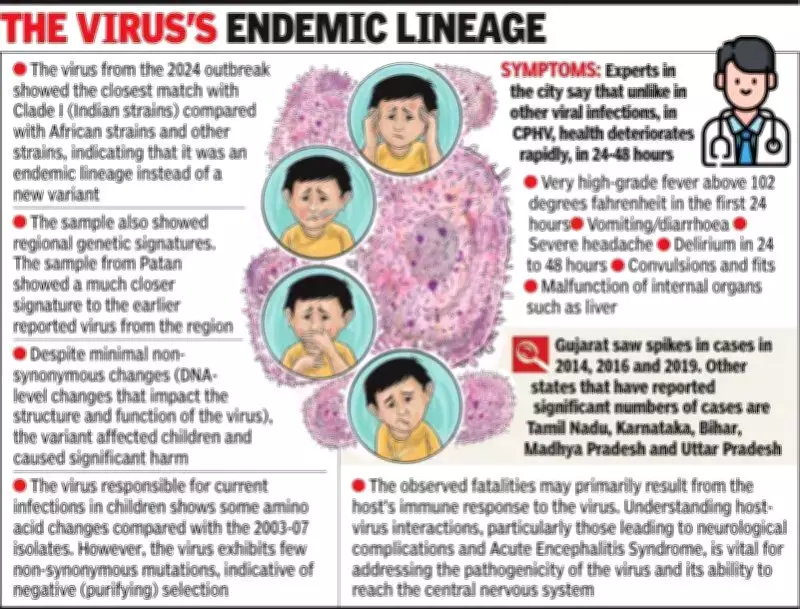
Ahmedabad: Gujarat's 2024 Chandipura virus outbreak was the worst in 20 years. Now, for the first time, scientists have decoded the virus's genetic blueprint from that episode.
Researchers from the Gujarat Biotechnology Research Centre (GBRC), the state health department, and the National Institute of Virology, Pune, sequenced the full genome of the virus and found approximately 293 mutations compared to earlier Indian strains. The findings could shape how India responds to future outbreaks of a virus that killed dozens of children in 2024.
Outbreak Scale and Impact
According to a Union government report dated August 1, 2024, India recorded 148 cases of acute encephalitis syndrome (AES) during the outbreak, of which 140 were from Gujarat alone. Of the total 148 cases, 51 were confirmed as Chandipura virus. Overall, 59 patients died. A separate WHO report put the numbers higher: 245 AES cases across India, 64 confirmed as CHPV, and 82 deaths, reflecting a mortality rate of 33%. The WHO described it as the "largest CHPV outbreak in 20 years".

Genomic Analysis
To understand how the virus had evolved, the GBRC conducted whole-genome sequencing of CHPV samples from the outbreak. The study titled 'Genomic and Evolutionary Characterization of Chandipura Virus: A Cause of the 2024 Outbreak in Gujarat, India' was carried out in collaboration with the state health department and the National Institute of Virology, Pune. It has been published in Microbiology Spectrum, a journal of the American Society of Microbiology.
The genome sample used for sequencing was taken from a 12-year-old patient from Patan.
Key Findings
"Comparative genomic analysis with previously reported Indian strain revealed approximately 293 mutations, including 24 non-synonymous… even under purifying selection pressure, CHPV retains the ability to infect and cause severe disease in children. This highlights the continued need to investigate virus-host interactions, particularly host immune responses, to better understand CHPV pathogenesis and its ability to cause disease in children," read the study findings.
Experts noted that the case fatality rate in 2024 was lower than in previous outbreaks due to better medical care and a reduced test positivity rate. They added that the understanding could help assess the existing treatment protocol and also understand the virus better to prepare for any possible future outbreak.