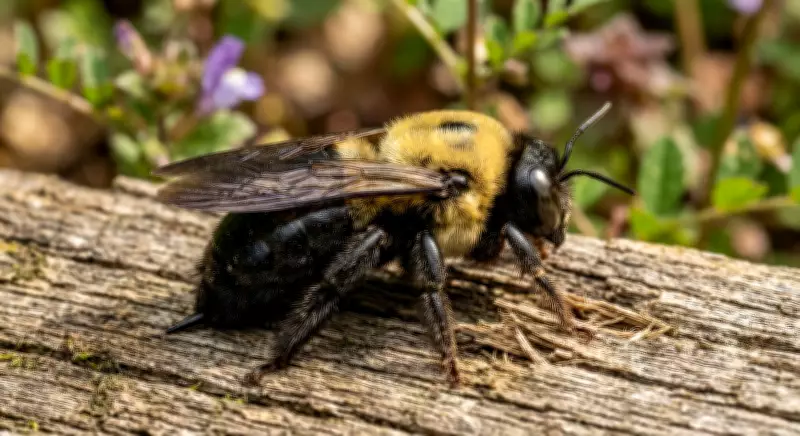
Every spring, like clockwork, they appear. You step onto your deck with your morning coffee, and there it is: a large, shiny bee hovering a bit too close to the railing, as if it owns the place.
Carpenter bees are a common backyard reality for many homeowners, especially those with older wood or weathered porches. While they do not attack and are fascinating creatures, they drill perfectly round holes in wooden structures, which over time can lead to significant damage.
Before reaching for bug spray, understand what is happening and how to address it effectively.

What Is a Carpenter Bee?
Carpenter bees are large and loud, often mistaken for bumblebees. However, their abdomens are solid, shiny black rather than fuzzy with yellow stripes. They are solitary insects, meaning each female creates her own tunnel in wood to lay eggs. Males are more dramatic: they hover in your face and dive-bomb when threatened, but they cannot sting.
Interestingly, the tunnels are not random. A study in Ecology and Evolution found that bees with wider mandibles are better at boring into harder wood, and longer tunnels lead to more offspring. Thus, the female drilling into your railing is making evolutionarily optimized choices.
An Important Pollinator
Carpenter bees are vital pollinators. They use buzz pollination, vibrating their bodies at a specific frequency to dislodge pollen. Research on buzz pollination indicates that about 6% of flowering plants rely on this method. Your backyard tomatoes and wildflowers benefit from their presence.
The Problem with Your Porch
If you notice perfectly round, dime-sized holes in deck railings, siding, or wooden furniture, carpenter bees have moved in. Look for a small pile of sawdust beneath the hole—evidence of the female chewing through wood. Over time, tunnels expand as bees return each season to build on existing nests. This allows moisture to enter, leading to rot. Woodpeckers may also start pecking for larvae, causing further damage.
How to Deal with Carpenter Bees Without Harming Them
You have several low-effort options:
- Paint and seal wood: Carpenter bees prefer bare, unfinished, weathered wood like pine, cedar, and cypress. Apply exterior paint or sealant to deter them. Fill nail holes and cracks with wood putty before painting.
- Fill existing holes: In fall, after bees have left, fill holes with wood filler, wooden dowels, or steel wool, then paint over them to prevent reuse.
- Use almond oil: Rub almond oil on wood surfaces in early spring before bees return. Its scent repels them. Reapply after rain as it is water-soluble.
- Set a trap: Carpenter bee traps are available online or at hardware stores. They mimic nesting sites and channel bees into a jar. Place them near problem areas in early spring.
- Provide an alternative: Move affected boards away from your house and replace with painted ones. Stack untreated wood piles away from your deck as decoy nesting sites. Plant pollinator-friendly flowers like lavender, sunflowers, and coneflowers to attract them elsewhere.
When to Call a Professional
If damage is extensive and structural integrity is compromised, consult a pest control professional. They can assess the situation and provide treatment that minimizes harm to bees while protecting your home.
A little early spring prevention goes a long way. Seal wood, fill old holes, and let these harmless, ecologically beneficial bees find a better place to live.