

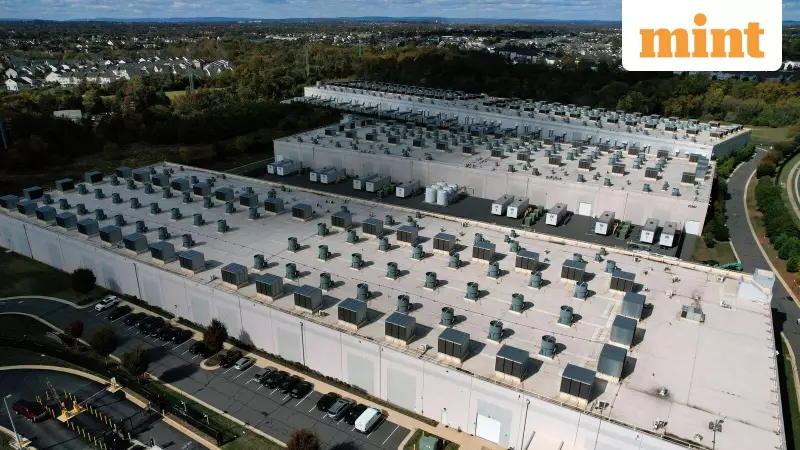
In a remarkable turnaround story, bitcoin mining companies are now becoming crucial partners for technology giants in the global artificial intelligence race. What began as speculative cryptocurrency operations in remote Texas towns has evolved into a multi-billion dollar infrastructure play that's attracting major investments from Microsoft, Amazon, and Google.
From Crypto Winter to AI Gold Rush
The transformation began taking shape in 2021 when investor Mike Alfred envisioned building massive bitcoin mining data centers in isolated Texas locations. He found alignment with IREN, a bitcoin-focused data-center developer, and joined its board. Together, they saw potential in places like Childress—a small Panhandle city with just 5,700 residents—for significant infrastructure development.
However, by 2022, this vision appeared threatened during the crypto winter that culminated with Sam Bankman-Fried's FTX exchange collapse. IREN shares plummeted to nearly $1, reflecting the broader industry downturn. But the company's fortunes have dramatically reversed with the AI revolution.

Earlier this month, Microsoft signed a $9.7 billion cloud-services contract with IREN to expand its rural data-center site in Childress for processing Microsoft's artificial intelligence workloads. The hardware deployment is scheduled to occur in phases through 2026.
Tech Giants' Power Struggle
IREN represents one of several bitcoin mining companies successfully pivoting to AI as technology firms undertake one of the most expensive infrastructure expansions in American history. The company's market value has surged to over $13 billion, supported by a more than 300% stock price increase this year.
Microsoft, Amazon.com, Google and other technology leaders are spending tens of billions to construct massive facilities housing thousands of power-hungry graphics-processing units required for training and operating AI models. Their most critical need? Reliable electricity access.
Bitcoin miners, having secured prime locations years earlier, are perfectly positioned to assist. These companies have compelling reasons to embrace AI—while bitcoin mining involves solving increasingly complex arithmetic problems to unlock cryptocurrency, the difficulty has been rising faster than bitcoin prices. Even with improved pricing from a year ago, mining profitability has declined.
"You literally couldn't get hyperscalers interested in this six months ago," noted Alfred, a hedge-fund investor focused on bitcoin since 2019. "And now they're banging on your door."
Texas Takes Center Stage
The shift toward AI has been particularly pronounced in Texas, where modern pioneers prioritize securing electricity over discovering oil. This month, Cipher Mining signed a 15-year lease agreement with Amazon Web Services for a West Texas site. The company, which owns or operates portions of five bitcoin mining data centers, will incorporate AI at two existing locations and redirect its 3.2 gigawatts of development capacity toward artificial intelligence.
Meanwhile, Google is supporting part of a 10-year, $3 billion agreement with Fluidstack, which will serve as cloud-computing operator at another Cipher site in West Texas. As part of the arrangement, Google will receive warrants for approximately 5.4% equity stake in Cipher and will increase its equity position in bitcoin miner TeraWulf to facilitate its AI transition at a New York location.
Bitcoin miners originally flooded into Texas in 2021 following China's cryptocurrency mining ban. They were drawn by inexpensive land and electricity, particularly West Texas's abundant renewable energy that sometimes went underutilized when transmission lines reached capacity.
Now, these miners benefit from the electric grid's first-come, first-served nature. Prospective customers essentially queue at grid operators and utility companies to complete engineering studies that eventually lead to electrical service.
"In our world, it doesn't matter if you have infinite money; it does not matter if you're Google or Meta," explained Scooter Womack, founder and managing partner of Vega Energy Advisors, which works with bitcoin miners, oil and gas operators, and data centers.

Womack confirms that bitcoin miners control some of Texas's most valuable electricity assets. Projects lacking secured electric capacity "have to wait just like Joe or Sally or anybody else." The process for completing necessary studies and constructing electrical infrastructure for AI-scale customers can take years, with wait times extending into the 2030s across much of the United States.
Grid Dynamics Shift Dramatically
Texas's power grid connection requests clearly illustrate this transformation. According to the Electric Reliability Council of Texas (Ercot), the state's primary grid operator, nearly 70% of customers seeking grid connections were data centers as of September, compared to just 12% representing crypto miners.
This marks a dramatic reversal from early 2023, when the cryptocurrency industry constituted Ercot's largest electricity service-seeking customer segment with 42% of requests, versus 31% for data centers, according to BNEF data.
Nathalie Limandibhratha, U.S. power senior associate at BNEF, notes that operational mining sites will likely remain crypto-focused since switching to AI would prove too costly. However, numerous planned-stage locations are shifting their focus toward artificial intelligence.
This transition presents additional challenges for utilities and grid operators. Cryptocurrency miners offer flexibility with their power requirements—they can reduce operations during high electricity prices and alleviate grid strain during peak demand periods. Some even participate in programs that compensate them for shutting down during these critical times.
Former Ercot independent market monitor Beth Garza of R Street Institute refrains from debating cryptocurrency's merits but acknowledges that from an electricity perspective, bitcoin miners represent "the best customers ever."
"Basically they use electricity when there is surplus, when it is low-cost," Garza explained. "They are very disciplined and regimented about when they stop using it."
In contrast, cloud or AI data centers require large, consistent power supplies continuously. This creates additional stress for grid operators managing rapidly expanding demand. A new Texas law could provide temporary relief, according to Garza, by requiring large new data centers to switch to backup power sources during grid stress periods.
The convergence of bitcoin mining infrastructure and artificial intelligence demands represents a significant development in technology and energy markets, demonstrating how specialized expertise in one domain can unexpectedly solve critical challenges in another emerging field.





