Astronauts' Profound Spiritual Encounters During Moon Mission
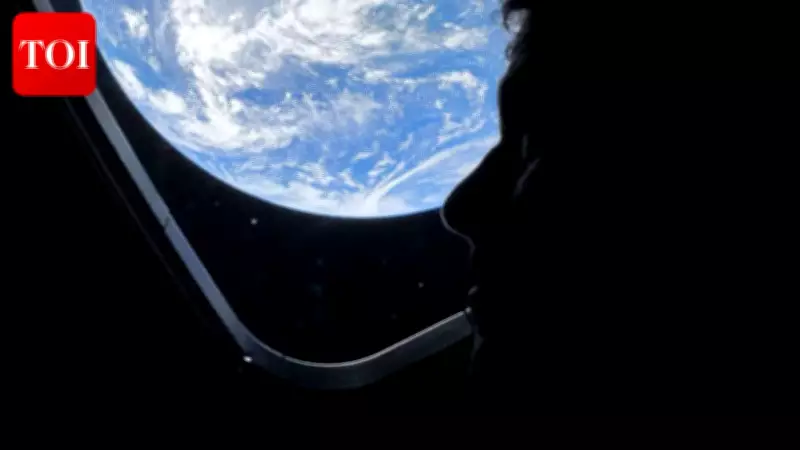
During a recent press conference, Artemis II Commander Reid Wiseman revealed a deeply personal moment following his 10-day lunar mission. "When I returned to the ship—I'm not particularly religious—but I found myself without any other way to process or explain what I had experienced," Wiseman recounted. "I requested the Navy chaplain to visit us briefly. When that man entered, I had never met him before. Yet, upon seeing the cross on his collar, I completely broke down in tears. It's incredibly difficult to fully comprehend what we just endured."
His teammate and mission pilot, Victor Glover, responded: "The only distinction I would make is that I am a religious person, but everything else remains identical."
The Eternal Science-Religion Debate Rekindled
This exchange highlights the perennial question that persists across generations—regardless of individual faiths, beliefs in God, or lack thereof. Science and religion have historically stood in opposition, with science demanding empirical evidence and falsifiability, while religion centers on faith in the unseen. Wiseman is not the first astronaut to confront questions about divinity after viewing Earth from space.

Historical precedents abound. James Irwin of Apollo 15, who walked on the lunar surface, later stated the experience "transformed a man... compels appreciation for God's creation and love." Russian cosmonaut Boris Volynov described how his psyche was "reshaped" by witnessing Earth from orbit. These individuals are not fringe mystics but test pilots and physicists whose professions required precise measurement, calculation, and survival skills.
Artemis II Crew's Unified Awe and Reflection
Victor Glover's public statements during the Artemis II mission echoed similar wonder and belief. From lunar orbit, he quoted Jesus in an Easter message: "Love God with all that you are... and love your neighbor as yourself." He contemplated Earth as "a spaceship... designed to provide us a dwelling place within the universe and cosmos." Even while acknowledging scientific marvels, Glover framed his experience within a context of purposeful creation.
Regardless of technological advancements or historical era, the question of God's existence persists. In the 21st century, following a global pandemic and what resembles an undeclared world war, Wiseman's ambivalence appears as perhaps the most rational inquiry many are currently making. Is God present in our contemporary times? To seek answers, examining historical perspectives proves invaluable.
The Overview Effect: Cosmic Perspective Shift
Over three decades ago, author Frank White introduced the term "Overview Effect" to describe the cognitive transformation space travelers undergo when observing Earth from space. This shift presents Earth as a delicate, borderless oasis floating in infinite darkness. For decades, astronauts have reported immediate global consciousness, profound interconnectedness, and near-mystical awe.
Edgar Mitchell, the sixth person to walk on the Moon during Apollo 14, articulated it thus: "You develop instant global consciousness, a people orientation, intense dissatisfaction with the world's condition, and a compulsion to address it... My perspective of our planet offered a glimpse of divinity."
Twentieth Century Theological Crises
The twentieth century grappled with similar questions and theological dilemmas, though answers differed in a world that had lost faith in humanity. Two world wars, the Holocaust at Dachau and Auschwitz, and the atomic devastation of Hiroshima not only challenged faith but rendered God's relevance seemingly obsolete. This cultural turning point was starkly captured on Time magazine's 1966 cover: a plain black page with three red words: "Is God Dead?"
The accompanying essay examined profound doubts about God's place in a world scarred by mechanized evil and scientific arrogance. The 1960s counterculture, anti-Vietnam protests, and rising secularism intensified this gradual erosion of faith. Pessimism dominated as historical nightmares dismantled previous certainties.

Contemporary Post-Truth Spiritual Yearning
Today's post-truth world features negotiable facts, algorithm-amplified outrage, and hollowed institutions. The COVID-19 pandemic left not only physical illness but collective, unacknowledged mass PTSD. Global anxiety and depression rates surged 25 percent in the pandemic's first year alone, with lingering fatigue, fear, and emotional exhaustion palpable worldwide.
In this climate, the God question emerges not from intellectual skepticism but from an overwhelming desire to rely on a Higher Power when even minor environmental details feel uncontrollable. Unlike the 1960s' gradual faith erosion amid protest and disillusionment, our era witnesses a quiet, urgent inclination toward belief. People yearn to believe—seeking normalcy, decency, awe, splendor, goodness, and camaraderie.
Artemis II astronaut Christina Koch encapsulated this sentiment post-mission: "A crew is inescapably, beautifully, dutifully linked... Planet Earth, you are a crew." Viewing our fragile blue marble from lunar distance, she perceived not merely science but a shared human journey requiring something greater than ourselves. The God question now centers less on proof or disproof and more on embracing belief when all else appears hopeless.
Scientific Minds and Spiritual Ambivalence
The existential God question resonates through history's most brilliant skeptics. Werner Heisenberg, quantum mechanics pioneer, captured this tension: "The first sip from natural sciences turns you atheist, but at the glass's bottom God awaits." Albert Einstein rejected a personal God yet referenced "Spinoza's God"—the universe's orderly harmony. "Science without religion is lame," he asserted, "religion without science is blind."
Charles Darwin, whose theory is often misinterpreted as faith's death knell, confessed in his autobiography that the impossibility of conceiving the universe arising by pure chance remained his strongest argument for divine intelligence—though he identified as an agnostic uncertain of its "real value." Carl Sagan, cosmic secularism's eloquent voice, maintained: "Science is not only compatible with spirituality; it is spirituality's profound source."
Even Richard Feynman, ultimate scientific pragmatist, described a "religious feeling of a special kind" arising from contemplating nature's laws. These minds—trained to doubt, test, and discard—nevertheless experienced ambivalence. They didn't convert to dogma but couldn't dismiss the awe and sense that something permanent, ineffable, and possibly purposeful exists at knowledge's frontier.
Evolutionary Wiring or Cultural Legacy?
Every century witnesses people grappling with the God question. Answers vary, but the inquiry persists. Critics may attribute it to conditioning—our species' evolutionary wiring for patterns and agency, or cultural residue from childhood narratives. Yet even Soviet cosmonauts raised on state atheism felt reshaped by Earth's vista, just as secular astronauts today report the same Overview Effect. If mere conditioning, increased scientific literacy should have eliminated it. Instead, expanded knowledge deepens the mystery.
In post-pandemic, post-truth exhaustion, this mystery feels less like luxury and more like lifeline. Physicist Paul Davies observed that universe study increasingly reveals it as "a put-up job." The Artemis II crew likely didn't "find God" in evangelical conversion terms. Wiseman saw a Cross and lacked words; Glover turned to scripture; Koch envisioned one planetary crew. These aren't isolated anecdotes but symptoms of a broader shift: when control vanishes and reality feels surreal, people lean harder on intuition that something—call it God, Higher Power, or cosmic order—sustains them.
Humanity desires belief—in normalcy's return, decency's triumph, awe and splendor's persistence amid daily grind. We want to believe Earth truly is a crew, united in shared vulnerability and wonder. Brilliant minds beginning as atheists or agnostics yet remaining ambivalent understood this pull instinctively. In the twenty-first century, that pull has transformed into a tidal force.