Asteroids Could Revolutionize Mars Travel
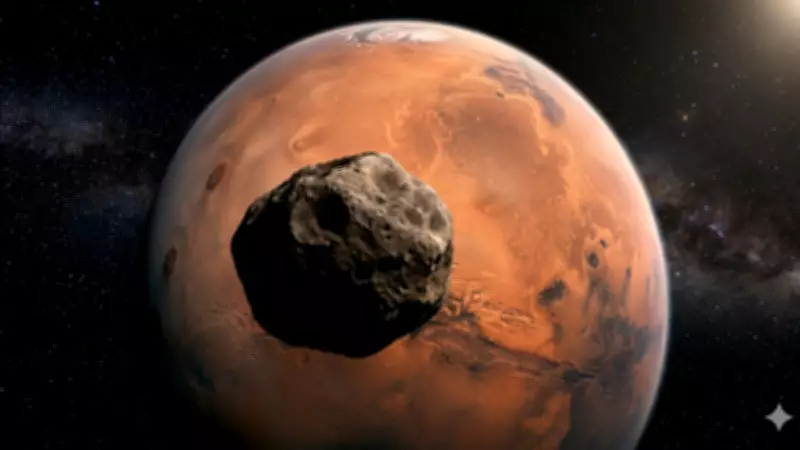
A groundbreaking convergence of asteroid studies, Mars mission planning, and spacecraft propulsion technology is poised to transform interplanetary travel. Researchers have discovered that certain asteroids can enable advanced propulsion systems, potentially cutting the travel time to Mars from the current six to nine months to significantly shorter periods. This innovative approach integrates astrophysics and space engineering, leveraging asteroids to make space travel more efficient and cost-effective.
How Asteroids Could Reduce Mars Travel Time
One of the biggest challenges in traveling to Mars is the duration. Traditional chemical rockets require many months to reach the Red Planet due to fuel limitations and orbital mechanics. However, scientists are now considering using asteroids as stepping stones. Studies indicate that some near-Earth asteroids follow trajectories that intersect those of Earth and Mars. By using these asteroids as waypoints, spacecraft can perform gravity assists—maneuvers that change speed and direction without consuming fuel. According to NASA's Jet Propulsion Laboratory, "Gravity assist maneuvers provide a substantial boost to spacecraft velocities without additional propellant expenditure."
Asteroid Resources and In-Space Refueling
Another exciting possibility is utilizing resources from asteroids themselves. Many asteroids contain water ice, which can be split into hydrogen and oxygen—the basic components of rocket fuel. This concept, known as in-situ resource utilization (ISRU), reduces the need to launch everything from Earth. As stated in a NASA publication, "Asteroid water could provide both the life support and propellant required for extended human presence beyond Earth orbit." By establishing depots at or near asteroids, missions to Mars could become much faster and more sustainable.

Advanced Propulsion and Asteroid-Assisted Missions
Asteroids may also aid in developing more efficient propulsion methods. For instance, ion engines are more fuel-efficient than chemical rockets but produce lower thrust. Integrating them with asteroid-based fuel systems could unlock new possibilities. Another technology under research is nuclear thermal propulsion, which could cut the journey to Mars in half. Combining this with asteroid-derived fuel or gravitational boosts could yield even better results. According to a NASA report, "Nuclear thermal propulsion could reduce transit time to Mars to as little as three to four months."
The Future of Mars Exploration
Although still in its early stages, applying asteroid science to space mission planning represents a paradigm shift in how we travel through space. Viewing asteroids as valuable resources rather than obstacles could make Mars missions faster and more routine. This would not only benefit astronauts but also pave the way for further missions and research, potentially leading to permanent colonization of the planet. Asteroids might be the key to making Mars exploration quick and efficient enough for humanity to begin exploring life beyond Earth.