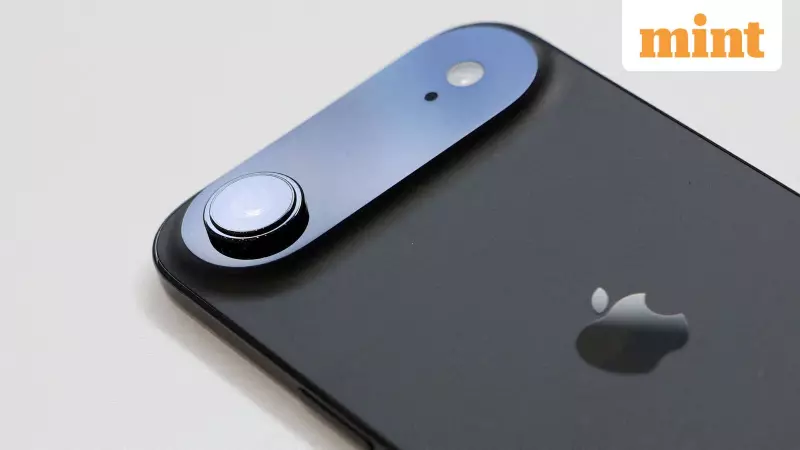
From AI Euphoria to Existential Crisis
Just one year ago, Apple appeared unstoppable. During a grand Silicon Valley event in 2024, the company unveiled its artificial intelligence strategy called Apple Intelligence, triggering an unprecedented market response. The following day, Apple's value skyrocketed by over $200 billion, marking one of the biggest single-day leaps in corporate history. Investors believed generative AI would transform the iPhone into an intelligent digital assistant, potentially reviving stagnant phone sales.
Today, that optimism has evaporated, replaced by growing concerns about Apple's future. The promised AI revolution has largely failed to materialize. Siri's major overhaul has been indefinitely postponed, and Apple Intelligence cannot compete with rival AI assistants like Google's Gemini. Meanwhile, Donald Trump's trade war has exposed Apple's deep vulnerabilities in China, one of its most critical markets.
Mounting Challenges and Ominous Comparisons
Apple's current predicament extends beyond technological shortcomings. The company faces significant legal and regulatory threats to its high-margin services business. Apple shares have dropped nearly 20% this year, significantly underperforming big-tech peers including Alphabet, Amazon, Meta, and Microsoft.

In his new book "Apple in China," author Patrick McGee draws disturbing parallels between Tim Cook and Jack Welch, the former CEO of General Electric. While Cook has generated enormous wealth for investors—Apple's market value grew by an average of $700 million daily during his initial years as CEO—this success might mask fundamental vulnerabilities, similar to what occurred at GE before its decline.
The most alarming comparison comes from Nokia, the Finnish phone-maker that Apple itself disrupted in the late 2000s. The central question now is whether Apple could suffer the same fate it once inflicted on others.
The Search for Apple's Next Big Thing
During Apple's June Worldwide Developers Conference, the company offered few solutions to its AI dilemma. Unlike last year's ambitious promises, the most significant announcement was a refreshed operating system design called Liquid Glass. Many analysts believe Apple needs more substantial innovation.
Craig Moffett of MoffettNathanson highlights that Apple's greatest historical successes came from reinventing "form factors"—the Mac revolutionized desktop computing, the iPod transformed music listening, and the iPhone created the smartphone era. Artificial intelligence represents the next potential pivot point, yet Apple's rivals are moving faster in exploring new opportunities.
Meta and Google are betting heavily on AI-powered smart glasses, as are Chinese tech firms like Xiaomi and Baidu. More concerning for Apple, OpenAI recently announced a $6.4 billion deal to acquire a firm founded by Jony Ive, Apple's former chief designer, to develop AI hardware.
Apple's response appears cautious. The company is expected to launch a foldable phone next year, following competitors like Samsung and Motorola. However, Richard Windsor of Radio Free Mobile suggests Apple's Vision Pro headset, despite its commercial struggles, could provide crucial expertise if smart glasses become mainstream.
Fundamental Shifts Required
Apple may need to reconsider core principles of Tim Cook's leadership to survive the AI era. The company's strong emphasis on privacy and its "walled garden" approach to product integration present significant challenges in the age of artificial intelligence.
Apple's privacy-first stance makes personalized AI model training difficult. Unlike Google, which collects rich user data, Apple relies on "differential privacy" using aggregate insights. This approach limits the company's ability to develop truly personalized AI experiences.
Additionally, Apple's focus on device-based AI rather than cloud infrastructure has put it at a technological disadvantage. Chatbots have advanced more rapidly in cloud environments where models can be larger and more powerful. Apple's late admission of this limitation was evident when it offered some Apple Intelligence users access to ChatGPT.

The company could potentially acquire a cloud-based large language model developer, but options are limited. OpenAI's partnership with Jony Ive makes collaboration unlikely, Anthropic is closely tied to Amazon, and other potential targets are either Chinese companies or too small for Apple's scale.
Services Business Under Threat
Perhaps the most immediate danger comes from Apple's services division, which has been the brightest spot in Cook's tenure. Two major revenue streams face existential threats.
The most significant risk involves Google's payments to Apple to make Google Search the default on iPhones. These payments generate approximately $20 billion annually for Apple. If a judge rules against this arrangement following antitrust proceedings, Apple could lose up to $10 billion in annual revenue according to David Vogt of UBS Investment Bank.
Simultaneously, Apple's App Store commissions, which generate an estimated $31 billion in high-margin revenue annually, face challenges from the EU's Digital Markets Act and ongoing antitrust litigation with Epic Games. If developers successfully steer customers away from Apple's payment systems, this lucrative business could suffer dramatically.
These services have been crucial in offsetting stagnant iPhone sales. Their potential decline could force Tim Cook to fundamentally reconsider his entire strategy—not just for AI, but for Apple's future direction. While Cook has built his legacy on process and financial reliability, the current crisis might require the kind of radical innovation that characterized Steve Jobs's leadership.