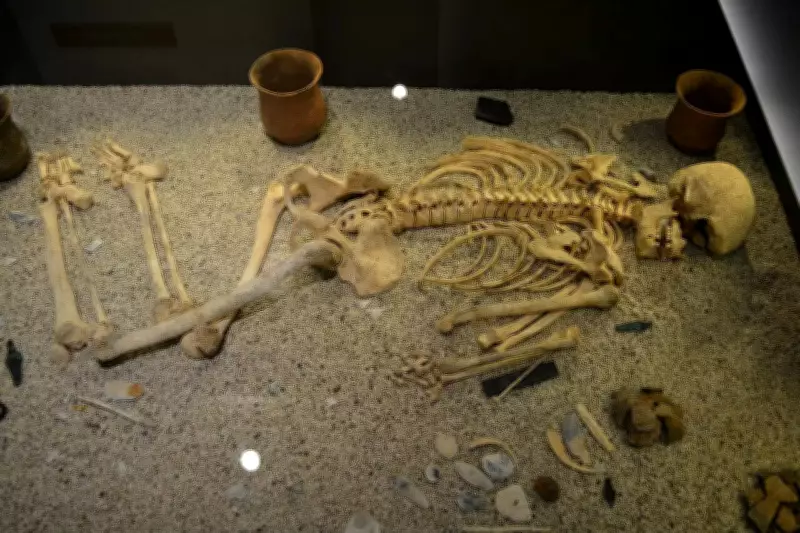
Imagine having to halt commercial construction because an underground treasure of gold was discovered beneath the surface. This is exactly what happened in Wiltshire, England, in spring 2002, when contract researchers conducting a routine survey for a housing project in Amesbury made an astonishing find. Just three miles from the iconic Stonehenge monoliths, their trowels uncovered an unusually dense burial pit beneath layers of chalk soil.
The Discovery of the Amesbury Archer
Inside the pit lay the bones of an ancient male, buried with the most elaborate collection of Early Bronze Age artifacts ever found in Great Britain. The excavation site yielded over 100 highly valuable relics, including well-crafted archery equipment, beautiful pottery, and the earliest golden ornaments ever recovered in the region. The discovery immediately captured global attention, and the mysterious figure became known as the Amesbury Archer.
A Continental Pioneer in Metallurgy
This inadvertent find revolutionized British history, challenging the conventional timeline of metallurgy in the region. According to the exhaustive field report by Wessex Archaeology titled The Amesbury Archer, the individual lived around 2300 BC, a critical period when the Stone Age was transitioning. Among his prized possessions were unique sandstone cushion stones that served as portable anvils for shaping copper and gold.

Before this discovery, textbooks often portrayed prehistoric Britain as an isolated island nation that stumbled upon metallurgy independently. However, the pristine condition of the artifacts suggests that the Archer was a highly respected master metalworker, whose skills were in great demand. He was a technological innovator who helped develop advanced metalworking communities around Salisbury Plain, which until then had relied solely on stone tools. Tooth analysis revealed that he migrated from the Alpine region, making him a continental pioneer who brought advanced metalworking skills to the Stonehenge landscape.
An Amazing Journey Across the Alps
What truly shocked researchers was the biological analysis of the remains. By studying tooth enamel, scientists can trace migrations because adult teeth contain chemical signatures from childhood water sources. As outlined in a BBC article titled The Amesbury Archer: King of Stonehenge?, tests on his tooth enamel confirmed that he was not born near Wessex. Instead, the mineral composition indicated he grew up in a cold Alpine climate, likely in what is now Switzerland, Germany, or Austria.
This evidence dispelled the notion of isolated, local communities. The Archer was an active traveler who moved hundreds of miles across Europe before reaching Britain, bringing metallurgy and cultural knowledge directly to the heart of the Stonehenge landscape.
Legacy and Exhibition
Today, visitors from around the world admire these remarkable discoveries at the Salisbury Museum, where the Alpine pioneer's artifacts are part of permanent exhibitions. The 2002 excavation serves as a perfect example of how amazing scientific discoveries can occur at any time, provided scientists work diligently.
It is a humbling thought that for years, as millions of tourists gazed at Stonehenge's towering stones, the key to Britain's prehistoric puzzle lay silently just steps away, waiting to be uncovered.