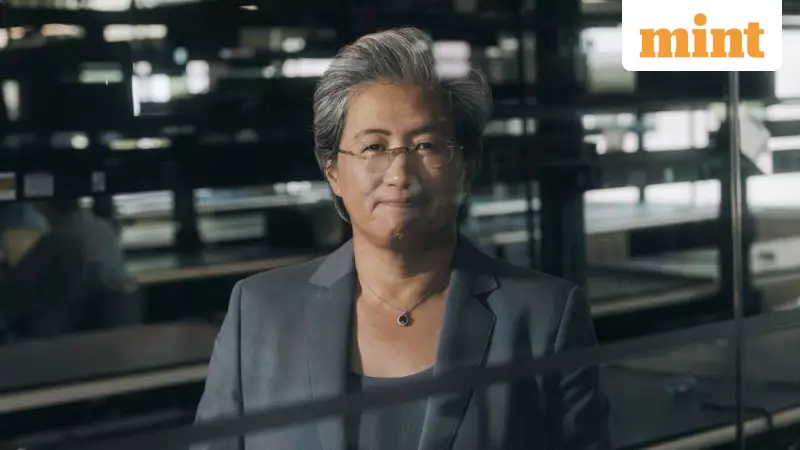
AMD's Bold Pivot to Artificial Intelligence
In a decisive board meeting during late 2022, Dr. Lisa Su, the Chief Executive Officer of Advanced Micro Devices (AMD), announced a radical transformation for the semiconductor company. The Taiwan-born, Queens-raised executive declared her intention to pivot the entire organization toward artificial intelligence, recognizing it as a once-in-a-lifetime opportunity that demanded center stage in AMD's product portfolio.
Three years following that strategic shift, the Santa Clara-based chip designer has witnessed remarkable growth, with its market valuation surging from $90 billion to exceed $335 billion, despite recent market corrections. This extraordinary expansion demonstrates how AMD's positioning at the core of the global artificial intelligence competition has generated substantial returns, transforming Su into a billionaire while establishing her company as one of the few credible designers of high-performance chips required for advanced AI systems.
Challenging the Semiconductor Giant
Dr. Su, who earned her Ph.D. in electrical engineering from Massachusetts Institute of Technology and possesses deep understanding of semiconductor physics, previously built her reputation by outperforming market leader Intel approximately ten years ago. She successfully captured leadership in producing central processing units (CPUs) for both personal computers and data centers. Now, she faces her ultimate challenge: competing against Nvidia, the world's most valuable company and dominant manufacturer of chips powering artificial intelligence data centers.

During October, investors significantly boosted AMD's stock price following the company's announcement of landmark agreements with both Oracle and OpenAI. These technology giants have committed to purchasing tens of thousands of AMD's newest generation AI processors, known as the MI450, scheduled for launch next year. Su described the OpenAI arrangement as turbocharging AMD's roadmap and representing a substantial endorsement of their forthcoming technology.
The growing artificial intelligence market presents a massive opportunity, according to Su, who emphasized the importance of establishing deep partnerships to secure a significant portion of this expanding sector. Her deal-making capabilities were further demonstrated recently when AMD revealed collaborations with Cisco Systems and a Saudi Arabian AI venture to construct extensive data center clusters within the kingdom.
The Trillion-Dollar Vision and Market Concerns
Central to Dr. Su's strategy is her conviction that computing power demand is insatiable, and that companies providing superior AI infrastructure will flourish as the market expands. She maintains that artificial intelligence does not represent a zero-sum game and has dismissed recent worries about overheated chip and data center markets as exaggerated.
Despite recent stock volatility that saw AMD shares decline approximately 20% this month after surging nearly 60% in October, Su remains unconcerned about a potential AI bubble. She argues that such concerns reflect short-term thinking and failure to appreciate the technology's transformative potential.
The AMD CEO has dramatically increased her market projections over the past year. Initially predicting $500 billion in annual AI chip sales by 2028, she recently revised this forecast upward, anticipating that the combined market for artificial intelligence and data-center computing will reach $1 trillion annually by 2030. She projects AMD's revenue in this segment will grow by 80% each year, with the company achieving double-digit percentage market share in AI chips within three to five years, a significant increase from the current 3-5% estimated by most analysts.
AMD is currently negotiating with multiple customers regarding agreements similar in scale to the OpenAI partnership, which involves providing sufficient MI450 chips to support 6 gigawatts of data-center capacity—enough electricity to power 4.5 million homes annually.

Global Expansion and Political Engagement
As AMD strengthens its position in artificial intelligence, Su has increasingly embraced the international spotlight and political engagement. She recently attended a black-tie dinner honoring Saudi Crown Prince Mohammed bin Salman alongside other executives at the White House and participated in a U.S.-Saudi Arabia investment forum.
The Trump administration's recent approval of chip exports to state-backed companies in Saudi Arabia and the United Arab Emirates provides significant advantages for both AMD and Nvidia. While Nvidia's CEO Jensen Huang has attracted more attention for lobbying efforts regarding chip exports to China and other nations, Su has been equally persistent in advocating for policies favorable to AMD during discussions with senior administration officials.
Su has contended that restricting American chip exports would strengthen Chinese competitors like Huawei Technologies, an argument that has resonated with administration officials. She has also suggested that strict export controls could disproportionately harm AMD as it attempts to establish footholds in international markets and reduce Nvidia's commanding lead.
In a notable demonstration of her growing influence, the semiconductor industry's trade association, the Semiconductor Industry Association, recently elected Su as its new chair. She acknowledges actively seeking participation in conversations where critical decisions are made, noting the current administration's openness to including industry leaders in policy discussions.
Despite the challenges of competing with Nvidia, particularly in training chips, Su remains optimistic about AMD's prospects. The company maintains a robust line of inference computing chips and believes the MI450 will enhance its competitive position in both training and inference applications. With strategic partnerships expanding globally and technological advancements progressing, AMD under Lisa Su's leadership appears determined to claim a substantial portion of the rapidly evolving artificial intelligence landscape.