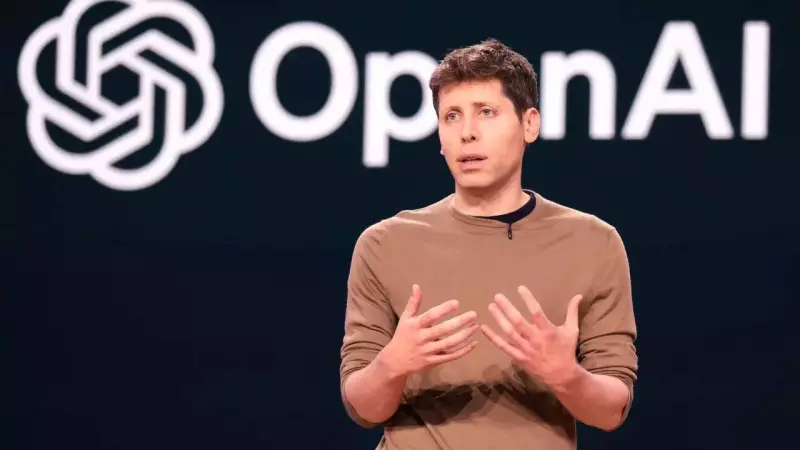
In a candid revelation, OpenAI CEO Sam Altman has stated that his company narrowly escaped a potential defeat by Google in the fierce artificial intelligence competition. Altman credited Google's delayed reaction to the launch of ChatGPT in late 2022 as the crucial factor that allowed OpenAI to solidify its market position.
Google's Missed Opportunity: A Strategic Delay
Speaking on the Big Technology Podcast with host Alex Kantrowitz, Altman offered a stark assessment. He admitted that if Google had taken the threat from OpenAI seriously in 2023, the outcome could have been disastrous for his startup. "We would have been in a really bad place. I think they would have just been able to smash us," Altman confessed. This frank admission underscores the precarious early stages of the AI battle that is now reshaping the global tech landscape.
Altman elaborated that Google's immense strength—its phenomenally profitable search and advertising business model—ironically became a strategic weakness. He argued that the company's reluctance to disrupt its core revenue streams has prevented it from making a full, aggressive pivot towards AI-first product development. "I think they will be slow to give that up," Altman said, referring to Google's existing infrastructure.

The Limitation of Bolting AI Onto Old Models
The OpenAI chief was critical of the approach of simply adding AI features to existing products like web search. He termed this method of "bolting AI into web search" as insufficient to unlock the technology's true, transformative potential. According to Altman, such incremental additions offer only marginal improvements rather than revolutionary change.
He passionately advocated for a complete reimagining of products from the ground up for an AI-native world. "Bolting AI onto the existing way of doing things, I don't think is going to work as well as redesigning stuff in the sort of AI-first world," Altman stated. He used the example of messaging apps, suggesting that while AI summaries are helpful, the future belongs to autonomous AI agents that can manage communications independently, only surfacing critical information for human review.
Ongoing Race and OpenAI's Response
Altman's comments come at a time of intense rivalry. He revealed that OpenAI recently declared an internal "code red" alert following the launch of Google's advanced AI model, Gemini 3. Such high-alert situations, he noted, happen "once maybe twice a year" when significant competitive threats emerge.
Despite the pressure, OpenAI maintains a strong user base, with ChatGPT reportedly boasting 800 million weekly users. In direct response to competitive moves from Google and others, OpenAI has been aggressively launching new models. This includes the recent release of its GPT-5.2 model last week and a new image generation model this week, signaling its commitment to staying ahead in the innovation curve.
The AI race, as framed by Altman, is not just about better technology but about fundamentally different approaches to product philosophy and business model agility.