Sam Altman Defends AI Energy Use, Compares It to Human Development
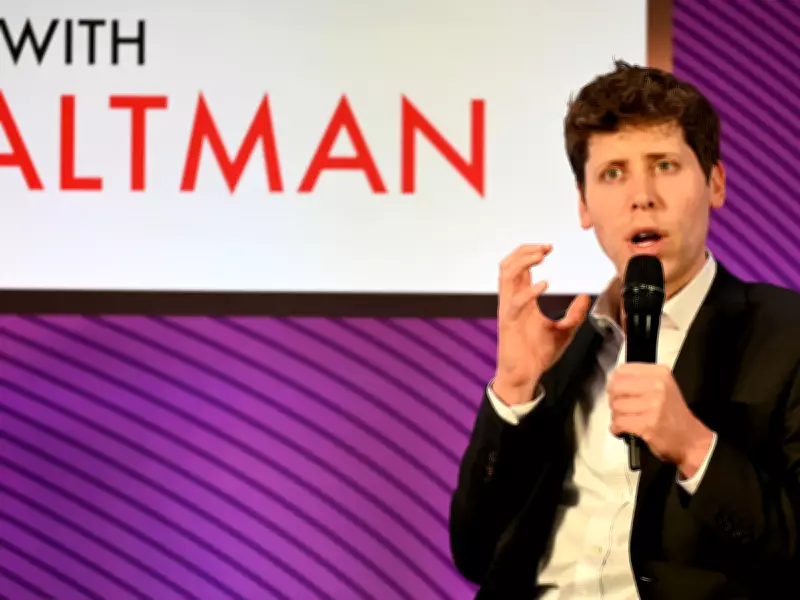
OpenAI CEO Sam Altman has ignited a significant controversy on social media platforms after he appeared to downplay concerns regarding the environmental impact of artificial intelligence. During his appearance at the Express Adda event, which was part of the India AI Impact Summit 2026, Altman challenged the prevailing narrative that AI represents an ecological disaster. He suggested that focusing solely on the energy consumption required to train advanced models such as GPT-4 is fundamentally unfair when contrasted with the substantial resources necessary for the biological development of human beings.
Altman's Argument: A Fair Comparison of Energy Consumption
In his remarks, Altman addressed specific criticisms head-on, dismissing claims that AI operations are excessively resource-intensive. He stated, "We used to do evaporative cooling in data centres, but now that we don't do that. You see these like things on the internet where 'don't use ChatGPT, it's 17 gallons of water for each query' or whatever… This is completely untrue. Totally insane. No connection to reality." Instead, he emphasized that the real issue lies in the total energy consumption as AI adoption grows globally. "What is fair though is the energy consumption, not per query, but in total because the world is now using so much AI is real and we need to move towards nuclear or wind and solar very quickly," he added, advocating for a shift to renewable energy sources to support AI infrastructure.
Drawing Parallels: AI Training vs. Human Intelligence Development
Altman further elaborated on his perspective by drawing a direct analogy between the training of AI models and the development of human intelligence. He argued that if critics are concerned about the energy used to train an AI system, they should apply similar metrics to human beings. "One of the things that is always unfair in this comparison is people talk about how much energy it takes to train an AI model relative to how much it costs a human to do one inference query. But it also takes a lot of energy to train a human. It takes like 20 years of life and all of the food you eat during that time before you get smart," Altman explained. He highlighted that human evolution itself required immense resources over millennia, involving billions of individuals learning to survive and advance knowledge.

He continued, "And not only that, it took like the very widespread evolution of the hundred billion people that have ever lived and learned not to get eaten by predators and learned how to like figure out science and whatever to produce you and then you took whatever you you know you took." Altman concluded that a fair assessment should focus on the energy efficiency of AI once trained, suggesting that AI may already be more efficient than humans in answering queries on an energy-per-question basis.
Social Media Backlash: Critics Label Altman's View as Dehumanizing
The response on social media, particularly on platform X, was swift and critical. User David Fairchild condemned Altman's analogy, describing it as reflective of a dehumanizing worldview that reduces humans to inefficient biological processors. "He's not just defending AI energy use. He is smuggling in a whole anthropology where humans are basically inefficient meat computers that you have to pour food and years into before they become useful. And once you accept that, the next move is obvious. If people are just costly biological training runs, then burning mountains of electricity to build synthetic intelligence starts to feel not only equal, but superior, even if it negatively impacts actual humans," Fairchild wrote.

He added, "That is the dystopian. It makes human development sound like a bug in the system, and it makes sacrificing human and creational flourishing for more computational power sound logical. To him, the grid gets strained, prices go up, ecosystems get hit, but hey, humans eat too, so what's the difference? The difference is that humans aren't an inefficient line item. They're the point. If your worldview can look at a child growing into an adult and describe it as energy spent to train intelligence, you haven't said something profound. You've revealed a horrifically rotten worldview." Another user expressed concern over Altman's influence, stating, "I just can’t understand how such a man have so much power and shape our future. This guy should not be leading any company."
Context and Broader Implications
This debate emerges at a time when the environmental footprint of technology, especially AI, is under increasing scrutiny. As AI systems become more integrated into daily life and industry, questions about sustainability and ethical responsibility are gaining prominence. Altman's comments highlight a tension between technological advancement and ecological concerns, sparking discussions on how to balance innovation with environmental stewardship. The criticism he faces underscores broader societal anxieties about the role of AI and the values it may promote, particularly regarding human dignity and resource allocation.