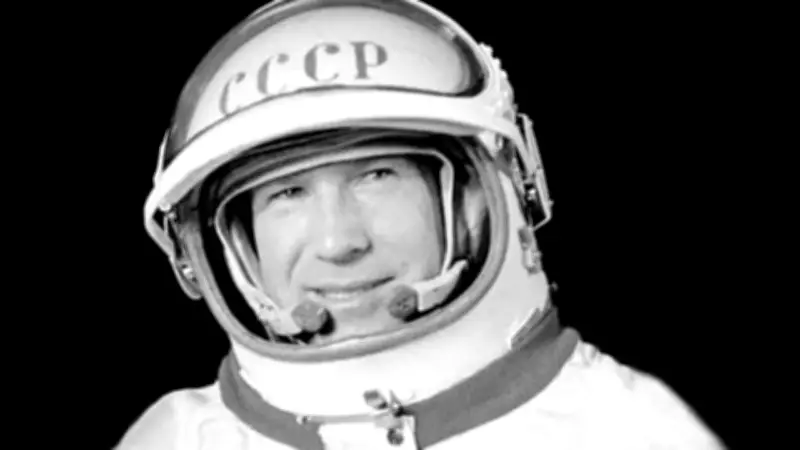
On March 18, 1965, Soviet cosmonaut Alexei Leonov became the first human to step outside a spacecraft, a historic moment in the Space Race. However, what initially seemed like a triumph quickly turned into a fight for survival. While floating above Earth, Leonov's spacesuit expanded in the vacuum of space, stiffening and making movement impossible. He could not fit back through the airlock as planned. With time running out, Leonov made a daring decision: he released oxygen from his suit, risking decompression sickness, to re-enter the spacecraft. His bravery and quick thinking saved his life and marked a pivotal moment in space exploration.
How Alexei Leonov Made History with the World's First Spacewalk
The Soviet mission Voskhod 2 carried two cosmonauts: Alexei Leonov and Pavel Belyayev. The primary objective was to send a person outside the spacecraft and return him safely. Approximately 500 kilometers above Earth, Leonov exited through an inflated airlock, floating in space attached by a tether. The spacewalk lasted only about 12 minutes, making Leonov the first to perform extravehicular activity (EVA). Recalling the experience, Leonov told Smithsonian Magazine: "I could hear myself breathe and even hear my own heartbeat in the silence of space." This achievement demonstrated that humans could work in outer space, keeping the Soviets ahead in the Space Race.
Why Leonov's Spacesuit Ballooned in the Vacuum of Space
The celebration was short-lived. In the vacuum, Leonov's Berkut spacesuit expanded far beyond expectations. The suit stiffened dramatically, making movement difficult. His hands and feet shifted inside, and he struggled to bend his limbs. Critically, the inflated suit became too large for the narrow airlock of Voskhod 2. As the spacecraft approached orbital darkness, Leonov realized he had only minutes to solve the problem. In his memoir, he described the feeling outside as: "Like a seagull with its wings outstretched, soaring high above the Earth." Yet beneath that wonder, a fatal crisis unfolded.

The Risky Oxygen Release That Saved the First Spacewalker's Life
Unable to fit through the airlock, Leonov made an unauthorized decision. He manually opened a valve to reduce suit pressure, allowing excess oxygen to escape. This made the suit more flexible but exposed him to decompression sickness, or "the bends." The maneuver succeeded: by equalizing pressure, Leonov squeezed back into the capsule. Controversy later surrounded the act, but it was necessary because the suit expanded in space. However, trouble continued. Voskhod 2 suffered malfunctions during descent, landing miles off course in a forest. The cosmonauts spent nearly two days waiting for rescue.
In hindsight, Leonov's spacewalk was not only the first but also a remarkable act of bravery and resourcefulness. His experience taught aerospace engineers valuable lessons about working in space, enabling over 3,000 successful EVAs by subsequent generations. The TOI Science Desk, an inquisitive team of journalists, curates captivating science news for The Times of India, demystifying discoveries for all readers.