AI's Economic Shadow Looms Over the Federal Reserve: Will Kevin Warsh Navigate the Coming Storm?
Markets are currently brimming with enthusiasm over the prospects of AI-driven economic growth and the potential appointment of Kevin Warsh as the next Federal Reserve chair. However, this optimistic outlook may be overly simplistic, overlooking significant risks that could reshape the economic landscape in the near future.
The Promise and Peril of Artificial Intelligence
A growth supercycle fueled by the mass manufacture and deployment of AI robotics is indeed on the horizon, but it remains years away from materializing. In the interim, the widespread adoption of AI technologies is likely to trigger substantial white-collar job losses, potentially sparking a recession. This creates a complex scenario for monetary policymakers.
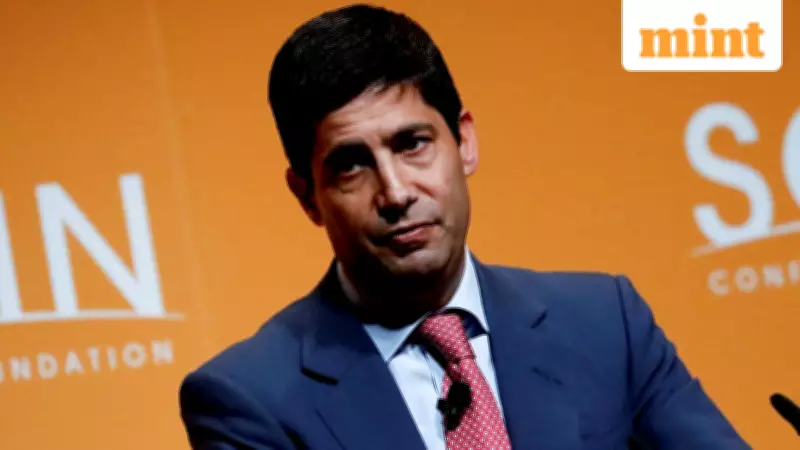
Kevin Warsh, President Donald Trump's pick for the next Fed chair, is known as an AI booster. His conviction that interest rates need to fall positions him favorably to avoid a recession compared to the more data-dependent approach of current chair Jerome Powell. Yet, if an AI-related recession does emerge, Warsh's ideological stance could prove problematic.

The Balance Sheet Conundrum
Warsh is deeply committed to shrinking the Federal Reserve's balance sheet, arguing that lower interest rates combined with AI productivity gains will drive disinflation, creating room for such reductions. While this approach might work if his disinflationary predictions about AI prove correct, it presents significant risks.
Should AI-related layoffs trigger a recession following rate cuts, the Fed's ability to respond effectively would be severely constrained if Warsh remains opposed to reinflating the balance sheet. Quantitative easing has been a crucial tool for stimulating the economy during modern recessions, and Warsh appears reluctant to utilize this mechanism.
Unique Challenges of an AI-Driven Downturn
Central banks typically grapple with labor market weakness stemming from demand deficiencies. However, an AI-driven recession would present a fundamentally different challenge: job losses resulting from technological displacement rather than weak demand.
In traditional recessions, employers cutting jobs due to weak demand typically become more conservative with wages for remaining employees. In contrast, AI implementation could drive decent white-collar wage growth for some time due to immediate productivity gains. Simultaneously, immigration restrictions may support wages in manual service sectors.
This wage strength creates dual complications for the Fed. First, inflationary pressures from wage growth might prompt a rate-cutting Fed to overcompensate with more aggressive balance sheet reductions to maintain credibility. Second, persistent wage strength could make it exceptionally difficult for policymakers to identify when job cuts risk pushing the economy into recession.
The Recovery Dilemma
If the U.S. economy does slip into recession, excessive balance sheet reduction would hinder recovery efforts. With limited room for further rate cuts or increased budget deficits, and coupled with Warsh's likely refusal to expand the Fed's balance sheet, the economy could face unnecessary struggles.
The eventual broad adoption of AI robotics might alter this dynamic, but manufacturers are expected to make the substantial investments required for industrial robotics only gradually. Credible mass-market service and consumer AI robots remain years away, meaning an AI robotics growth boom will probably arrive too late to prevent a white-collar AI-driven recession.
Warsh's Critical Choice
Fortunately, Warsh's willingness to implement rate cuts despite inflationary pressures might provide precisely what the economy needs to moderate inevitable recessionary pressures from AI-related white-collar layoffs. The crucial question for markets is whether Warsh's foresight regarding AI's economic impact will be clear-sighted, or whether his monetarist ideology will lead him to exploit initial AI-driven wage inflation to aggressively shrink the Fed's balance sheet.

If Warsh chooses the former approach, he could prove a more effective economic steward than Powell. If he opts for the latter, his reluctance to reverse course on balance sheet reduction could transform him from Wall Street's favored candidate into a liability for both financial markets and Main Street during an AI-driven recession.
The intersection of artificial intelligence and monetary policy presents unprecedented challenges for the Federal Reserve. How Kevin Warsh navigates this complex terrain will determine not just his legacy, but potentially the trajectory of the U.S. economy through one of its most technologically transformative periods.