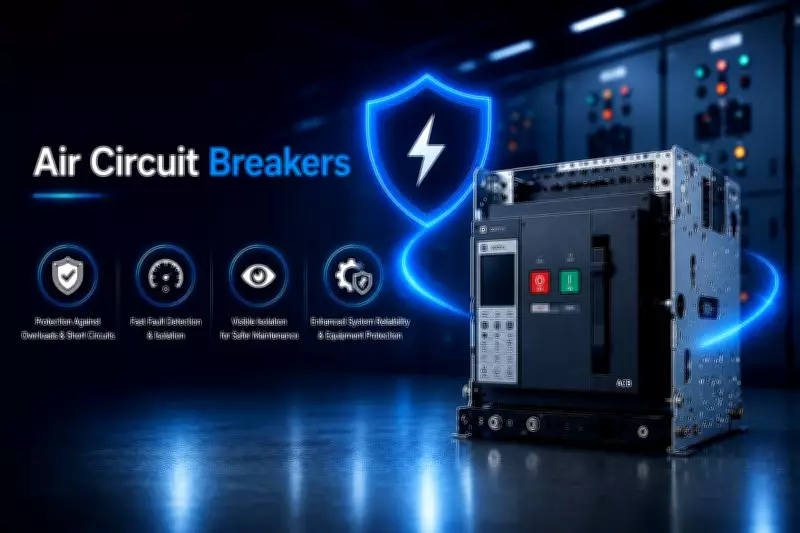
In industrial environments, when something goes wrong, it is rarely minor. A small fault can escalate quickly, leading to equipment shutdown, system trips, or even safety hazards. These risks are not unusual; they are inherent in working with high electrical loads daily. The real question is not whether a fault will occur, but how well the system handles it when it does. This is where air circuit breakers (ACBs) come into play.
What Are Air Circuit Breakers?
Air circuit breakers are devices that protect electrical systems by interrupting current when it exceeds safe limits. In a typical industrial setup, electricity flows continuously to power machines, motors, and entire operations. When a fault such as an overload or short circuit occurs, the ACB detects the anomaly and cuts off the current almost instantly, preventing further damage. The key feature of an ACB is its use of air to extinguish the arc that forms when the circuit is broken. This controlled arc extinction is critical for safety in high-power environments.
Types of Air Circuit Breakers
Different industrial environments require different types of ACBs. The main types include:

- Plain Break Type: The simplest design, suitable for systems with predictable loads and infrequent switching. It relies on basic arc control without additional mechanisms.
- Magnetic Blowout Type: Uses a magnetic field to push the arc away from the contacts, enabling faster arc extinction and reduced wear. Ideal for high-load applications.
- Air Chute Type: Splits the arc into smaller parts using arc chutes, cooling it quickly and safely. This type offers a good balance of performance and reliability for continuous industrial operations.
How Air Circuit Breakers Work
The working principle of an ACB involves three main steps:
- Fault Detection: The breaker continuously monitors the current. When it detects an overload or short circuit, it reacts almost instantly.
- Arc Formation and Interruption: When the breaker opens, an arc forms between the contacts. The ACB uses air to extinguish this arc safely, preventing equipment damage and hazards.
- Reset and Reusability: Unlike fuses, ACBs can be reset after the fault is resolved, reducing downtime and simplifying maintenance.
Role of Air Circuit Breakers in Improving Electrical Safety
Safety in industrial facilities is about controlling and managing risks. ACBs play a crucial role in this by:
- Preventing Equipment Damage: By interrupting current during faults, ACBs protect expensive machinery from overheating or failure, reducing repair and replacement costs.
- Enhancing Operational Safety: Controlled arc interruption minimizes risks such as sparks, fire, or sudden failures, creating a safer workplace.
- Supporting System Reliability: ACBs isolate faults quickly, preventing them from affecting the entire system. Only the affected section is interrupted, ensuring overall system stability.
Conclusion
Electrical systems are not just about supplying power; they are about managing it safely. Air circuit breakers act as the first line of defense, ensuring that faults are handled quickly and safely before they escalate. In industrial environments, that readiness makes all the difference. Leading manufacturers like Lauritz Knudsen Electrical & Automation offer advanced solutions such as the C Power and U-Power OMEGA ranges, designed for high performance, durability, and superior protection in demanding conditions.
Disclaimer: The content above is presented for informational purposes as a paid advertisement. The Tribune does not take responsibility for the accuracy, validity, or reliability of the claims, offers, or information provided by the advertiser. Readers are advised to conduct their own independent research and exercise due diligence before making any decisions based on its contents.