Claude Code Creator Predicts End of IDEs as AI Agents Take Over Development
Boris Cherny, the visionary behind Anthropic's Claude Code, has issued a bold prediction that the fundamental tools developers have depended on for generations are approaching their expiration date. Following his earlier forecast that the "software engineer" job title would begin disappearing this year, Cherny now targets the very environments where coding happens, suggesting integrated development environments (IDEs) like Microsoft's VS Code and Apple's Xcode are destined for obsolescence.
The Terminal as the Future
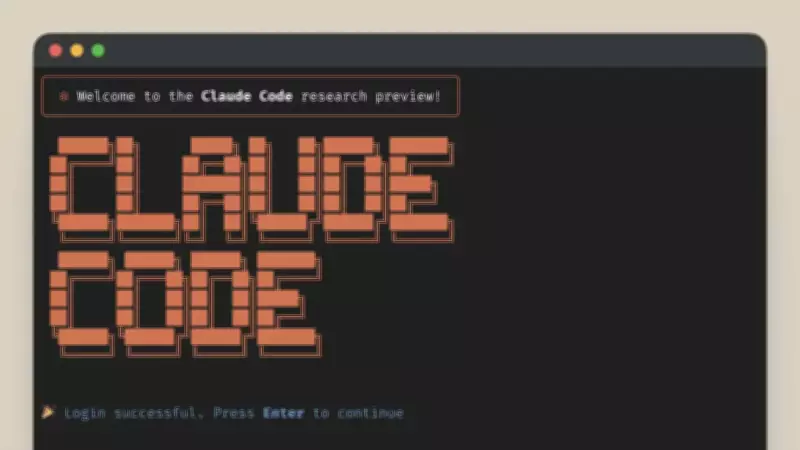
Cherny's perspective emerged during a recent talk at Anthropic, where he explained why Claude Code was deliberately built as a terminal-based command-line interface rather than a full graphical IDE. "There's a good chance by end of year people aren't using IDEs anymore," Cherny stated, emphasizing the rapid progress of AI models. The decision to center Claude Code around the terminal was both practical and strategic—it serves as the common ground across diverse tools used by Anthropic engineers, from VS Code and Zed to Xcode, Vim, and Emacs.
"We want to get ready for this future and avoid over-investing in UI on top, given the way models are progressing," Cherny elaborated. "It just may not be useful work pretty soon." This approach reflects the team's firsthand observation of Claude's accelerating capabilities, leading them to bypass potentially redundant graphical interfaces that could become outdated within months.

From Software Engineers to "Builders"
Cherny's IDE prediction aligns with his broader thesis about the transformation of software engineering itself. On Lenny's Podcast last month, he argued that while coding will become ubiquitous, the traditional role will evolve into something closer to a "builder"—a generalist who orchestrates AI systems rather than writing code line by line. This shift is supported by Anthropic's own 2026 Agentic Coding Trends Report, which finds engineers currently use AI in about 60% of their work, with only 0–20% of tasks being fully delegated to AI.
The human role is not vanishing but transforming toward architecture, oversight, and strategic judgment. Claude Code already demonstrates this future: it operates as a fully agentic system capable of writing complete features, fixing bugs, and navigating complex codebases across multiple files autonomously. Cherny himself hasn't manually edited a single line of code since November, illustrating the technology's potential.
Navigating the Disruption
Cherny acknowledges the coming changes won't be comfortable for everyone. "It's going to be painful for a lot of people," he admitted, offering advice for workers facing this transition: experiment early, maintain curiosity, and avoid waiting for stability. "Don't be scared of them. Just dive in," he urged, emphasizing proactive engagement with AI tools.
He also highlighted that the societal implications extend beyond any single company. "As a society, this is a conversation we have to figure out together," Cherny noted, calling for collective dialogue about the future of work in an AI-driven world. This perspective underscores the profound impact AI agents could have on development practices, potentially rendering familiar tools obsolete while creating new opportunities for innovation and collaboration.