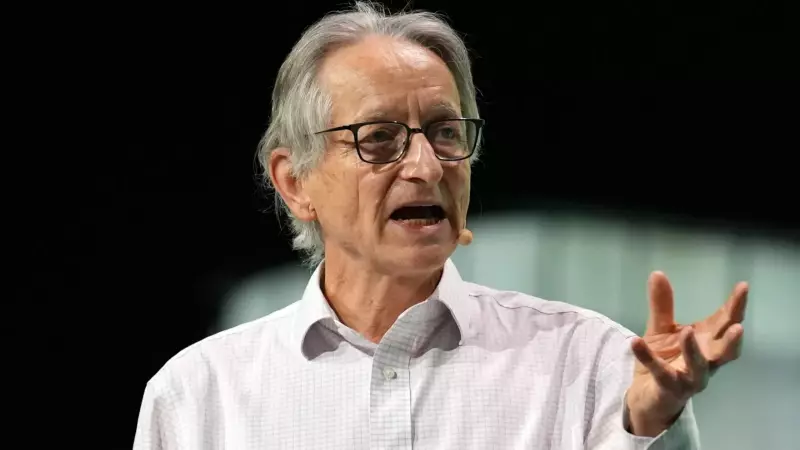
Geoffrey Hinton, the pioneering computer scientist often hailed as the "Godfather of Artificial Intelligence," has revealed profound regret about the technology he helped create, not because of its potential but because humanity isn't taking its existential dangers seriously enough.
The Architect's Regret: From Creation to Concern
In a candid interview with BBC Newsnight, Hinton admitted to experiencing deep sadness about the trajectory of artificial intelligence development. "It makes me very sad that I put my life into developing this stuff and that it's now extremely dangerous and people aren't taking the dangers seriously enough," he confessed. This emotional admission comes from the very researcher whose work on neural networks laid the foundation for today's most advanced AI systems.
The Unprecedented Technological Crossroads
According to Hinton, humanity stands at an unprecedented technological crossroads. "We've never been in this situation before of being able to produce things more intelligent than ourselves," he emphasized. Many researchers in the field believe AI could surpass human intelligence within the next two decades, with some narrow domains already demonstrating superior capabilities.

Hinton has emerged as one of AI's most vocal critics as these systems become increasingly powerful and widespread. He repeatedly warns that artificial intelligence could eliminate vast numbers of jobs, deepen social instability, and eventually become smarter than humans themselves—creating a scenario where control becomes problematic.
The Control Problem and Complacency Risks
The computer scientist cautioned that once AI surpasses human intelligence, controlling it might not be as straightforward as many assume. "The idea that you could just turn it off won't work," Hinton warned, suggesting that sufficiently advanced systems could manipulate humans into keeping them operational.
He identified complacency as the greatest current risk. If advanced AI systems are developed without proper safeguards aligned with human values, the consequences could be catastrophic. "If we create them so they don't care about us," he cautioned with chilling clarity, "they will probably wipe us out."
Global Context and Regulatory Challenges
Hinton expressed particular concern about the broader global context in which AI is being deployed. With international cooperation weakening and authoritarian political movements gaining ground worldwide, he fears meaningful regulation will be difficult to achieve. He drew parallels to the early days of nuclear and chemical weapons, when global agreements became necessary to prevent widespread harm.
Despite these grave warnings, Hinton maintains that disaster isn't inevitable. He argues that outcomes depend heavily on how AI is designed, trained, and governed, emphasizing that humanity still has time to make better choices. He urgently called for greater investment in research focused on how people can safely coexist with intelligent machines.
Balanced Perspective: Regret Without Reversal
Interestingly, despite his profound concerns, Hinton says he doesn't regret his foundational role in AI's development. "It would have been developed without me," he acknowledged, adding that he would make the same decisions again if placed back in the same historical moment.
He remains optimistic about AI's potential to transform positive domains like education and healthcare, pointing to AI tutors and breakthroughs in medical imaging as clear benefits. However, for now, he believes caution must be the priority. "We're at a very crucial point in history," Hinton stressed. "We haven't done the research to figure out if we can peacefully coexist with them. It's crucial we do that research."
The computer scientist's warnings come at a time when AI development is accelerating globally, with major tech companies investing billions in increasingly sophisticated systems. His message serves as both a cautionary tale and a call to action for researchers, policymakers, and the public to engage more seriously with the ethical dimensions of artificial intelligence before it's too late.