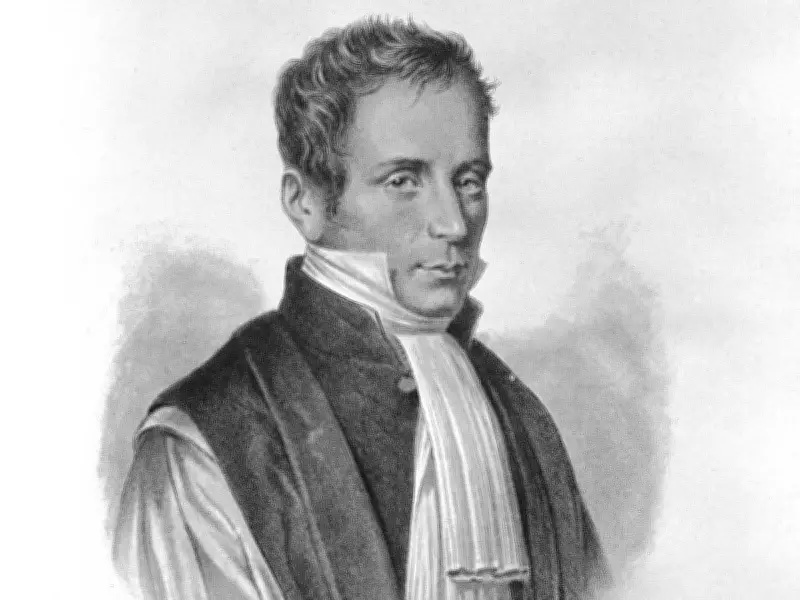
The first stethoscope was a makeshift solution to an awkward problem. In 1816, a French physician named René Laennec rolled a sheet of paper into a cylinder so that he would not have to place his ear directly against a young woman's chest. This simple fix for a social dilemma transformed medicine's ability to listen to the human body. Laennec's improvised listening tube became the stethoscope, turning an uncomfortable bedside encounter into one of the most recognizable tools in healthcare.
A Breakthrough Born from Social Discomfort
The history of the stethoscope begins with a blend of modesty, professionalism, and improvisation. In Paris, Laennec was faced with a patient exhibiting symptoms of a heart condition. At that time, doctors used immediate auscultation, which involved placing an ear directly on the patient's body. Laennec found this standard method inappropriate because the patient was a young woman. According to studies, Laennec recalled an acoustic principle: sound travels more clearly through solid materials. He tightly rolled a sheet of paper, placed one end on the patient's chest, and the other to his ear. To his surprise, the internal sounds of the heart and lungs were not muffled but remarkably loud and distinct. The paper tube solved a social dilemma while also providing a significant technical advantage.
How the Paper Tube Transformed Clinical Practice
The instrument quickly changed how doctors examined their patients. Instead of direct skin-to-skin contact, physicians now had a device that focused, amplified, and standardized what they could hear. This revolutionized the diagnosis of chest diseases, particularly those of the lungs and heart. Laennec's invention introduced the practice of mediate auscultation, meaning listening through an intermediate tool. It reduced the need for direct ear-to-body examination; instead of listening to general sounds within the body, doctors used a fine instrument to map the interior of a living patient. Bedside medicine changed as physicians gained a reliable, formalized way to interpret what was happening beneath the ribs.

Beyond the Medical Icon
Today, the stethoscope is the universal symbol of the medical profession. However, the story becomes more interesting when we strip away modern symbolism. In its early days, the tool was not intended to be a badge of professional identity. It was a practical answer to a daily human problem. Laennec's notes show that over years, he refined his initial paper model, eventually building a hollow wooden cylinder that could be unscrewed into segments. The device was built from a desire to treat patients effectively and respectfully. The object that now represents high clinical authority was once an ad hoc cardboard cylinder held together with paste.
Why the Invention Remains Relevant
It is easy to picture that original moment in 1816: a doctor with a simple piece of paper, standing beside a patient, overcoming an embarrassing social barrier, and suddenly unlocking a new acoustic world. The scene is simple, but the long-term impact on global healthcare was profound. Once the stethoscope became standard practice, physical examinations became highly repeatable and refined, according to a study published in the Postgraduate Medical Journal. It offered doctors a healthy dose of physical distance balanced by scientific accuracy. This combination ensured that the tool became a permanent fixture in clinical practice, not a passing fad.
From a Quick Fix to a Universal Identity
The evolution of the stethoscope demonstrates how a simple design can transform an entire field of science. Some tools solve a problem so cleanly that they become synonymous with the profession itself. The temporary roll of paper was soon replaced by the wooden monaural stethoscope, which eventually evolved into the flexible, binaural, double-earpiece device used today. The practice itself has remained essentially the same for over 200 years: an expert captures, channels, and interprets sound inside the human body. Laennec's paper cylinder did more than resolve one awkward encounter in Paris; it offered medicine a non-invasive way to look inside the chest, forever changing how doctors hear and diagnose disease.

About the Author: TOI Science Desk. The TOI Science Desk is an inquisitive team of journalists who delve into the realms of discovery to curate a captivating collection of news, features, and articles from the vast and ever-evolving world of science for the readers of The Times of India. They serve as a scientific companion, delivering a daily dose of wonder and enlightenment. Whether it is the intricacies of genetic engineering, the marvels of space exploration, or the latest in artificial intelligence, the TOI Science Desk ensures readers stay connected to the pulse of the scientific world. They are not just reporters but storytellers of scientific narratives, committed to demystifying the intricacies of science and making it accessible and engaging for readers of all backgrounds.