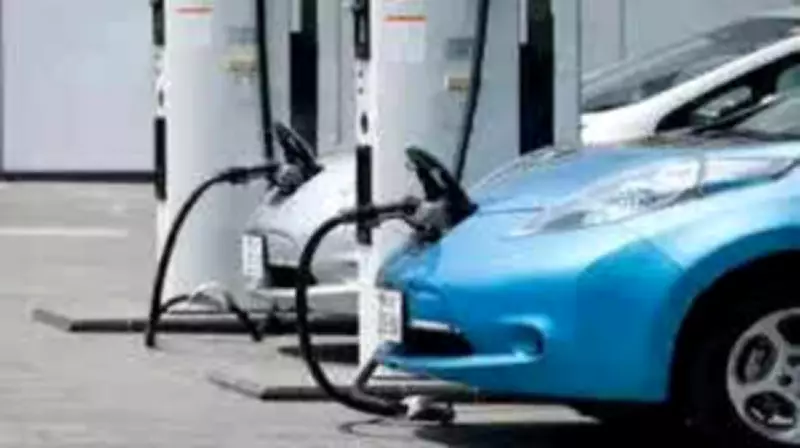
Madurai: Tamil Nadu’s public electric vehicle (EV) charging network is set to expand significantly after the Union government sanctioned 498 new charging points under the PM E-DRIVE scheme. This addition will complement the state’s existing network of around 1,800 public charging stations.
Improving Charging Access Across the State
The approval is expected to enhance charging access in cities and along national highway corridors as EV adoption spreads beyond Chennai into tier-two cities. Tamil Nadu currently has an estimated public charging station-to-EV ratio of one station for every 135 registered electric vehicles, which is better than the national average. However, charging availability remains uneven outside major urban centres, particularly along inter-city routes used by private vehicles, taxis, and commercial travellers.
Key Corridors for New Charging Points
The new charging points are planned for installation along key corridors, including the Chennai–Nagercoil national highway, covering major nodes such as Trichy, Madurai, Tirunelveli, and Nagercoil. This strategic placement aims to support long-distance travel and reduce range anxiety among EV users.

Local Reactions and Benefits
Madurai-based EV user R Prakash welcomed the move, stating that it would encourage long-distance travel. “The new charging points will help reduce range anxiety among EV users, especially car owners, as they are expected to come up along highway stretches,” he said.
Funding Allocation and Cost Analysis
Tamil Nadu has been allocated ₹34.6 crore for the 498 charging points, translating to about ₹6.9 lakh per charger. This is lower than the national average of ₹10.3 lakh per charger. For comparison, Kerala has been allocated about ₹18.8 lakh per charger, Karnataka ₹9.9 lakh, and Uttar Pradesh ₹8.6 lakh.
Expert Insights on Funding Differences
EV infrastructure consultant S Arvind explained that the difference in funding should not be viewed solely as a matter of allocation. “The subsidy depends on the type and capacity of chargers, site category, and whether the funding covers only upstream infrastructure or also the charging equipment,” he said. “A 50kW DC car charger, an AC two-wheeler charger, and a high-capacity bus charger involve very different project costs.”
Charger Types and Scope
Officials confirmed that the chargers approved for Tamil Nadu in the current phase are intended for two-wheelers and cars, with no bus or truck charging stations included. Arvind noted that this could explain the lower per-unit funding sanctioned for the state.
Stay updated with the latest Madurai news. Download the TOI App.
About the Author: Ram Sundaram is an Assistant Editor at The Times of India, Chennai, where he covers commute, trial courts, and political affairs.