Walk into a busy quick-service restaurant (QSR) outlet today, and you will notice a significant change. Many customers no longer discover the brand at the counter. Instead, they find it through search results, browse menus on apps, place orders from home, and arrive only for pickup. The experience begins much earlier than the restaurant visit itself.
The Screen Is Now the Storefront
For a growing number of consumers in India, the first interaction with a restaurant brand happens on a screen. This shift is transforming how restaurant brands think about customer relationships. Physical stores still matter, but digital touchpoints often shape the decision first. Lyxel & Flamingo examined this transition through Taco Bell India's approach, looking at how the brand is strengthening its digital presence and building stronger customer connections across multiple online platforms.
The numbers are hard to argue with. India's online food delivery market was valued at approximately $7.5 billion in 2023 and is projected to reach $25 billion by 2030, driven almost entirely by app-first ordering behaviour, according to Redseer Strategy Consultants (2024). Separately, Google's 2024 India consumer research found that over 60% of food-related purchase decisions now begin with a digital search or discovery moment, before the customer has even decided which platform to order from. The storefront has moved, and the question is whether the brand has moved with it.

Why Third-Party Platforms Aren't Enough Anymore
Aggregator platforms solved a real problem for restaurant brands in the early days. They brought distribution, logistics, and customer trust without requiring brands to build any of that from scratch. But they come with a ceiling. When a customer orders through Swiggy or Zomato, the platform owns that relationship. The data stays with them, and the retention levers stay with them. The brand is essentially a listing in a marketplace: visible, but not in control.
That is the core reason so many restaurant brands are now pouring resources into native app development, not just to have an app, but to build something that gives them genuine control over the customer relationship. What aggregators own includes customer data and full ordering history, all retention and re-engagement levers, loyalty and discount mechanics, and the first-party relationship at every touchpoint. In contrast, a direct app gives back full visibility into ordering patterns and customer preferences, the ability to identify and reward highest-value customers directly, personalised communication that does not go through an intermediary, and margin that is not shared with the platform on every transaction.
The catch is that customer expectations have moved up just as fast as the technology has. Users do not give apps much grace anymore. A checkout flow that is slightly confusing, a loading screen that lingers a second too long, a payment that fails without a clear error message, any of these can be enough to send someone back to the aggregator, or worse, to a competitor's app that just worked better.
Design Is Doing More Work Than Most Brands Realize
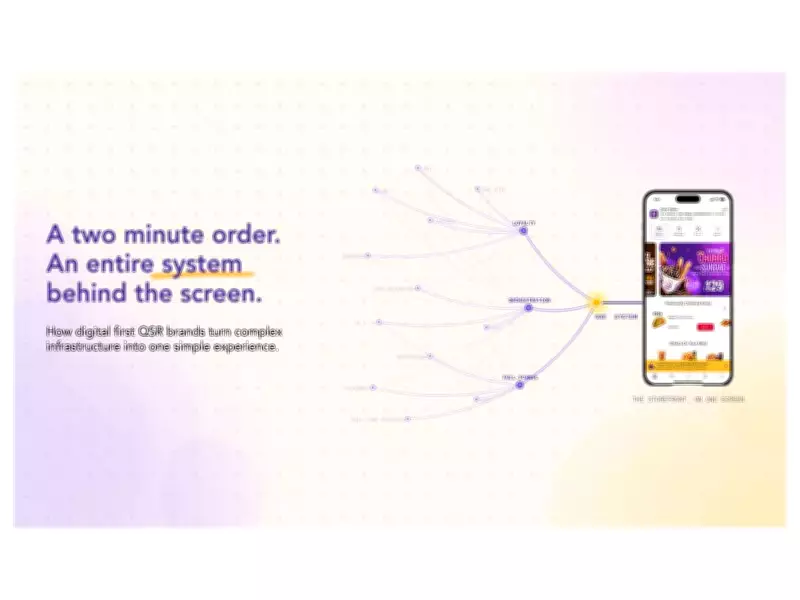
There is a tendency in the restaurant industry to treat UI UX design as a finishing step, something you hand off to make the app look good before launch. That is a costly misunderstanding. In a category where most ordering decisions happen in under two minutes, the way an interface is designed has a direct impact on whether a sale happens at all. The QSR brands that are growing fastest digitally have started treating UX the same way physical stores treat layout and signage. It is not decoration; it is part of the selling environment.

Common friction points where brands lose customers include a menu that is hard to browse or not optimised for mobile scroll, a cart that does not save when a user switches apps or gets interrupted mid-order, an address field that resets or fails to detect location accurately, a checkout flow with too many steps between intent and confirmation, payment failure without a clear error message or retry path, and loading screens that exceed two to three seconds on mid-range Android devices. In work building ordering platforms for QSR brands, the drop-off point is almost never where teams assume it will be; it is usually one step earlier, buried in a flow that looked fine on a desktop prototype but created friction on a mid-range Android device under real network conditions. That kind of insight does not come from a single UX audit; it comes from continuous attention to behaviour data and willingness to iterate on what the data actually reveals.
When the Backend Can't Keep Up, the Brand Pays for It
Customer-facing experience gets most of the attention, but the infrastructure running underneath it matters just as much, sometimes more. During high-traffic moments, such as a big promotional campaign, a long weekend, a flash sale, or a cricket final, order volumes can spike dramatically in a very short window. If the backend is not built to absorb that kind of pressure, users start seeing error messages, payment failures, and tracking breakdowns right when the brand needs to be performing at its best. Scalability is not glamorous, but it is expensive to ignore.
This is why serious investment in custom app development goes well beyond the front end. What good infrastructure has to handle includes API architecture designed for concurrent high-volume requests, advanced caching strategies to reduce database load during spikes, load balancing that distributes traffic without degrading response times, geofencing and GPS-based location services for accurate store discovery, real-time order tracking that stays accurate across delivery partner APIs, and POS integration that keeps digital and in-store operations in sync. Location services are another area where the gap between technically functional and actually good becomes very obvious to users. People expect apps to know which store is closest to them, to show live order tracking, and to reflect delivery status accurately. When that works well, it feels seamless; when it does not, users lose confidence in the brand quickly.
Building the App Is Only Half the Business Problem
Building a great app is only half the puzzle. Getting the right customers to use it and keeping them coming back requires a completely different set of capabilities. Full funnel marketing for QSR brands today looks nothing like it did five years ago. The old model was heavy on mass reach: TV spots, outdoor, discount-led acquisition campaigns on aggregators. That still exists, but it is no longer enough on its own. Modern restaurant brands need to think about the entire customer lifecycle, and each stage demands a different approach, different channels, and different messaging.
The customer lifecycle includes several stages. Discovery is driven by organic search, local SEO, social media, and paid acquisition. The first order is influenced by app store presence, onboarding experience, and introductory offers. Retention relies on loyalty programs, push notifications, personalised recommendations, and CRM-led reengagement campaigns. Advocacy is fuelled by referral programs, review management, and brand community building. Retention programs, push notification strategies, personalised recommendations based on order history, and CRM-led reengagement campaigns are not luxuries for large enterprise brands; they are increasingly the difference between customers who order twice a year and customers who order twice a week.
The structural problem, in our experience, is organisational rather than strategic. When the teams building the product and the teams running the campaigns operate on separate briefs, data stays in silos. Acquisition campaigns drive installs that the retention stack never sees. Loyalty mechanics go underpromoted because the performance team is optimising for a different KPI. The technology and the marketing have to be planned and measured as one system, not sequenced and not handed off.
Organic Discovery Is the Advantage QSR Brands Keep Underestimating
There is a conversation that is finally picking up inside QSR marketing teams: organic search matters, and most brands are leaving a lot of it on the table. When someone searches for the best burger near me or Mexican food delivery in Koramangala, the results that show up are not random. They reflect months and years of deliberate work: structured content, local listing optimisation, review management, and technical SEO that makes sure the brand shows up when it should.
Restaurant SEO services are not as flashy as a paid campaign, and the results take longer to show up. But they compound. A well-ranked local listing or a piece of content that ranks consistently for high-intent search queries keeps generating visibility without a cost-per-click attached to every visit. For QSR brands dealing with rising acquisition costs on paid channels, organic visibility is becoming a serious competitive advantage. According to BrightLocal's 2024 Local Consumer Review Survey, 98% of consumers used the internet to find information about a local business in the past year, and for food and restaurant categories, Google Maps is now the primary discovery surface for first-time visits. As more users start their food discovery on Google Maps, Google Search, or voice assistants, brands that have invested in local SEO are going to be much better positioned than those that relied entirely on aggregator presence and paid ads. That is a structural shift in how new customers find QSR brands, and most paid media strategies are not designed to capture it.
Taco Bell India: What Scaling Digital Infrastructure Actually Looks Like
This is where theory meets execution. Taco Bell's digital build in India is one of the more instructive examples in the QSR space, not because everything was smooth, but because the challenges they faced are exactly the ones any brand at scale has to solve. Taco Bell entered India in 2010, opening its first store in Bangalore. The growth since then has been steady and deliberate, with around 150 stores today and plans to expand to 600 across the country. At that scale, digital infrastructure stops being a customer experience project and becomes an operational necessity.
We built a connected digital ecosystem to support that expansion, one that had to hold together under conditions of rapid, unpredictable growth. The tech stack included various tools, but the real challenge was making sure all of these systems kept working in sync when traffic volumes jumped suddenly. Restaurant platforms do not get consistent, predictable demand. A promotional campaign or a weekend spike can push thousands of users into the app within a very short window. If the backend buckles under that pressure, the campaign does not just underperform; it actively damages the brand.
What this required, more than any single technology decision, was designing for failure before it happened. We put scalable backend architecture, advanced caching, and load-balancing systems in place specifically to absorb high-demand windows, the kind that arrive without warning when a campaign lands or a cricket match drives a late-night spike. The system had to degrade gracefully when demand spiked, not collapse. On the front end, the focus was on maintaining a consistent experience across Android and iOS without sacrificing the native performance that makes each platform feel right. The development approach combined a unified interface framework with native technologies: SwiftUI for iOS and Jetpack Compose for Android, so the apps felt responsive and platform-appropriate rather than like ports of the same generic template.
Loyalty was treated as a retention infrastructure priority rather than a marketing add-on. Xeno API integrations allowed Taco Bell to build a more connected rewards experience, giving customers actual reason to keep coming back to the direct channel instead of defaulting to an aggregator. POSIST integrations synchronised digital ordering with in-store operations in real time, reducing the gaps that tend to create customer complaints around order accuracy and wait times.
Results at a glance include over 8.5 lakh registered users on the platform, 2x growth in order volumes, 150+ stores live with a 5x expansion trajectory in motion, and a loyalty programme driving a measurable shift from aggregator ordering to direct channel. What the Taco Bell case really demonstrates is something that is easy to say and hard to execute: technology, design, marketing, and operations have to work as one system. When they do, growth becomes self-reinforcing. When they do not, even heavy investment in any single area tends to hit a ceiling.
Where India's QSR Industry Is Heading
The brands shaping India's QSR market over the next decade will not just be the ones with the best menus or the most locations. They will be the ones that figured out how to build digital experiences customers actually prefer: fast, reliable, personal, and worth coming back to. What the next decade requires is not a technology budget conversation; it is a strategic one. The brands that get this right will have made a series of compounding decisions: investing in android app development and iOS app development infrastructure built to hold under pressure, treating UI UX design as a revenue decision rather than a finishing step, running full funnel marketing in genuine connection to the product experience, and building restaurant SEO services and organic visibility as compounding long-term assets rather than afterthoughts. That is a different kind of ambition than adding another outlet to the map.
The customer journey today, discover the brand, install the app, order during a peak hour, track delivery, earn loyalty points, and reorder next weekend, happens almost entirely on a screen. Every step in that journey is a product decision. Brands that get those decisions right consistently are building something much harder to compete with than a good menu or a low delivery fee. The digital-first shift in India's QSR industry is not a trend that is going to plateau; if anything, it is just getting started.
(ADVERTORIAL DISCLAIMER: The above press release has been provided by VMPL. ANI will not be responsible in any way for the content of the same.)