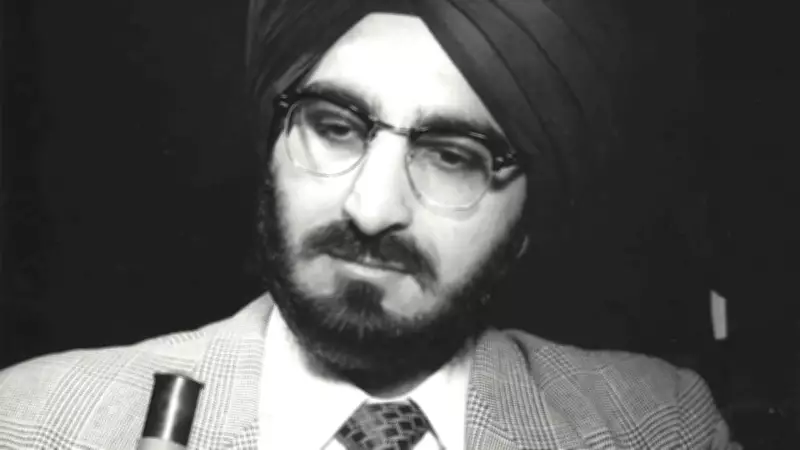
Most people learn about the creators of the internet and coding algorithms from school textbooks, but the name of the man who built the physical wires connecting the world remains largely unknown. His contributions gained recognition only after his death. Meet Narinder Singh Kapany, the father of fibre optics.
Early Life and Education
Narinder Singh Kapany was born on October 31, 1926, in Moga, Punjab, India. His father, Sundar Singh, served in the Royal Air Force fighting the Germans, while his mother, Kundan Kaur, was a Sodhi from near Moga. Kapany grew up in Dehradun and graduated from Agra University in 1948. As early as 1947, he challenged the conventional wisdom that light travels only in straight lines. In 1955, he earned his doctorate from Imperial College London, where he successfully demonstrated that light could be bent. This discovery revolutionized the world, laying the groundwork for the internet and global connectivity.
Invention of Fibre Optics
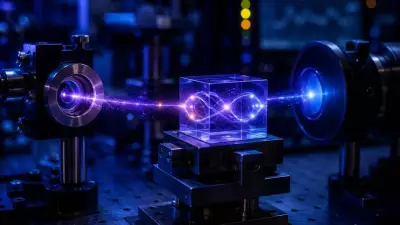
Kapany coined and popularized the term 'fibre optics.' He transmitted high-quality images through fibre bundles slightly thicker than a human hair and authored books on the subject. Today, fibre optic cables form the physical backbone of the internet, connecting continents via underwater networks and transferring vast amounts of data—all thanks to this Indian inventor.

Career and Entrepreneurship
After marrying Satinder Kaur, Kapany moved to the United States, working at the University of Rochester and later at the Illinois Institute of Technology in Chicago. In 1961, the couple settled in Woodside, California, where Kapany founded Optics Technology Inc., taking it public in 1967. This made him the first Sikh Indian to lead a company public in Silicon Valley. In 1973, he founded Kaptron Inc., later acquired by AMP Inc. In 1999, Fortune magazine named him one of seven “unsung heroes” in its “Businessmen of the Century” issue.
Patents and Academic Contributions
Kapany wrote four books on fibre optics and entrepreneurship. His pioneering research in fibre optics, lasers, and solar energy—with applications in biomedical instruments, defense, communications, and pollution monitoring—earned him over 100 patents. In 1979, he established the Center for Innovation and Entrepreneurial Development at the University of California, Santa Cruz, and later endowed a Chair in Opto-Electronics there. He served as a Regents Professor at UC Berkeley, a visiting scholar at Stanford University, and on the boards of UC Santa Cruz and Menlo School. A fellow of the British Royal Academy of Engineering, the Optical Society of America, and the American Association for the Advancement of Science, Kapany was a member of numerous scientific societies.
Champion of Sikh Culture
Beyond science, Kapany was deeply committed to promoting Sikh culture. In 1967, he founded the Sikh Foundation, which pioneered displays of Sikh art at the Victoria and Albert Museum in London, the Smithsonian Museum in Washington, DC, and the Rubin Museum in New York. In 1991, he established the Kundan Kaur Kapany Chair of Sikh & Punjabi Language Studies at UC Santa Barbara in honor of his mother. He also donated his extensive collection of Sikh books to the McHenry Library at UC Santa Cruz, along with a reading room, in memory of his father. Kapany spent his final years writing his memoir, The Man Who Bent Light, before peacefully passing away in Woodside, California on December 3, 2020. He was posthumously awarded India’s second-highest civilian honor, the Padma Vibhushan, in 2021. Today, he is remembered as the 'Father of Fibre Optics.'