

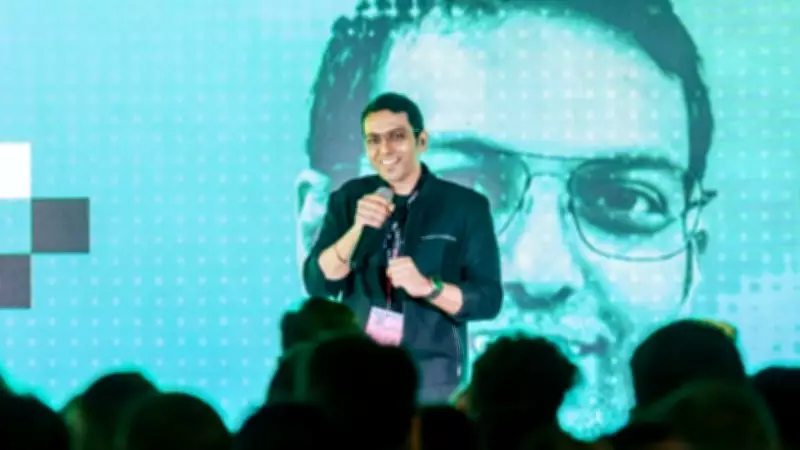
Myntra's Design Head Highlights Multidimensional Approach to E-commerce Design
During a thought-provoking session at the Ahmedabad Design Week, which commenced on Friday, Shayak Sen, the Head of Design at Myntra, articulated that contemporary design in the e-commerce realm transcends mere visual aesthetics. He emphasized that it now operates at a complex intersection of psychology, ethics, technology, and business strategy, reflecting a significant evolution in the profession.
The Evolution of Design with Technological Shifts
Sen traced the historical trajectory of design, noting its continuous adaptation to technological advancements. "When digital products began scaling, there was a demand for a new breed of designers who could master visual communication while effectively managing it with technology," he explained. He further highlighted that artificial intelligence is currently driving a similar transformative shift, leading to novel interactions and innovative approaches to form factors.
Sen cautioned against design stagnation, stating, "If you remain entrenched in one type of design for too long, it inevitably becomes compromised." He elaborated on how AI is making interfaces more fluid and adaptive, particularly crucial for a diverse country like India. "The interface will become virtualized based on the user group. The same UI cannot universally apply due to varying parameters such as typographic density, contrast, and color vibrancy, which differ significantly between aspirational and non-aspirational users," Sen detailed.

Ethical Responsibilities and Creative Processes in Design
Addressing the ethical dimensions of e-commerce design, Sen acknowledged the intensified challenges posed by AI-driven systems. "In an open market, achieving responsible design is inherently difficult," he admitted, while stressing that designers bear a moral responsibility despite commercial pressures. He referenced regulatory scrutiny of dark patterns, noting that designers can play a pivotal role in mitigating such practices through rigorous audits.
Sen discussed common e-commerce mechanisms like urgency cues, price anchoring, and stock notifications, asserting that they must be rooted in truthful information to avoid becoming dark patterns. "Creating false urgency constitutes a dark pattern, which we strictly avoid at Myntra," he affirmed. He also underscored the importance of behavioral psychology and personalization in crafting satisfying user experiences, revealing that "the entire UI and content are highly personalized."
Regarding creative processes, Sen warned against rigid frameworks that might stifle innovation. "Processes are merely instruments; there are no absolute truths, only local truths," he philosophized. He cited design thinking as an example, suggesting its utility fluctuates over time. Sen shared that breakthrough design ideas often emerge outside structured workflows: "The best insights come from immersing oneself in a problem for an extended period, believing there is a meaningful solution to uncover."
Advice for Aspiring Designers and Future Outlook
For students and newcomers to the field, Sen advised against merely chasing current trends, as they may already be peaking. Instead, he advocated for first-principle thinking, curiosity, and adaptability. He emphasized that designers must champion the user's perspective, stating, "Design is the sole function that can robustly own the user's point of view. You must persistently advocate for the customer's voice."
On the topic of AI tools, Sen reassured that technical proficiency is not the primary hurdle. "Learning tools is relatively easy; the real challenge lies in comprehending the vast possibilities and determining where to begin," he noted, addressing common concerns about being overwhelmed by technological advancements.
The Ahmedabad Design Week, hosted at Karnavati University from January 30 to February 1, serves as a platform for designers, industry leaders, and academics to explore the convergence of design and artificial intelligence across various sectors, fostering dialogue on these critical issues.






