

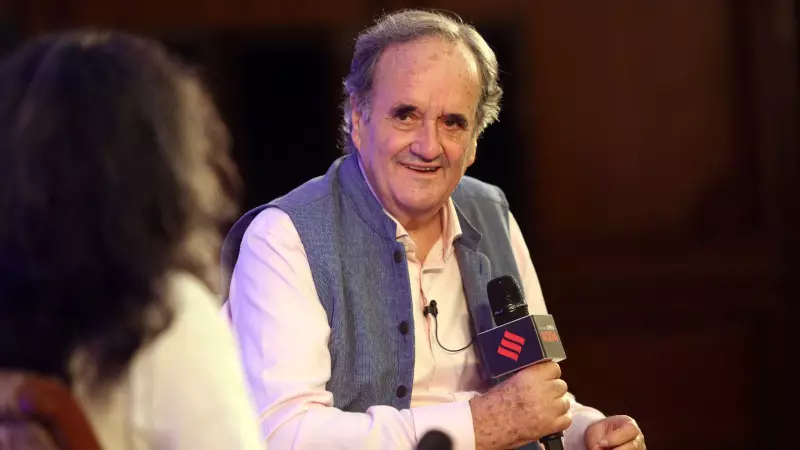
Mark Tully: The Gift to India That Defined an Era of Journalism
In the rich tapestry of journalism, few figures stand out as distinctly as Sir Mark Tully, whose contributions to India have left an indelible mark on the nation's historical narrative. As noted by Pratap Bhanu Mehta, Tully was not just a reporter; he was a unique voice that often served as the sole first draft of history during critical moments. Born in Calcutta and appointed BBC Bureau Chief in Delhi in 1972, Tully made India his lifelong home, immersing himself in its complexities and reporting on events that shaped modern South Asia.
A Witness to History: From Bangladesh to Babri Masjid
Sir Mark Tully's career spanned decades, covering consequential events that defined the region. He reported on the Bangladesh War, the Emergency, the Soviet occupation of Afghanistan, the Union Carbide catastrophe in Bhopal, Operation Blue Star, the Delhi riots, and the demolition of the Babri Masjid. His reporting was characterized by genteel insight, understated eloquence, moral toughness, wry humour, and a level of objectivity that few journalists could muster. This combination made his voice indispensable, especially in times when reliable information was scarce.
For many Indians, Tully's broadcasts became a trusted source during crises. Mehta recalls a personal memory from high school during the 1984 Delhi riots, when in towns like Jaipur, there was no reliable news. Horrible snippets about the targeting of Sikhs after Indira Gandhi's assassination trickled in, but it was only Sir Mark's voice each evening, speaking with controlled despair, that provided a coherent picture. His soft, rhythmic delivery paradoxically made the horror more vivid, cementing his role as the voice of Indian history as it unfolded.

The Institutional Context: Why the BBC and Tully Mattered
Beyond his personal qualities, the institutional and political context made Tully indispensable. The foreign press, particularly the BBC, held outsized importance in India due to censorship and constraints on local media. The BBC effectively served as a local radio station, filling a void in reliable reporting. As a genuinely great institution at the time, it commanded authority through journalists like Mark Tully, who maintained trust even when disagreements arose over specific judgments.
In a 2004 radio interview on secularism, Tully emphasized a core principle of journalism: asking, "Why should anyone trust you over the long run?" He believed that keeping this question in mind disciplined reporting, warning that trust, once corroded by popularity, money, or proximity to power, could never be regained. Later, he became a vocal critic of the BBC's decline, accusing it of Stalinism in editorial decisions and crass commercialism.
Sociological Prescience and Enduring Principles
Tully's reporting was not just about events; it was grounded in sociological prescience. He sensed that India's cultural politics were on the cusp of transformation, driven by a deep cultural stirring for authenticity that elites often ignored. This theme, explored in works like No Full Stops in India, showcased his ability to look beyond surface-level issues.
His career was marked by resilience, as he was targeted by every political dispensation—expelled during the Emergency and chased by mobs during the Ayodhya violence. Yet, he never succumbed to temptations that ensnare many journalists. Tully understood India's challenges deeply without a trace of misanthropy, avoiding crusades for favored causes and never confusing neutrality with objectivity.
A Sense of Fate and Gratitude
Mark Tully often spoke of a sense of fate in his connection to India, viewing the world as a gift despite its problems. Deeply Anglican, he suggested Christianity could benefit from less emphasis on original sin and more on fate—not as passive acceptance, but as recognition of life's giftedness. For him, India and the task of reporting on it were gifts he embraced wholeheartedly.

In summary, Sir Mark Tully's legacy is one of unparalleled journalism, where his voice became the first draft of history for India. Through decades of reporting, he built trust, provided clarity in chaos, and left a lasting impact on how we understand the nation's past. His principles and insights continue to resonate, reminding us of the power of truthful, disciplined journalism in shaping historical narratives.





