

The Rise of India's AI-Generated Content Phenomenon
In the vibrant landscape of Indian digital content, an unexpected superhero has emerged from the realms of artificial intelligence. The Marvel character Hulk, created by Stan Lee and Jack Kirby in 1962, has undergone a remarkable transformation in India's AI-generated content ecosystem. Reimagined as "Hulku," "Hulkeshwar," and "Hulkanand," this character appears in thousands of user-generated videos, typically depicted as a villager navigating everyday Indian life.
The Hulku Phenomenon: Cultural Reinterpretation Through AI
These AI-generated narratives present the Hulk figure in distinctly Indian contexts. He is often portrayed being ordered around by frail grandmothers, performing household chores, facing teasing from village bullies, receiving scoldings from elders, and fielding questions about why he remains unmarried. One particularly telling video shows the character being thrown out of a shopping mall for being poorly dressed, revealing the social anxieties and aspirations that resonate with many Indians.
The popularity of this genre has spawned numerous YouTube tutorials teaching creators how to make Hulk videos in three simple steps. These tutorials often include ready-made story-writing prompts that can be fed into ChatGPT to generate scripts, democratizing content creation in unprecedented ways.

Bandar Apna Dost: India's Global AI Success Story
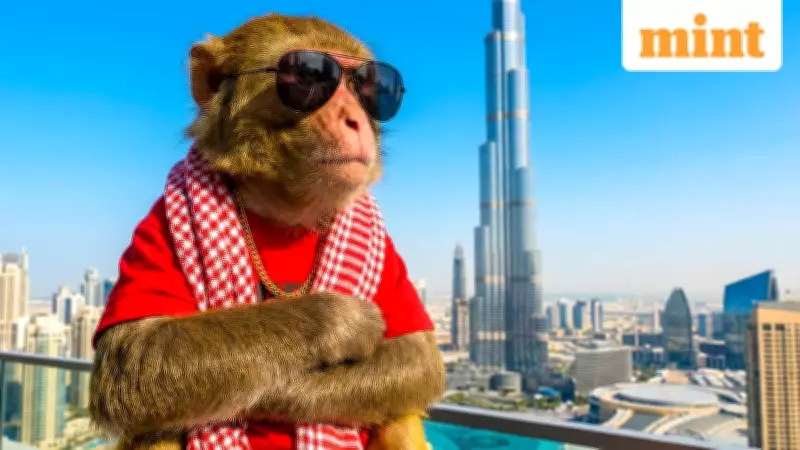
While the Hulk variations enjoy widespread popularity, India's most successful AI channel globally is Bandar Apna Dost. This YouTube channel gained international recognition in November 2025 when a comprehensive global report identified it as the world's most-viewed "AI slop" channel on YouTube, boasting 2.07 billion views at the time (now grown to 2.65 billion).
The channel's main character, an anthropomorphized monkey named Boltu, shares many characteristics with the Hulk variations but has carved its own niche in the crowded AI content space. According to Kapwing's "AI Slop Report," Bandar Apna Dost generated an estimated $4.25 million in revenue, making it the highest-earning channel in this category worldwide.
The Creator Behind the Success
Surajit Karmakar, the 23-year-old creator from Bongaon, Assam, maintains discretion about his exact earnings but acknowledges doing "very well" financially. His journey began with technical videos in 2014, evolved through comedy content on Besharam Boyz (which reached 1.5 million subscribers), and found its ultimate expression in AI-generated animal videos using Google's Veo 3 in 2024.
"Initially, I uploaded 20-25 bandar videos a day," Karmakar reveals. "I thought it was great that I could work totally on my own. I didn't need a team, a cameraman, actors—this was just me." Within a month, he reached 100,000 subscribers and began monetizing his content. Today, he spends 6-7 hours creating each video and maintains a disciplined schedule of one daily upload across YouTube and Instagram.
The Expanding AI Content Ecosystem
India's AI content landscape has evolved into a sophisticated ecosystem encompassing:
- Content Creators: Like Prajwal Rai from Bengaluru, who transitioned from traditional video editing to creating AI-generated content for special occasions, charging approximately ₹1 lakh per video
- Platforms: Indian AI video-generation tools like Invideo and Phenomenal AI competing with global players
- Content Coaches: Educators like Tanishaa Bhansali, who has trained over 40,000 people in AI video creation through her Instagram channel with 318,000 followers
The Platform Paradox: Encouragement vs. Restriction
A significant tension exists at the heart of major platforms like YouTube and Instagram. While they aggressively promote AI tools—Instagram with generative AI stickers and backgrounds, YouTube with Dream Screen and auto-dubbing features—they simultaneously tighten monetization policies for AI-generated content.

In July 2025, YouTube updated its monetization policy, renaming the "repetitious content" guideline to "inauthentic content" policy. The platform now requires videos to be original, high-value, and not easily replicated at scale to qualify for the YouTube Partner Program, creating uncertainty about what constitutes "high quality" in this new content paradigm.
Cultural Significance and Future Trajectory
Dipankar Mukherjee of Mumbai-based StudioBlo offers a nuanced perspective: "AI slop can be broadly broken down into two categories—one is senseless, mindless automation at scale, which will die its natural death... The other is content made with humour and intent, which eventually will get more sophisticated."
As Instagram head Adam Mosseri noted recently, there's growing emphasis on "rawness" and "authenticity" in content. "In a world where everything can be perfected, imperfection becomes a signal," he observed, suggesting a shift toward more genuine-seeming content even as AI capabilities advance.
The Indian AI content revolution represents more than just viral videos—it's a cultural phenomenon that gives voice to creators who previously lacked production resources. As tools improve and platforms refine their policies, this space will continue evolving, potentially reshaping how India consumes and creates digital entertainment in the years ahead.





