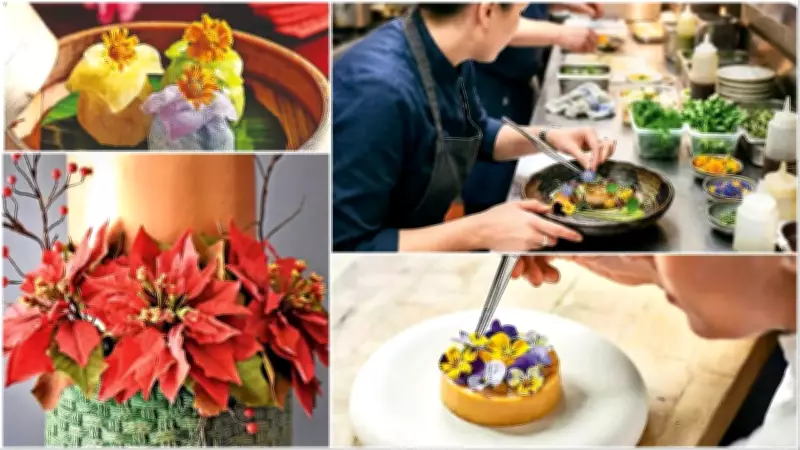
From cocktail glasses to couture cakes, edible flowers have evolved from a simple garnish into a thoughtful ingredient. Today, flowers are valued as much for the stories they tell as for their flavour. As their popularity grows, so do discussions around safety, authenticity, and personal preference.
Edible flowers are not just a pretty garnish
Chef Harsh Shodhan, Founder of The Gourmet Kitchen and Studio, sees edible flowers as an extension of his culinary language. “For me, presentation is an integral part of the dining experience. One of my signature ways to elevate a dish is through edible flowers. They lend sophistication to appetisers, soften monochromatic plates, and introduce a burst of colour to desserts.”
Dishes being decorated with edible flowers Chef Raymond Wong, who recently worked on the bloom menu at Hakkasan, adds, “Traditionally, flowers were used as a garnish. But growing exposure to global cuisines has encouraged diners to explore floral flavours. Edible flowers add a delicate sweetness and fragrance to a dish, making them a key ingredient rather than a decorative addition.”

‘Not everything that looks beautiful is safe’
Cake artist and educator Megha Kwatra Madan chooses not to use real flowers at all. She says, “Not everything that looks beautiful is safe. There are concerns around pesticide exposure, allergies, and sensitivities. I’ve moved away from real florals and instead create edible sugar or wafer-paper flowers that look realistic. This gives me complete control over safety and design.”
‘I can’t imagine eating the flower’
However, not all diners are convinced by its appeal. Aditi Niphadkar, a marketing professional says, “I’m not a fan of edible flowers. Although they’re visually appealing, my brain is trained to remove them from a dish. I can’t imagine eating the flower itself.”
‘They help create a sensory memory’
For mixologists, flowers can influence both flavour and perception. Yeti mixologist, Deepankar Sardana says, “I strongly believe in experimenting with natural resources—flowers, fruits, herbs, and botanicals—because they offer texture and aroma while aligning with the growing trend toward mindful consumption. Edible flowers introduce natural colour, complex aromas, and a distinct palate. Flowers like Rose, Hibiscus, Elderflower, Butterfly Pea, and Lavender contribute deep hues and essential oils that define a drink’s aromatic profile. They also help tell a story or create a sensory memory.”