

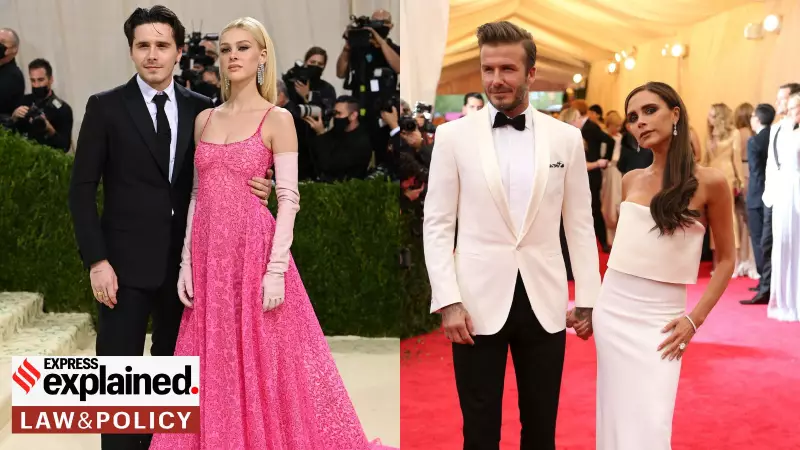
Beckham Family Trademark Dispute: Brooklyn's Battle Over His Own Name
In the world of celebrity, a name often transcends personal identity to become a valuable commercial asset. This reality has sparked a public dispute within the Beckham family, as Brooklyn Beckham, the 26-year-old son of football icon David Beckham and fashion designer Victoria Beckham, has raised concerns about the trademark rights to his own name. The issue underscores a broader tension in celebrity families, where personal boundaries frequently collide with commercial interests.
The Core of the Conflict: Trademark Pressure and Family Dynamics
Brooklyn Beckham recently took to social media to allege that his parents pressured him to sign away rights to his name ahead of his 2022 wedding. He claimed that this pressure affected his financial opportunities and altered his treatment within the family. This revelation has drawn attention to how celebrity names are managed as brands from an early age, with trademarks often registered by parents to protect and monetize their children's identities.
Public records from the UK Intellectual Property Office show that the trademark "BROOKLYN BECKHAM" was registered in December 2016, when Brooklyn was just 16 years old. The proprietor is listed as Victoria Beckham, acting as parent and guardian. This registration covers a wide array of domains, including:

- Clothing and accessories
- Cosmetics and beauty products
- Printed materials and entertainment services
Similar trademarks exist for his siblings—Romeo, Cruz, and Harper—highlighting how the Beckham surname has been systematically developed into a brand architecture.
Legal Complexities: When a Name Becomes a Business Asset
Under UK trademark law, ownership does not automatically revert to an individual upon reaching adulthood. Instead, registrations remain with the listed proprietor unless formally transferred. This legal framework means that Brooklyn, as an adult, must navigate complex negotiations to reclaim control over his name. The law does provide a defence for individuals to use their own names in business, but it is limited to honest use that does not confuse consumers or exploit an existing brand's reputation.
In families like the Beckhams, where the surname anchors a vast commercial empire—including fashion labels, endorsements, and media ventures—this defence becomes a tightrope walk. Independence for adult children often requires renegotiating around a name that has already been packaged and monetized by others.
Broader Implications for Celebrity Families and Brand Management
For decades, David and Victoria Beckham have cultivated a tightly managed public image, centralizing control through endorsements, licensing deals, and in-house productions. Brooklyn's public break from this narrative disrupts the family's brand coherence, revealing familiar struggles in celebrity households. His attempts to establish an independent identity through photography, food ventures, and fashion have been consistently measured against the gravitational pull of the Beckham name.
If such disputes escalate to court, judges typically focus on legal documents—trademark registrations, contracts, and evidence of commercial use—rather than familial emotions. However, most conflicts are resolved through renegotiations, coexistence agreements, or limited licences to avoid litigation that could damage both relationships and the brand itself.
Adding to the intrigue, the "BROOKLYN BECKHAM" trademark is due for renewal later this year. This timing places the dispute in an awkward space between family disagreement and strategic brand management, as renewal would preserve existing ownership, while lapse could publicly reopen questions of control.
This case serves as a poignant reminder of the challenges faced by celebrity offspring in balancing personal autonomy with commercial legacies, where a name is not just an identity but a contested asset in the global marketplace.






