Coco Gauff's Private Outburst Sparks Major Privacy Debate at Australian Open
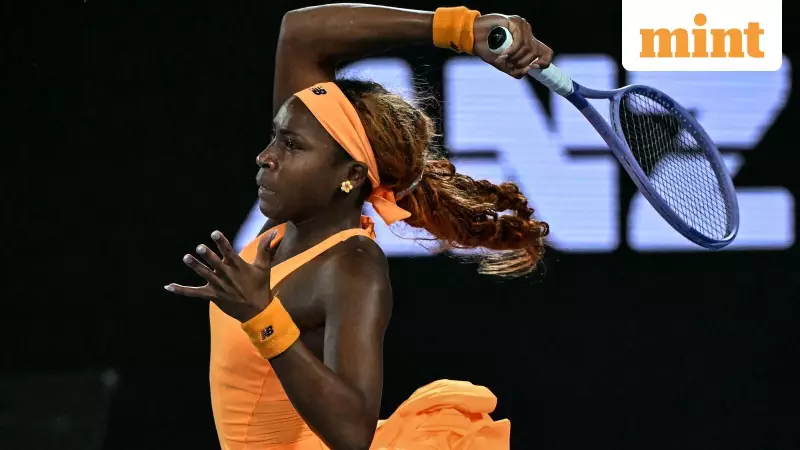
American tennis sensation Coco Gauff has inadvertently ignited a significant controversy surrounding player privacy at the Australian Open after television cameras captured her smashing a racquet in a restricted corridor following a stunning quarter-final defeat. This incident could potentially leave the world No.3 facing a substantial fine of up to $50,000, while simultaneously raising critical questions about broadcast boundaries in professional tennis.
Frustration Boils Over After Shock Defeat
The 20-year-old star's frustration visibly spilled over after her unexpected straight-sets loss to Elina Svitolina, who dismantled Gauff 6-1, 6-2 on Tuesday night in what has been described as one of the tournament's most surprising results. While Gauff maintained remarkable composure on the court during the match, her emotions surfaced dramatically once she believed she was out of public view.
Broadcast footage revealed Gauff repeatedly smashing her racquet on the ground in a backstage corridor specifically reserved for players and tournament officials. The American athlete appeared to walk behind a wall in a deliberate attempt to shield this private moment from cameras, only for the broadcast team to continue filming and transmit these images to a global audience of millions.

Precedent and Potential Penalties
This incident immediately drew comparisons with Aryna Sabalenka's similar racquet-smashing outburst following her defeat in the 2023 US Open final, which also occurred away from the main court but was widely broadcast to viewers worldwide. Despite occurring behind the scenes, Gauff's actions technically fall within the Australian Open precinct, leaving her exposed to potential disciplinary action under Grand Slam regulations.
Under strict Grand Slam rules, players are explicitly prohibited from abusing equipment anywhere on tournament grounds. The regulations clearly state: "Players shall not violently, dangerously or with anger hit, kick or throw a racquet or other equipment within the precincts of the tournament site." The maximum penalty for such racquet abuse violations is $50,000, and while it's considered unlikely Gauff will receive the harshest possible fine, precedent suggests a significant sanction remains distinctly possible.
Sabalenka was reportedly fined $20,000 after smashing her racquet on court following last year's Australian Open final, placing Gauff's potential punishment in similar financial territory. This precedent establishes that tournament officials take such violations seriously regardless of where they occur within the tournament complex.
Gauff Calls for Broadcast Boundaries Review
Beyond the potential financial penalty, Gauff used her post-match press conference to question the extent of broadcast access at the Australian Open, arguing passionately that players should be afforded greater privacy during emotionally charged moments away from competitive play.
"I tried to go somewhere where there was no cameras," Gauff explained. "I kind of have a thing with the broadcast. I feel like certain moments … I feel like they don't need to broadcast. I don't necessarily like breaking racquets. Round of 16 of French Open, I think, I said I would never do it again on court because I don't feel like that's a good representation."
The young star continued: "I tried to go somewhere where they wouldn't broadcast it, but obviously they did. Maybe some conversations can be had because I feel like at this tournament, the only private place we have is the locker room."
Comprehensive Coverage Versus Player Privacy
The Australian Open is widely regarded as offering some of the most comprehensive behind-the-scenes coverage in global sports, with cameras strategically positioned throughout Melbourne Park to capture player movements, reactions, and interactions. This extensive coverage has been praised for bringing fans closer to the action but now faces scrutiny regarding where appropriate boundaries should be drawn.

Gauff's incident highlights the tension between providing immersive viewing experiences for global audiences and respecting athletes' need for private moments during high-pressure tournaments. As players compete at the highest level with immense emotional investment, the question of where broadcast access should end and personal privacy should begin has become increasingly relevant in modern sports broadcasting.
This controversy emerges at a time when sports organizations worldwide are grappling with balancing transparency and entertainment value against athletes' mental well-being and right to personal space during vulnerable moments. The outcome of Gauff's potential fine and any subsequent discussions about broadcast policies could set important precedents for future tournaments across the tennis calendar.