Novak Djokovic's Australian Open Victory Echoes Richard Feynman's Unconventional Genius
Richard Feynman's autobiography Surely You're Joking, Mr Feynman stands as one of the most humorous reads in physics, far surpassing the dry textbooks engineering students endure. The title originates from a Princeton incident where the Dean's wife, offering tea, asked Feynman if he wanted lemon or cream. Unfamiliar with British etiquette or perhaps subtly alluding to quantum duality, he replied "Both," prompting her retort: "Surely, you are joking, Mr Feynman," since mixing lemon and cream causes curdling. This moment of defying convention resonates strikingly with Novak Djokovic's recent performance at the Australian Open, where he seemingly joked with reality, biomechanics, and time itself.
Defying Age and Expectations in a Marathon Match
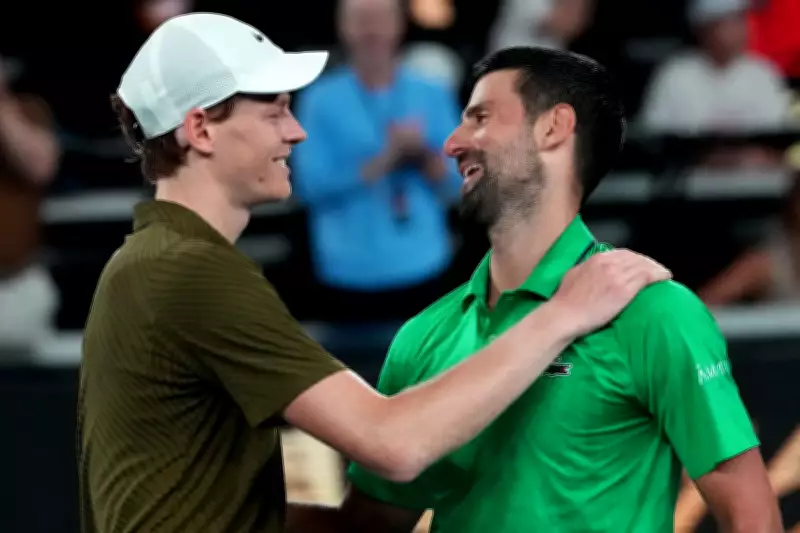
At an age where most people struggle to watch nine hours of tennis without back spasms, Djokovic battled Jannik Sinner, a player 14 years his junior. When Djokovic turned professional, Sinner wasn't even two years old, and his potential final opponent, Carlos Alcaraz, hadn't been born. Yet, in Melbourne, after four hours and nine minutes of grueling play, Djokovic emerged victorious at Rod Laver Arena, overcoming a two-set deficit. He broke a five-match losing streak against Sinner, saving 16 out of 18 break points, including eight across two critical service games.
The GOAT Debate and Djokovic's Persistent Questioning
The term GOAT is often used loosely, but no athlete has faced as much scrutiny as Novak Djokovic. For instance, a Guardian article questioned his greatness by imagining a hypothetical 10-foot-tall player with 30 Grand Slams, arguing greatness requires context. Djokovic seems to exist under a permanent asterisk, as highlighted when asked about "chasing" Sinner and Alcaraz after years of chasing Rafael Nadal and Roger Federer. A frustrated Djokovic responded, "I'm chasing Jannik and Carlos? In which sense? So I'm always the chaser, and I'm never being chased?" He pointed to his 15-year period of Grand Slam dominance.

Statistics and Stripped Opportunities
Between 2015 and 2023, Djokovic won 24 out of 61 Slams he was eligible to play, a remarkable feat considering Wimbledon 2020 was canceled due to Covid and he was barred from the 2022 US Open and Australian Open for refusing the vaccine. This denial of opportunity in his prime parallels Muhammad Ali's boxing ban for refusing the Vietnam draft. While distancing himself from anti-vax movements, Djokovic defended his decision, stating, "The principles of decision making on my body are more important than any title or anything else."
Rewriting Tennis Hierarchy Across Generations
Djokovic has beaten Federer 27 times and Nadal 30 times, an impressive record for someone accused of merely chasing them. His rise was arduous, including training in a disused swimming pool, and he emerged during an era dominated by two seemingly unbeatable players. Yet, he frequently defeated both, reshaping tennis hierarchy. For much of the 2026 Australian Open, a Sinner-Alcaraz final seemed inevitable, but Djokovic, carrying doubt and a creaking body, defied expectations. He acknowledged luck with two byes but showcased resilience against Sinner, who hit 72 winners and 26 aces.
Stubbornness Elevated to Art and Future Implications
Facing a player many call a younger version of himself, Djokovic played the underdog, responding with stubbornness elevated to art. He refused to be bullied, standing firm at the baseline. A victory in the final would give him 25 Grand Slam singles titles, surpassing Margaret Court and extending his lead over Nadal's 22. However, numbers alone fail to capture Djokovic's essence; they merely outline his achievements. As Mick Jagger sang in Sympathy for the Devil, Djokovic continues to introduce us to human spirit and resilience, defying retirement expectations.

Bridging Eras and Defying Physics
Djokovic uniquely succeeded across generational shifts, ending the Federer-Nadal duopoly and now holding off Sinner and Alcaraz. Most athletes excel in one era, but he bridged two. Eventually, physics may prevail, but for now, like Arya Stark's defiance, not today. The final showdown will determine history: Alcaraz could become the youngest man to complete a Career Grand Slam, or Djokovic could win his 25th major at 38. Surely, you are (d)joking, Mr Novak? Yet, Djokovic jokes about everything except winning, where he remains deadly serious.
Perhaps the Dean's wife was correct: lemon and cream don't mix, age and dominance shouldn't blend, and physics should curdle ambition. But Novak Djokovic continues to pour both into the same cup, challenging the universe and inspiring awe with his relentless pursuit of greatness.