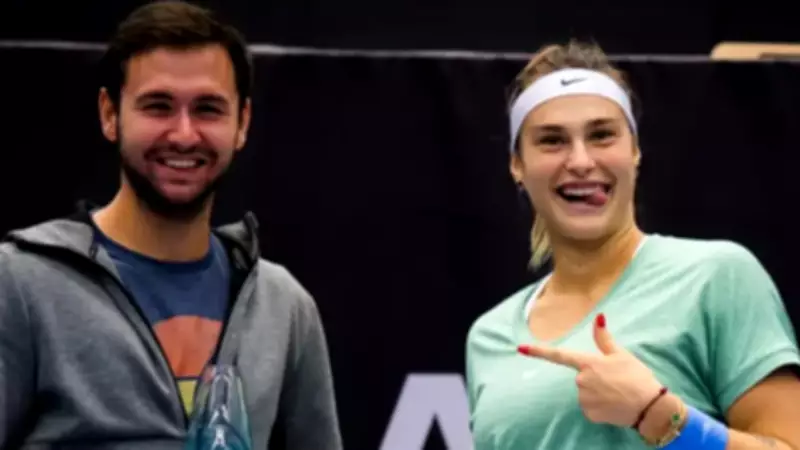
The Quiet Architect: Anton Dubrov's Role in Aryna Sabalenka's Tennis Dominance
In the captivating narrative of contemporary tennis, few tales have captured global attention like the remarkable ascent of Aryna Sabalenka to the pinnacle of the women's game. The Belarusian powerhouse has matured into one of the most intimidating competitors on the professional tour, showcasing an extraordinary blend of raw explosive power, unwavering determination, and fierce competitiveness. Yet, behind this spectacular evolution stands a coach who, while often operating away from the limelight, has been instrumental in sculpting her triumphs: Anton Dubrov.
From Hitting Partner to Head Coach: An Unconventional Journey
The path that brought Anton Dubrov into Aryna Sabalenka's career is notably unconventional. Dubrov, a former professional tennis player from Belarus, initially joined Sabalenka's team as a hitting partner before gradually ascending to the role of head coach. Their professional partnership commenced in 2020, during a period when Sabalenka was already recognized for her formidable game but struggled with inconsistencies and emotional volatility on court.
Despite initial skepticism from external observers, the duo cultivated a robust working relationship founded on mutual trust and shared objectives. Dubrov placed significant emphasis on refining Sabalenka's decision-making processes, enhancing her court movement, and developing strategies to manage pressure during high-stakes matches. The most challenging phase emerged in 2022, when Sabalenka confronted severe serving issues that jeopardized her career trajectory. Dubrov's steadfast presence and subtle technical adjustments proved crucial in restoring her confidence and technical proficiency.

Forging a Grand Slam Champion: The Dubrov Methodology
The profound impact of Anton Dubrov's coaching philosophy became unmistakably evident at the Australian Open 2023, where Aryna Sabalenka clinched her maiden Grand Slam singles title. This landmark victory illustrated her newfound ability to harmonize aggressive power with composed execution on tennis's grandest stages. She subsequently secured a second Australian Open crown and added US Open trophies to her collection, firmly establishing herself among the sport's elite champions.
Central to Dubrov's approach is the seamless integration of mental preparation with physical training. He encourages Sabalenka to maintain her characteristic aggressive style while simultaneously exercising emotional control—a delicate equilibrium that enables her to outmaneuver opponents without succumbing to pressure during critical moments. Their collaboration transcends traditional hierarchical structures, operating instead as a partnership built on continuous communication and profound mutual understanding.
While Sabalenka accumulates trophies and occupies the world number one ranking, Dubrov continues his dedicated work behind the scenes. Their journey exemplifies a shared commitment to long-term development, recognizing that sustainable success in professional tennis requires patience, perseverance, and strategic evolution rather than seeking immediate, short-term gains.