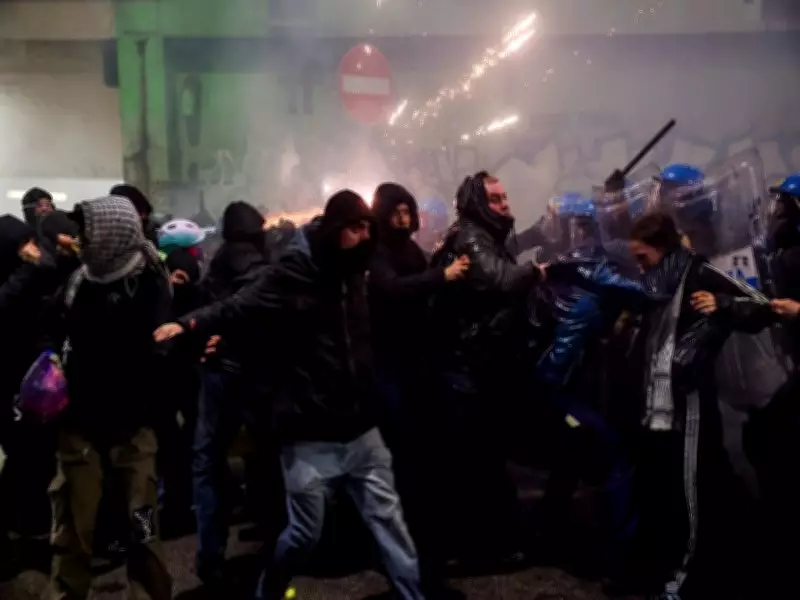
Violence Erupts at Anti-Olympics Protest in Milan as Italy Investigates Railway Sabotage
A demonstration opposing the upcoming 2026 Winter Olympics in Milan escalated into violent clashes between protesters and law enforcement authorities, resulting in injuries and property damage. The unrest occurred as Italian officials launched a probe into suspected acts of railway sabotage, which are believed to be connected to the broader anti-Olympics movement in the region.
Protest Turns Chaotic in Milan Streets
Hundreds of activists gathered in Milan to voice their dissent against the hosting of the 2026 Winter Olympics, citing concerns over environmental impact, financial burdens, and social displacement. The protest, initially peaceful, quickly spiraled into chaos when a faction of demonstrators began engaging in aggressive tactics. Police responded with force, leading to intense confrontations that left several individuals injured and caused significant disruption in the city center.
Eyewitnesses reported scenes of chaos, with protesters throwing projectiles and setting off fireworks, while authorities deployed tear gas and water cannons to disperse the crowds. The violence has sparked widespread condemnation from local officials and Olympic organizers, who are now reassessing security measures for future events related to the games.

Italy Probes Suspected Railway Sabotage Incident
In a related development, Italian authorities have initiated an investigation into a suspected act of railway sabotage that occurred in the vicinity of Milan. Preliminary findings suggest that unknown individuals tampered with railway infrastructure, potentially to disrupt transportation and amplify the impact of the anti-Olympics protests. This incident has raised alarm bells about the potential for coordinated efforts to undermine the Olympics through acts of civil disobedience and sabotage.
The probe is focusing on forensic evidence and surveillance footage to identify those responsible. Officials have not ruled out the possibility of links to extremist groups or organized movements opposed to the Olympics. The sabotage attempt has prompted calls for enhanced security protocols around critical infrastructure, especially as Italy prepares to host the international sporting event in less than two years.
Implications for the 2026 Winter Olympics
The violent protest and sabotage investigation have cast a shadow over the preparations for the 2026 Winter Olympics, which are set to be held in Milan and Cortina d'Ampezzo. Organizers are now facing increased pressure to address the grievances of protesters while ensuring the safety and smooth execution of the games. Key concerns include:
- Security Enhancements: Implementing stricter security measures at Olympic venues and transportation hubs to prevent further incidents.
- Community Engagement: Initiating dialogues with local communities to address environmental and social issues raised by opponents.
- Infrastructure Protection: Bolstering defenses against potential sabotage attempts on railways and other critical facilities.
Despite the unrest, Italian officials remain committed to hosting a successful Olympics, emphasizing the economic and cultural benefits for the region. However, the recent events underscore the challenges of balancing public sentiment with the demands of organizing a global sporting spectacle.
Global Reactions and Future Outlook
International observers have expressed concern over the violence and sabotage, highlighting the need for peaceful protest and robust security planning. The incident in Milan is part of a broader trend of opposition to mega-events like the Olympics, where host cities often grapple with public dissent over costs and disruptions.
As the investigation into the railway sabotage continues, Italian authorities are expected to ramp up surveillance and counter-terrorism efforts. The outcome of this probe could influence security strategies for other countries hosting similar events in the future. For now, all eyes are on Milan as it navigates these turbulent times ahead of the 2026 Winter Olympics.