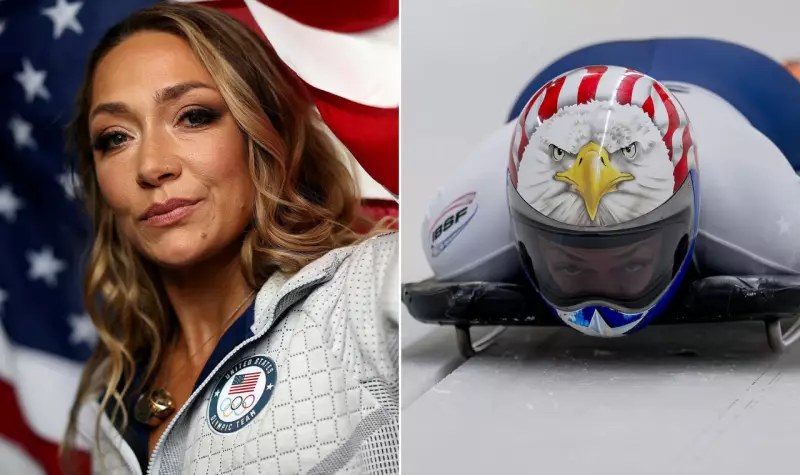
Katie Uhlaender's Sixth Olympic Dream Ends as IOC Rejects Wild Card Appeal
The International Olympic Committee has delivered a decisive blow to American skeleton racer Katie Uhlaender's aspirations, formally rejecting a special request that could have kept her in contention for the upcoming Milan Winter Olympics. This ruling effectively closes the door on what many anticipated would be the final Olympic chapter of her distinguished two-decade career.
Controversial Qualification Outcome in Lake Placid
Uhlaender's Olympic hopes hinged on securing full qualification points during the North American Cup race held in Lake Placid. Despite achieving victory on the track, she fell eighteen points short of the Olympic cutoff mark. This mathematical ineligibility stemmed from a controversial rule application triggered when late withdrawals by Team Canada reduced the race field to just nineteen athletes.
Under existing International Bobsleigh and Skeleton Federation regulations, this reduction in participants activated a twenty-five percent points penalty. The situation grew more contentious due to accusations from Uhlaender, who claimed the Canadian withdrawals were tactical maneuvers designed to protect team standings. Canadian officials firmly denied any wrongdoing, and a subsequent federation investigation concluded no rules had been violated, thereby upholding the points reduction.

Formal Appeal and IOC's Final Decision
In response to this outcome, the U.S. Olympic and Paralympic Committee intervened on Uhlaender's behalf. The USOPC submitted a formal appeal to the IOC, requesting a wild card entry for the veteran athlete. Officials argued that excluding Uhlaender, whom they described as one of the world's top skeleton racers, would diminish the overall quality and competitive integrity of the Olympic field.
After thorough review, the International Olympic Committee declined to make an exception. In their decision, the IOC emphasized that altering established qualification rules would undermine fair competition standards and set a problematic precedent for future Olympic cycles. This marks a significant setback for Uhlaender, who at forty-one years old has represented the United States at five consecutive Winter Games since her debut in 2006.
Career Crossroads and Legal Challenge
This competitive season was widely regarded as Uhlaender's last realistic opportunity to compete on the Olympic stage. After failing to secure a spot on the U.S. World Cup team earlier in the year, she was compelled to pursue qualification points in lower-tier events, with Lake Placid representing her final chance.
Uhlaender has not accepted the IOC's decision passively. She has announced plans to challenge the ruling through the Court of Arbitration for Sport. Her legal argument will cite concerns over fairness and the potential reputational harm to the sport stemming from the circumstances that ended her Olympic dream. Until this legal matter is resolved, a sixth Olympic appearance remains unattainable, transforming what was meant to be a celebratory final season into one of the most hotly debated controversies of the current Olympic qualification cycle.
The athlete now faces a critical juncture in her career, contemplating her next moves while the sporting world reflects on the complex intersection of rules, competition, and athletic legacy.