Indian sport climbers are confronting a steep financial challenge as they attempt to scale the heights of international competition, with the absence of a recognized government body creating significant obstacles for athletes aspiring to reach Olympic levels.
The Reality of International Competition
Kehihyulo Khing, a professional climber from Nagaland with eleven years of experience, recently faced the harsh reality of India's climbing ecosystem. When presented with an opportunity to compete internationally, he discovered he would need to fund his entire trip personally - covering flights, accommodation, and food expenses from his own pocket. Even more startling was the instruction to create his own competition t-shirt and attach the logo of an unofficial governing body.
Khing, who now coaches children in and around New Delhi, represents the growing number of athletes caught between Olympic dreams and financial limitations. The sport's inclusion in the Olympic movement has not translated into adequate support systems for Indian competitors.

Grassroots Challenges and Equipment Costs
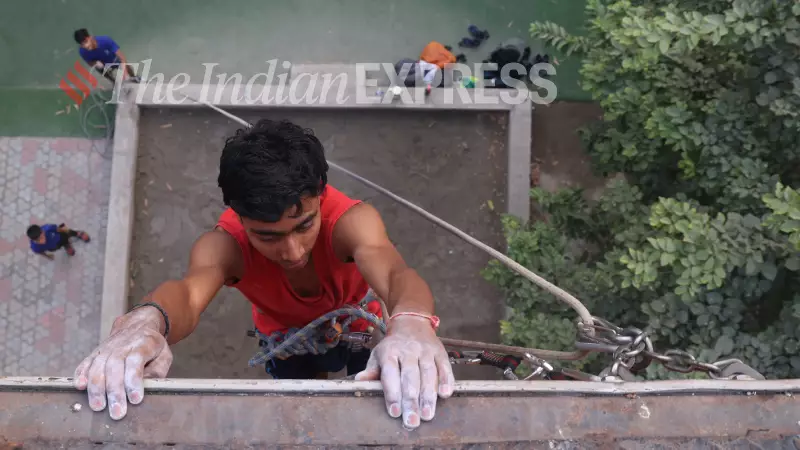
At Delhi's Salwan Boys' Senior Secondary School, a climbing wall constructed in 2006 serves as a crucial training ground for underprivileged children from Rajinder Nagar. Coach Nandkishore manages a team of fifteen young climbers, providing free training through the school's trust-funded infrastructure.
However, the daily operational costs present constant challenges. Climbing boots alone cost between ₹6,000 and ₹12,000, requiring replacement every few months due to wear and tear. Additional expenses include intercity travel to access better training facilities at the Indian Mountaineering Foundation's Dhaula Kuan campus and competition-related travel costs that often fall on the coach himself.
Nandkishore highlights the story of twelve-year-old Kunal Singh, who lost both his father and uncle in recent years. Kunal's father, who drove a water transport tempo, passed away from a heart attack in January last year, leaving the family with minimal financial support. The climbing program remains Kunal's only avenue for continued training, as his single mother cannot afford equipment costs.
Limited Career Pathways and Financial Strain
The employment landscape for professional climbers remains severely restricted. Sachin Saroj, a former student of Nandkishore who aspires to full-time climbing, works five hours daily as an instructor at Boulder Box climbing gym in Delhi. While this arrangement allows him to continue training, the income falls far short of what's needed for elite athletic development.
Professional training requires an annual budget of ₹20-24 lakhs, according to Sachin's estimate. Currently, government job opportunities through sports quotas are limited primarily to the Madras Regiment, with recent inclusion in Air Force sports quotas providing some optimism.
Most climbers come from humble backgrounds and find themselves choosing between military service or climbing gym employment. As Khing notes, this lifestyle becomes increasingly difficult to maintain over time, despite the passion for the sport.
The combination of high equipment costs, limited competition funding, and restricted career pathways creates a perfect storm that Indian sport climbers must navigate on their journey toward Olympic qualification, making their athletic achievements even more remarkable given the circumstances.