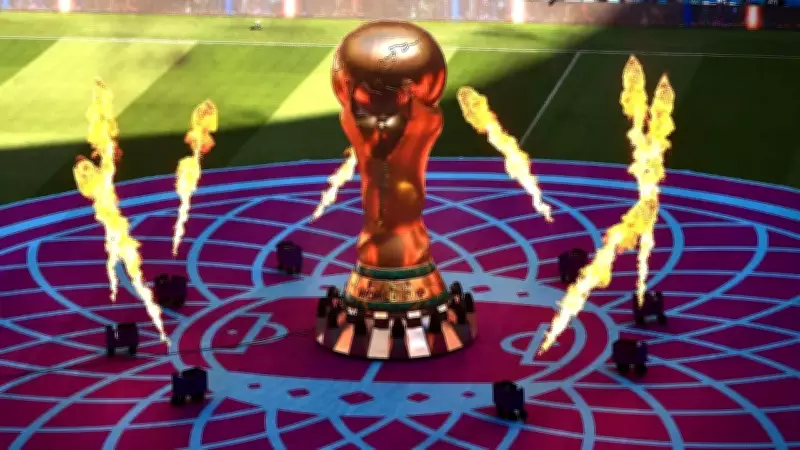
The 2026 FIFA World Cup officially kicks off on June 11 with the first of three opening ceremonies spread across Mexico City, Toronto, and Los Angeles. For the first time in the tournament's history, three separate host nations will each stage their own cultural showcase before their opening matches. FIFA has brought in veteran Olympic ceremony director Marco Balich to tie all three events together under a single unifying theme: football as a force that bridges nations.
Duration Comparison: World Cup Opening Ceremony vs. Super Bowl Halftime Show
These two events are not as comparable as they might seem. The Super Bowl halftime show is a tightly engineered entertainment window built into a live broadcast, typically running 12 to 15 minutes for the performance itself, with the full break stretching to around 25 to 30 minutes once you factor in stage setup and network transitions.
The World Cup opening ceremony works differently. It is a standalone pre-match spectacle with no in-game timing pressure. According to The Athletic, Mexico City's ceremony is scheduled to run approximately 16 minutes and 30 seconds, while the Toronto and Los Angeles shows are each set for around 13 minutes. All three begin 90 minutes before the respective opening match, with matchday protocols -- player walkouts and official introductions -- starting 25 minutes before kickoff and lasting another 13 minutes.

Production Costs: World Cup vs. Super Bowl
The Super Bowl halftime show holds the edge in both budget and logistical scale. Production costs have historically exceeded $10 to $15 million for a single performance, averaging roughly $1 million per minute. The NFL covers staging, lighting, and crew costs -- which have required over 2,000 workers -- while the performing artists typically receive no direct fee. The economic backdrop amplifies everything: Super Bowl commercial slots run into millions of dollars per 30 seconds, making it the most expensive advertising window in American television.
World Cup opening ceremonies are also high-budget global productions, but FIFA distributes costs differently. The emphasis falls on choreography, artistic direction, and cultural storytelling rather than raw technical spectacle. The ceremonies are not anchored to a broadcast advertising market in the same way.
Performers at the 2026 World Cup Opening Ceremonies
Each host nation brings its own lineup, though all three shows share a unifying theme around football and unity.
Mexico City (June 11): The roster leans heavily into Latin music, with Alejandro Fernandez, Belinda, Danny Ocean, J Balvin, Lila Downs, Los Angeles Azules, and Mana all confirmed. South African singer-songwriter Tyla also performs. Shakira will be there to deliver her song Dai Dai alongside Burna Boy -- she is also set to co-headline the inaugural FIFA World Cup Final Halftime Show on July 19 alongside Madonna and BTS.
Toronto (June 12): Canada's ceremony centres on cultural diversity, with a lineup spanning Alanis Morissette, Alessia Cara, Elyanna, Jessie Reyez, Michael Buble, Nora Fatehi, Sanjoy, Vegedream, and William Prince. The show opens with a countdown designed to take viewers on a journey across Canada from coast to coast.
Los Angeles (June 12): The US ceremony features Katy Perry, Future, Anitta, LISA, Rema, and Tyla, a lineup FIFA says was chosen to reflect the cultural diversity and global influence of American pop culture.
Theme of the 2026 World Cup Opening Ceremony
While each ceremony has its own visual identity -- papel picado for Mexico, a cultural mosaic for Canada, and what director Marco Balich described as "a super shiny, glowing cup" for the US -- all three are connected by a shared message: football's ability to unite people across borders.
"The FIFA World Cup is a moment the world shares, and that begins with how we open it," FIFA President Gianni Infantino said. "Starting with Mexico City and continuing the next days with Toronto and Los Angeles, these ceremonies will bring together music, culture and football in a way that reflects both the individuality of each nation and the unity that defines this tournament. It is a powerful way to begin a truly global celebration."

Balich, whose credits include several Olympic opening ceremonies including the 2026 Winter Games edition, is producing all three events.
Schedule of the Three Opening Ceremonies
Mexico City -- June 11: The tournament begins at Mexico City Stadium, formerly the Estadio Azteca, 90 minutes before Mexico faces South Africa in a repeat of the 2010 opener. June 11 has been declared a public holiday in Mexico City, with schools closed and access to the stadium restricted to ticket holders, accredited media, and authorised personnel.
Toronto -- June 12: Canada's ceremony at Toronto Stadium starts at 1:30pm local time (17:30 GMT) before the country takes on Bosnia and Herzegovina -- the first FIFA World Cup match the Canadian Men's National Team will have ever played on home soil.
Los Angeles -- June 12: The US ceremony at Los Angeles Stadium precedes the Americans' opener against Paraguay.
How to Watch the 2026 World Cup Opening Ceremony
US viewers have several options. English-language coverage airs on FOX and FS1, while Spanish-language broadcasts run on Telemundo and Universo. Free streaming is available through Tubi, which will simulcast both the ceremonies and the opening matches -- Mexico vs South Africa on June 11 and the US vs Paraguay on June 12. All 104 World Cup matches are also available on the FOX One app (subscription required), with Spanish-language streaming on Peacock and the Telemundo app.