The Indian Super League's Rocky Road: From IPL Inspiration to AIFF Control
Drawing inspiration from the immensely successful Indian Premier League (IPL), the Indian Super League (ISL) was established in 2014 by Football Sports Development Limited (FSDL). This move followed a significant 15-year contract signed between FSDL and the All India Football Federation (AIFF) back in 2010. The league adopted a franchise-based model that attracted celebrity owners from various fields, creating initial buzz and media attention.
Celebrity Involvement and Financial Struggles
The early years of ISL saw prominent figures like cricket legends Sachin Tendulkar and Sourav Ganguly, along with Bollywood stars Abhishek Bachchan and Ranbir Kapoor, investing in franchises. However, this celebrity involvement faced challenges over time. Sachin Tendulkar exited Kerala Blasters in 2018, while Sourav Ganguly stepped down due to conflicts of interest. Meanwhile, Bachchan and Kapoor have maintained their involvement despite the league's ongoing difficulties.
Each team was mandated to include marquee players, leading franchises to onboard high-profile international names such as Bruno Cirillo, formerly of Inter Milan, and Mikael Sylvestre, formerly of Manchester United. This aggressive spending strategy resulted in substantial financial losses, with most teams reporting deficits exceeding Rs 30 crores by the conclusion of the inaugural season, which spanned just over two months.

Financial Corrections and Comparative Challenges
In response to these financial concerns, corrective measures were implemented for the second season. The player purse was capped at Rs 21 crores, with specific allocations of Rs 15.5 crores for international players and Rs 5.5 crores for domestic players. Despite these caps, teams demonstrated continued spending enthusiasm, allocating a staggering Rs 12.5 crores solely on domestic players during the second-season ISL auction day. To provide context, this amount equaled or surpassed the entire operational cost of running a full I-League season featuring 11 teams at that time.
While the IPL has flourished over nearly two decades, showcasing premium cricket and fueling the sport's growth across India, the ISL has faced stiff competition from established international leagues. The English Premier League, with clubs boasting over a century of history, and La Liga, which reported a brand value of $1.6 billion with revenues exceeding $2 billion during the 2024-25 season, have dominated football viewership in India. The ISL has managed to generate interest primarily in specific regions, with Kerala emerging as a notable example of successful fan engagement.
Structural Changes and Constitutional Mandates
The league's journey took a significant turn in 2025 when a dual challenge emerged. The Supreme Court imposed a hold on all commercial negotiations involving AIFF pending final orders in the longstanding AIFF versus Rahul Mehra case. Simultaneously, the sanction and commercial rights agreement between FSDL and AIFF reached its conclusion. Although player welfare concerns were raised before the Supreme Court just before the summer transfer window closure, the final order approving the Constitution drafted by Justice L Nageswara Rao was delivered on September 19, 2025.
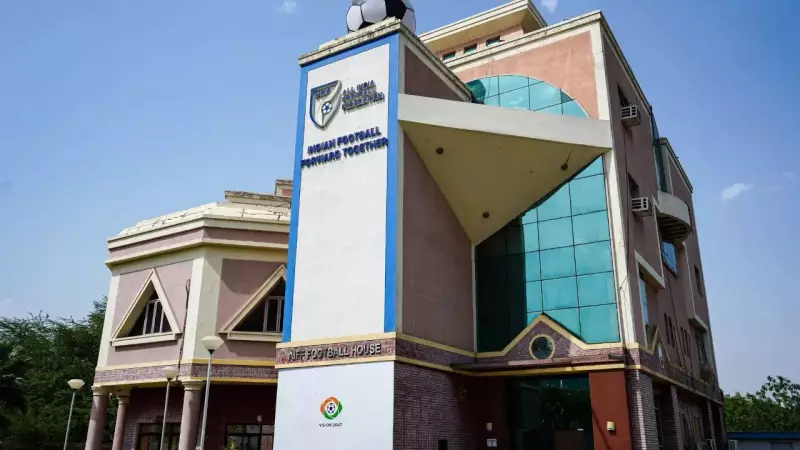
The new AIFF Constitution introduced groundbreaking changes, mandating that the federation must own and operate the top-tier league while implementing promotion and relegation systems. This development placed approximately Rs 300 crores invested by various clubs, which had yielded zero returns thus far, under considerable threat. Despite a request for proposal for managing the top-tier league being circulated in October 2025, no interested parties emerged initially.
Recent Developments and Future Uncertainties
Several stakeholders approached the Sports Ministry for intervention, leading to resolution when the Hon'ble Sports Minister announced on January 6, 2026, that the 2025-26 ISL season would commence on February 14, 2026. All existing clubs agreed to participate in an abridged version of the league, marking a crucial step forward.
Over the subsequent three weeks, multiple key developments unfolded:

- FSDL appears to have agreed to transfer the ISL trademark to AIFF, marking a relatively smooth transition compared to other Indian sports leagues that faced similar challenges.
- The AIFF circulated a timeline of events, though deviations have already occurred regarding media rights proposals and commercial partnership requests.
- Clubs face the challenging task of finalizing and executing 20-year participation agreements by February 15, 2026, despite commercial partner proposals scheduled only for February 20, 2026.
- At least four broadcasters attended media rights pre-bid meetings, indicating renewed interest.
- The ISL charter incorporated several club suggestions, granting them greater say in commercial matters and aligning more closely with the revised I-League structure.
- No waiver has been provided on the Rs 1 crore participation fee, with most clubs seeking reductions or complete waivers.
- Relegation clarity remains absent, with clubs citing valid preparedness concerns due to suspended training and limited squad planning time.
- Several clubs continue facing stadium-related challenges with venues deemed unfit for play.
- Multiple clubs have approached players for salary cuts, with many players agreeing in solidarity.
The Make-or-Break Season
With less than three weeks remaining before the season commencement, organizing a complete tournament in just 39 days from announcement to kickoff presents monumental challenges. The 2025-26 season represents a critical juncture for AIFF, particularly as clubs are entering only single-season participation agreements as provisional solutions.
Should AIFF fail to conduct a successful season or demonstrate future potential, or if no commercial partners emerge to fund operational costs of approximately Rs 30 crores annually before season conclusion, several clubs may consider selling at depreciated valuations or shutting down entirely. Alternative possibilities include clubs exploring breakaway league formations, drawing parallels with the proposed European Super League and the Competition Commission of India's earlier ruling favoring the Indian Cricket League.
Another potential pathway involves state federations sanctioning leagues, such as the Kerala Football Association's Super League Kerala initiative, where ownership rests entirely with private entities. Clubs with strong regional fan bases might consider working directly with state associations and becoming league operators themselves, especially given their long-term investments in grassroots development.
In a World Cup year, with FIFA conducting trophy tours in India, the English Premier League boasting over 150 million estimated fans in the country, and recent fanfare surrounding Lionel Messi's visit, the future of Indian football stands at a crossroads. The coming months could either establish a new blueprint for sustainability or mark the conclusion of another professional sports league experiment in India.