Iran Women's Football Team Returns Home After Asylum Controversy
The Iranian women's national football team has returned to their homeland following a dramatic asylum situation that unfolded during the Women's Asian Cup tournament in Australia. The squad's journey back to Iran involved multiple international stops and came after significant political pressure and diplomatic tensions between Tehran and Canberra.
Asylum Applications and Reversals
Seven members of the Iranian delegation initially sought asylum in Australia last week after facing severe criticism back home. The players had been labeled "traitors" in Iran for their decision not to sing the national anthem before their opening match of the Asian Cup tournament. This act of protest triggered a wave of backlash from conservative elements within Iran.
However, in a surprising turn of events, five of these seven players later withdrew their asylum applications. Among those who reversed their decision was team captain Zahra Ghanbari, who opted to return to Iran with the majority of the squad. Ultimately, only two players—Fatemeh Pasandideh and Atefeh Ramezanisadeh—chose to remain in Australia and pursue their asylum claims.

The Complex Journey Home
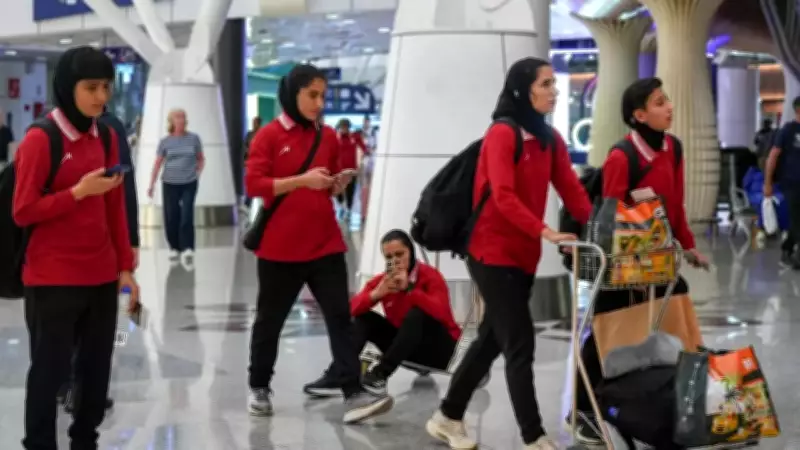
The team's return journey was anything but straightforward. After departing Australia where they had been competing in the Asian Cup, the squad first traveled to Oman, then continued to Kuala Lumpur, Malaysia. From there, they flew to Istanbul, Turkey on Tuesday evening.
The final leg of their journey involved flying to the eastern Turkish city of Igdir before making an overland crossing back into Iranian territory. This circuitous route reflected the complex diplomatic and logistical challenges surrounding their return.
At Kuala Lumpur airport on Monday, one player expressed emotional turmoil to AFP news agency, stating simply, "I am missing my family." This sentiment highlighted the personal conflicts many athletes face when caught between international sports participation and domestic political pressures.
Political Reactions and Accusations
Iranian parliament speaker Mohammad Bagher Ghalibaf celebrated the team's return in a post on social media platform X. He declared the players and staff were "children of the homeland, and the people of Iran embrace them." Ghalibaf further asserted that by returning, the athletes had "disappointed the enemies (of Iran) and did not surrender to deception and intimidation by anti-Iran elements."
International human rights organizations have repeatedly alleged that Iranian authorities pressure athletes abroad through various means. These alleged tactics include threatening family members back in Iran with potential property seizure or other reprisals if athletes defect or speak against the government. Such practices create immense psychological pressure on competitors representing Iran internationally.
Iranian officials have countered these allegations by accusing Australia of attempting to influence the players to remain in the country. This exchange of accusations highlights how sports events have become another arena for geopolitical tensions between nations with strained diplomatic relations.
Broader Context of Iranian Sports Diplomacy
This incident occurs against a backdrop of increasing scrutiny on how Iran treats its athletes, particularly women, who compete internationally. The women's football team's experience mirrors challenges faced by other Iranian sports professionals who must navigate complex political landscapes while pursuing athletic excellence.
The situation also underscores how international sporting events have become platforms for political expression and diplomatic friction. As global attention focuses on major tournaments, individual athletes often find themselves at the intersection of personal aspirations, national representation, and geopolitical realities.
The return of most team members represents a temporary resolution to this particular controversy, but it leaves unresolved the broader tensions between athletic freedom and political control that continue to affect Iranian sports at the international level.