The year 2025 will be remembered as the annus horribilis for Indian football, a period of unprecedented crisis where the sport plunged into its deepest abyss since Independence. This despair was thrown into sharp relief by the contrasting joy from the Caribbean, where tiny Curacao, with a population of just 155,000, qualified for the 2026 FIFA World Cup under renowned Dutch coach Dick Advocaat. Meanwhile, Indian football, once labelled a 'sleeping giant', grappled with a paralysed domestic league, a failing national team, and administrative inertia.
A League in Limbo and an Empty Cupboard
The most visible symbol of the collapse was the complete stall of the national league. For the first time since its inception in 1996, the top-tier competition failed to kick off on schedule. The core issue was financial: the 15-year agreement with Football Sports Development Limited (FSDL), which brought in Rs 50 crore annually to the All India Football Federation (AIFF), expired on December 8. The new AIFF leadership, in charge since 2022, could not secure a new commercial partner.
This left the league orphaned, with sponsorship dried up. Clubs paused operations, players stopped training, and foreign players eyed exits. One club even informed its squad they would have to "forego salaries" until the league restarted. As the year ended, a glimmer of hope emerged with the AIFF proposing a 20-year plan to ISL clubs, aiming for a truncated league start around February 7-8. IFA secretary Anirban Dutta expressed conviction in finding a solution, but the damage was already severe.

The national team's scenario was equally bleak. The senior men's team failed to qualify for the 2027 AFC Asian Cup, meaning no competitive football until at least November 2027—a gap of nearly three years. In a damning statistic, the AIFF had presented itself before the Supreme Court 16 times in the year, while the national team played only 12 matches.
Administrative Chaos and On-Field Failure
The operational dysfunction was staggering. National team camps, under coaches Manolo Marquez and later Khalid Jamil, often began without half the players, as clubs refused releases outside FIFA windows. The trust deficit hit a low when Mohun Bagan SG accused the federation of negligence over an injury to their captain, Subhashish Bose.
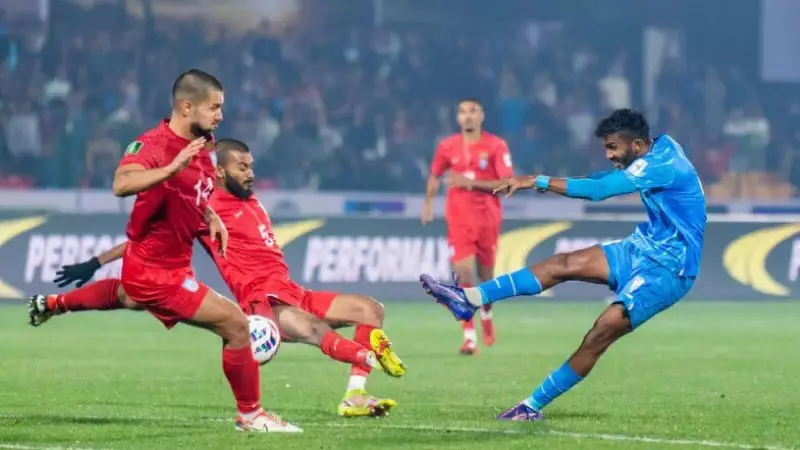
On the pitch, the results were dismal. In the final round of Asian Cup qualifiers, India—the highest-ranked side in their group—finished bottom without a single win, scoring just twice in five matches. The 1-0 defeat to Bangladesh in Dhaka was the first in 22 years and a particularly bitter pill. The constant churn in the dugout saw three coaches—Igor Stimac, Manolo Marquez, and Khalid Jamil—in 15 months, with none able to secure qualification.
The crisis was underscored by the reliance on 40-year-old Sunil Chhetri, who had to reverse his retirement decision, highlighting the stark lack of ready talent. This stood in ironic contrast to the AIFF's past problem of having to cap national team matches at 45 per player.
Silver Linings and a Glaring Question
Amid the gloom, the women's game provided rare cheer. The senior women's team defied odds to qualify for the AFC Asian Cup, and the U-17 and U-20 teams secured spots in continental competitions for 2026. At the club level, East Bengal's SAFF Club Championship win and a first group-stage victory in the AFC Women's Champions League were positive notes.
Yet, a haunting question remains: if a nation like Curacao can hire a world-renowned coach like Dick Advocaat, why can't India, with its economic might, move beyond a cycle of coaches like Stimac, Marquez, and Jamil? The silence from Football House is deafening.
The year's final blow was the exit of the City Football Group (CFG) from Mumbai City FC, citing "ongoing uncertainty surrounding the future of the Indian Super League." This commercial vote of no confidence encapsulates the monumental challenge facing Indian football as it steps into an uncertain 2026.