India's Women's Football Team Seeks Redemption at AFC Asian Cup After Pandemic Heartbreak
In 2022, India was selected to host the AFC Women's Asian Cup for the first time since 1980, generating significant excitement among football enthusiasts nationwide. However, the anticipated euphoria of competing before home supporters was dramatically overshadowed by the devastating outbreak of the COVID-19 pandemic. Multiple teams reported positive cases, but India suffered the most severe impact with twelve players testing positive. This catastrophic development forced the team to withdraw from the tournament entirely, as they could not assemble the required thirteen-member squad for their opening match.
From Setback to Remarkable Resurgence
The withdrawal created a profound dampener that lingered for months and years following the tournament. Several promising players faded into relative obscurity, and India's FIFA world ranking plummeted from 55th position to 70th by June of last year. Yet, against all odds, the team staged an extraordinary resurgence during the qualification phase for the current tournament.
India delivered four consecutive victories: a dominant 13-0 triumph against Mongolia, followed by a 4-0 win over Timor-Leste, a commanding 5-0 performance against Iraq, and finally a hard-fought 2-1 victory against Thailand, who were quarterfinalists in the previous edition. These results enabled India to top Group B in the qualifiers and secure their place in the finals for the first time entirely on sporting merit.

Daunting Group Stage Challenge in Australia
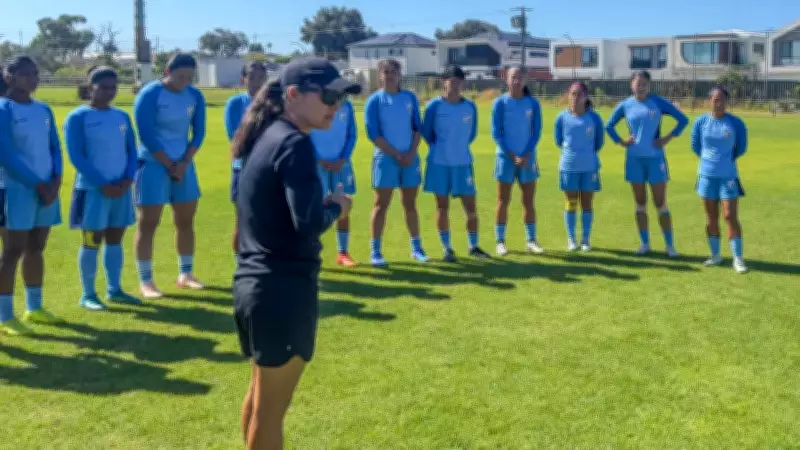
Now, an even more formidable test awaits as India participates in the 2026 AFC Women's Asian Cup, scheduled from March 1 to 21 across Australia. The team finds itself placed in a daunting Group C alongside two-time champions Japan, Vietnam, and three-time winners Chinese Taipei. Leading this ambitious campaign is newly appointed head coach Amelia Valverde, who joined the Indian setup in January alongside existing coaching staff members Crispin Chettri, Priya PV, and Mario Aguia.
"We face three strong opponents with significant experience and pedigree," Valverde explained in an exclusive interview with TimesofIndia.com from Perth. "Japan have been world champions, Vietnam participated in the last World Cup, and Chinese Taipei came very close to qualifying. We understand the competitive level we are facing, and these matches will undoubtedly be very tight contests."
"Our primary objective is to compete effectively in all three group stage matches, taking things step-by-step. The opening match will be particularly crucial. India earned the right to be here through qualification, and now we must demonstrate our competitive capabilities on this prestigious stage," she emphasized.
Valverde's Impressive Credentials and Preparation
The 39-year-old Costa Rican coach brings substantial experience to the Indian setup. Beginning her coaching career in 2011, Valverde managed Costa Rica's national team for eight years from 2015 to 2023, guiding them to two FIFA Women's World Cup tournaments. Her achievements include being named the 2016 CONCACAF Female Coach of the Year and receiving the Mexican Balón de Oro award for best coach in the Liga MX Femenil during her tenure with CF Monterrey.
Her record against Asian teams provides additional confidence, having faced four Asian nations as coach—Japan, South Korea, China, and the Philippines—with her only defeat coming against 2011 World Cup champions Japan.
Under Valverde's guidance, the Indian women's football team has undergone intensive preparation including a training camp in Turkey and multiple friendly matches. The team recorded victories against FC Schlieren, Hertha BSC Frauen, Zvezda, FK Csíkszereda Miercurea Ciuc, and Perth RedStar, along with a draw against Spartak Moscow.
Challenges and Strategic Approach
Captain Sweety Devi has led the squad in Australia since February 11 to acclimatize to local conditions ahead of the tournament. However, the camp has already experienced heartbreak with midfielder Anju Tamang withdrawn due to injury, replaced by forward Karishma Shirvoikar.

Valverde, who admires coaching luminaries including Pep Guardiola, Jose Mourinho, Emma Hayes, and Pia Sundhage, has focused on strengthening existing systems rather than implementing radical changes.
"We have respected the structure and system the team already possessed because they demonstrated excellent work during qualification," Valverde explained regarding her approach. "Our goal has been to reinforce what already functions effectively. The team must adapt to the demands of international football while we simultaneously adapt to the players' inherent qualities. This team displays bravery, attacking speed, and defensive solidity, so we have concentrated on enhancing these existing strengths."
Addressing Gender Disparity in Football
Historically, the Indian men's football team has captured disproportionate attention despite the women's team frequently producing superior results. Controversies and media limelight have predominantly focused on the men's national team and domestic leagues, while women's football has received comparatively limited support from various stakeholders.
Valverde acknowledges this disparity extends beyond India's borders. "This phenomenon doesn't occur exclusively in India. It happens in numerous countries, with the United States being perhaps one exception. The only viable method to change this situation is through on-field performance. These players have already demonstrated something significant by qualifying for this Asian Cup after more than twenty years. They have knocked on the door and shown they can compete at this level," stated the Indian coach.
"Improving visibility, extending league durations, developing infrastructure, and enhancing support represents a shared responsibility involving the federation, the country, media organizations, and all stakeholders," she added as guidance for future progress.
High Stakes and Future Implications
With qualification for the 2028 Los Angeles Olympics and the FIFA Women's World Cup potentially riding on their Asian Cup performance, the Indian women's football team has a genuine opportunity to transform the narrative and become flag bearers for Indian national football. Perhaps then, stakeholders will finally accord them the recognition they deserve.
AFC Women's Asian Cup Format and India's Schedule
Tournament Structure: The top two teams from each group, along with the two best third-placed teams, will advance to the quarterfinal stage.
Group Composition:
- Group A: Australia, South Korea, Iran, Philippines
- Group B: North Korea, China, Bangladesh, Uzbekistan
- Group C: India, Japan, Vietnam, Chinese Taipei
India's Group Stage Fixtures (All times IST):
- March 4: India vs Vietnam in Perth at 4:30 PM
- March 7: India vs Japan in Perth at 4:30 PM
- March 10: India vs Chinese Taipei in Sydney at 2:30 PM
India's Final Squad Selection:
- Goalkeepers: Panthoi Chanu Elangbam, Shreya Hooda, Sowmiya Narayanasamy
- Defenders: Astam Oraon, Juli Kishan, Martina Thokchom, Nirmala Devi Phanjoubam, Sanju Yadav, Sarita Yumnam, Shilky Devi Hemam, Sushmita Lepcha, Sweety Devi Ngangbam
- Midfielders: Aveka Singh, Babina Devi Lisham, Jasoda Munda, Sanfida Nongrum, Sangita Basfore
- Forwards: Grace Dangmei, Kaviya Pakkirisamy, Lynda Kom Serto, Malavika Prasad, Manisha Kalyan, Pyari Xaxa, Rimpa Haldar, Soumya Guguloth, Karishma Shirvoikar