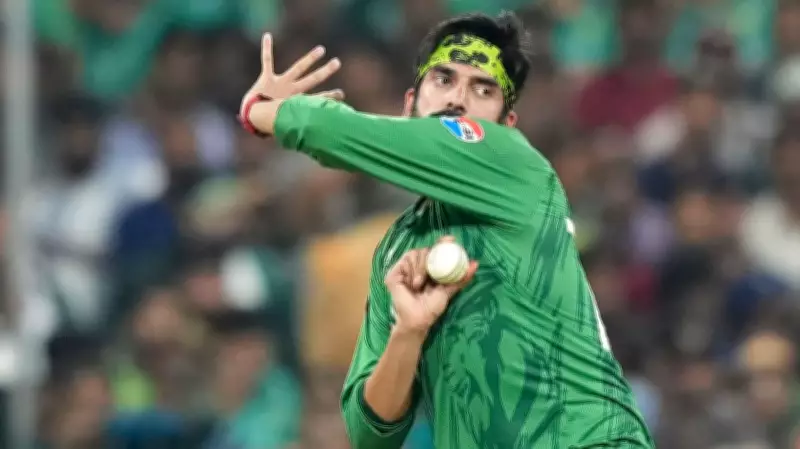
Usman Tariq's Controversial Bowling Action Divides Cricket World During T20 World Cup 2026
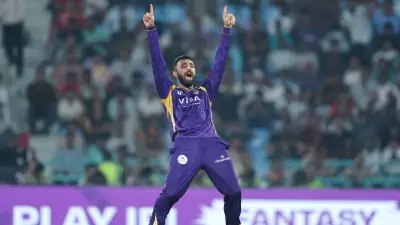
Pakistan's spin bowler Usman Tariq has become a central figure of discussion in the ongoing T20 World Cup 2026, primarily due to his highly distinctive and debated bowling action. The 28-year-old cricketer, who has previously faced scrutiny over his bowling technique in his career, has been officially cleared to bowl by the International Cricket Council (ICC). Despite this clearance, his action continues to generate significant attention and mixed reactions from players and fans alike.
Key Performance and Historical Context
Tariq recently played a pivotal role in Pakistan's crucial victory over the United States of America in a match held in Colombo. His contribution was instrumental in securing the win, showcasing his effectiveness on the field. However, it is his unique bowling style that has captured headlines. Similar to the legendary Sri Lankan fast bowler Lasith Malinga, Tariq incorporates a noticeable pause during his bowling run-up. He takes a few steps, halts briefly for about a second, and then releases the ball, a technique that has raised eyebrows across the cricket community.
This action has not gone unnoticed by opponents. During a T20 International series just before the commencement of the T20 World Cup 2026, Australian all-rounder Cameron Green expressed visible dissatisfaction with Tariq's bowling action, highlighting ongoing concerns despite ICC approval.

Indian Cricketers Voice Divided Opinions Ahead of High-Stakes Clash
As the cricket world anticipates the high-voltage India versus Pakistan match in the tournament, Indian cricketers have offered contrasting perspectives on Tariq's technique. Sreevats Goswami, a member of India's U-19 World Cup-winning team from 2008, took to social media platform X to voice his criticism. He drew a comparison to football, stating, "Even football doesn’t allow players to pause during a penalty run-up anymore. How is this ok? Action - all good. But pause? That too while loading to deliver. This can’t be continued seriously!" Goswami's comments underscore the debate over whether such a pause should be permissible in cricket.
Former India spinner Ravichandran Ashwin responded to Goswami, agreeing with the football analogy but shifting the focus to broader inconsistencies in cricket's regulations. Ashwin argued, "Agree football doesn’t allow it! While the batter can switch-hit or reverse without informing the umpire or bowler, after committing to bat on one side, why are the restrictions only limited to the bowler?" He further pointed out, "In fact, the bowler isn’t allowed to change the arm with which he/she bowls without informing the umpire. They should first change that rule." This highlights a perceived imbalance in the rules favoring batsmen over bowlers.
Technical Scrutiny and Questions Over Pace
Adding to the discourse, former Indian cricketer and commentator Aakash Chopra entered the conversation with a technical inquiry. While expressing that the pause itself is acceptable, Chopra raised a critical question regarding the physics of Tariq's delivery. He questioned, "I feel ‘pause’ is absolutely fine. But I do have a very specific bowling question—if there’s no momentum generated by the run-up, is it possible to increase your pace by 20-25kms on certain deliveries without bending the arm?" Chopra, who played 10 Test matches for India, brings a player's insight into whether such a technique could naturally achieve significant speed variations, hinting at potential concerns over bowling arm bending.
The ongoing debate surrounding Usman Tariq's bowling action adds an intriguing layer to the T20 World Cup 2026, especially with the high-profile India-Pakistan match on the horizon. As the tournament progresses, all eyes will be on how this controversy unfolds and whether it impacts future regulations in the sport.