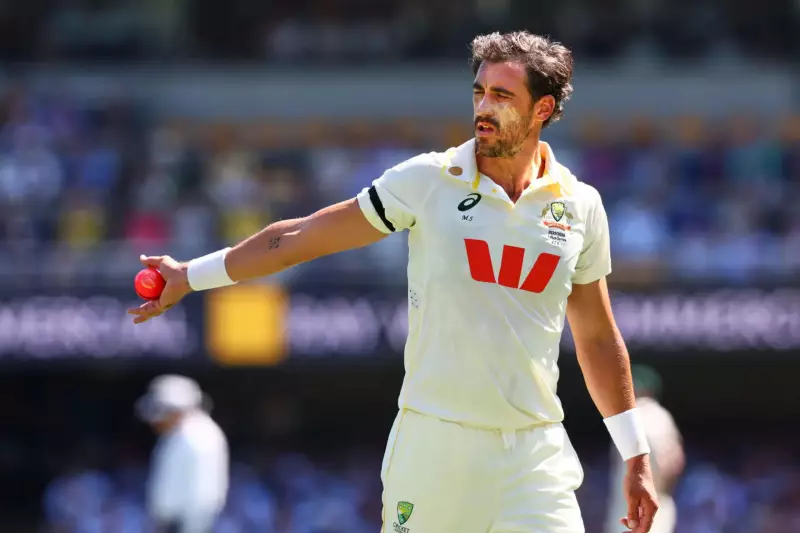
The third Ashes Test in Adelaide has been engulfed in a major controversy surrounding the Decision Review System (DRS), with Australian fast bowler Mitchell Starc delivering a scathing verdict. Following a series of contentious calls on Day 2, Starc was caught on the stump microphone branding the Snicko technology as the "worst technology ever" and demanding it be "sacked."
A Series of Contentious Moments
The debate around the reliability of Snicko, the ultra-sensitive audio technology used to detect edges, ignited on the opening day. Australia's wicketkeeper, Alex Carey, was at the centre of the first major incident. On 72 runs, he survived a strong caught-behind appeal. While replays showed a noticeable spike on Snicko, the sound registered significantly before the ball passed the bat. Third umpire Chris Gaffaney concluded there was a "clear gap" and gave Carey not out.
Carey capitalised fully on the reprieve, going on to score his maiden Ashes century and playing a pivotal role in shaping Australia's first innings. After the day's play, Carey himself admitted he thought he had edged the ball. "I thought there was a bit of a feather or some sort of noise when it passed the bat," Carey said, adding he would not have walked due to the technology's verdict.

Day 2 Doubts and Starc's Fury
Questions over the technology resurfaced dramatically on Day 2, with England batter Jamie Smith involved in two close decisions in quick succession. In the 44th over, a delivery from Pat Cummins appeared to glove Smith, with Usman Khawaja taking a catch at slip. On-field umpire Nitin Menon referred the decision upstairs.
Despite Smith's glove visibly moving, Snicko showed no spike. Third umpire Gaffaney ruled the ball had brushed the batter's helmet, not the glove, allowing Smith to continue. This ruling prompted Starc's immediate and furious reaction, which was clearly picked up by the microphones.
Confusion deepened just two overs later. Smith attempted a pull shot off Cummins and was caught behind by Carey. Umpire Menon again sent the decision upstairs. This time, Snicko produced a spike one frame after the ball passed the bat. This was deemed sufficient evidence to overturn the on-field call and give Smith out, further fuelling inconsistency concerns.
Technology Provider Admits Fault
Adding another layer to the controversy, BBG Sports, the company responsible for providing Snicko for Australian Tests, later acknowledged a fault in the Alex Carey incident from Day 1. Founder Warren Brennan explained that the error was likely due to the incorrect audio feed being used, which caused the sound to appear early on the Snicko waveform.
This admission has cast a long shadow over the Adelaide Test, turning the spotlight away from the on-field battle and onto the systems designed to aid accuracy. The sequence of events has sparked a fierce debate among players, pundits, and fans about the consistency and reliability of the DRS technology, particularly the Snicko component, in high-stakes international cricket.