Shami's Incisive Bowling Met by J&K's Resilient Batting in Ranji Trophy Semi-Final
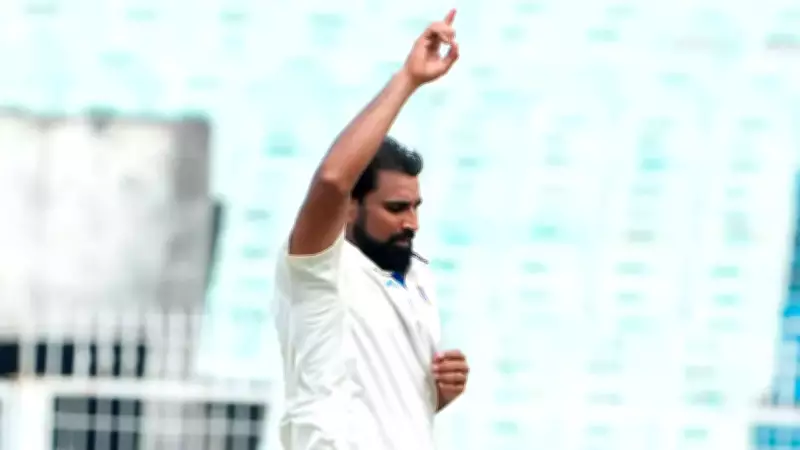
On a gripping second day of the Ranji Trophy semi-final, Mohammed Shami delivered two sharp spells to take three crucial wickets for Bengal. However, Jammu and Kashmir showcased remarkable resilience, battling their way to 198 for 5 by stumps. The contest remains finely balanced as both teams head into the third day with everything to play for.
Bengal's First Innings Concludes at 328
Resuming their innings at 249 for 5, Bengal were eventually bowled out for 328. The standout performer was Auqib Nabi, who completed an impressive five-wicket haul with figures of 5 for 87 in 26 overs. This achievement also marked Nabi's milestone of reaching 50 wickets in the current Ranji Trophy season, underscoring his consistent form.
In-form batter Sudip Kumar Gharami, who had remained unbeaten on 136 overnight, could only add 10 more runs before Nabi trapped him leg-before-wicket with a delivery that tailed in slightly. Veteran Sumanta Gupta played an aggressive knock of 39 off just 36 balls, but the hosts failed to capitalize fully. Nabi and left-arm seamer Sunil Kumar, who took 3 for 41 in 20 overs, effectively utilized the second new ball to wrap up the Bengal innings.

Jammu and Kashmir's Rocky Start and Spirited Recovery
Jammu and Kashmir endured a shaky beginning to their innings, with Mohammed Shami producing a probing opening spell that put them under immediate pressure. Shubham Khajuria was dismissed for 3, trapped plumb in front, followed by Tawer Hussain who fell for 2 in a similar manner. Shubham Pundir then edged Mukesh Kumar to Sudip Chatterjee in the slips, leaving J&K reeling at 13 for 3 and in deep trouble.
Skipper Paras Dogra and young IPL star Abdul Samad mounted a spirited counter-attack, stitching together a crucial 143-run stand for the fourth wicket. Samad took on Shami, who finished with 3 for 60 in 13 overs, and Mukesh Kumar, who claimed 2 for 40 in 13 overs, with a flurry of boundaries. Dogra provided solid support at the other end, and during his knock, he also completed the significant milestone of 10,000 Ranji Trophy runs, highlighting his experience and class.
Bengal's Defensive Tactics and Missed Opportunities
Under the defensive captaincy of Abhimanyu Easwaran, Bengal lost momentum as Samad began to dominate the bowling. Easwaran spread the field and introduced Shahbaz Ahmed, who failed to create wicket-taking opportunities, conceding 19 runs in 8 overs without a wicket. The presence of fielders at long-off, deep extra cover, and deep mid-wicket allowed the batters to rotate strike freely, easing the pressure on J&K.
All-rounder Suraj Sindhu Jaiswal, the third pacer, lacked pace and proved the easiest to negotiate for the batters. With Dogra and Samad in control, Easwaran refrained from giving short bursts to key bowlers like Shami or Akash Deep, a move that might have shifted the momentum back in Bengal's favor.
Shami's Return and Late Wickets
Mohammed Shami eventually returned to break the dangerous partnership, having Abdul Samad caught by Akash Deep after a brisk 82 off 85 balls. Paras Dogra, who had been solid until then, later fell to Mukesh Kumar, with Suraj Sindhu taking the catch. From a commanding position of 156 for 3, J&K slipped to 156 for 5, but Abid Mushtaq and Kanhaiya Wadhawan added an unbeaten 42 runs for the sixth wicket to steady the innings.
Abid Mushtaq remained not out on 26, while Kanhaiya Wadhawan was unbeaten on 10, ensuring Jammu and Kashmir ended the day at 198 for 5, trailing Bengal by 130 runs with five wickets in hand.
Brief Scores and Match Summary
Bengal 1st Innings: 328 all out in 97.1 overs (Sudip Kumar Gharami 146, Abhimanyu Easwaran 49, Auqib Nabi 5/87, Sunil Kumar 3/41).
Jammu and Kashmir 1st Innings: 198/5 in 51 overs (Abdul Samad 82, Paras Dogra 58, Mohammed Shami 3/60, Mukesh Kumar 2/40).
The match is poised for an exciting third day, with both teams having opportunities to seize control. Bengal will look to capitalize on early breakthroughs, while Jammu and Kashmir aim to build on their recovery and narrow the deficit.