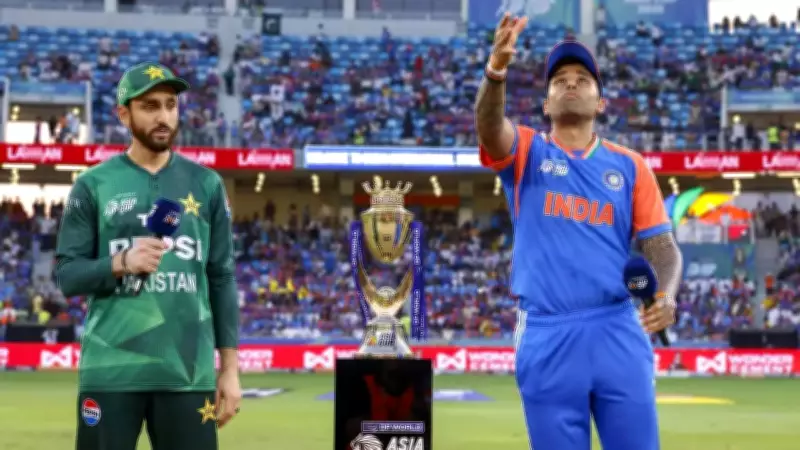
As the status quo continues regarding Pakistan's planned boycott of the T20 World Cup fixture against India scheduled for February 15 in Colombo, developments suggest the next 48 hours will be crucial. While the Pakistan government has officially cleared its national cricket team to travel to Colombo for the tournament, the selective boycott of just one match—specifically against arch-rivals India—is emerging as a potential violation of contractual agreements.
Contractual Breach Concerns Surface
The Pakistan Cricket Board (PCB) finds itself in a precarious position as sources indicate the boycott violates a contract the board itself co-signed. This agreement explicitly states that both India and Pakistan agree to participate in International Cricket Council (ICC) events and compete against each other at neutral venues. Notably, the contract lacks any force majeure clause that would allow for such selective non-participation under special circumstances.
Former Pakistan captain Rashid Latif has commented on the situation, highlighting the contractual dilemma. A source closely tracking developments explained, "PCB is violating a contract that itself is a co-signee of. There is no force majeure clause in that agreement which would permit this kind of selective boycott."

ICC's Terms of Participation Under Spotlight
The International Cricket Council's Terms of Participation mandate that Full Member nations must make every reasonable effort to address any government concerns. This provision is expected to feature prominently in upcoming discussions between ICC representatives and PCB officials. The PCB may be required to demonstrate what efforts it has undertaken to mitigate the government's specific objection to playing India.
Furthermore, since the Pakistan government has singled out only the match against India, ICC representatives are likely to question whether this represents a new national policy applying to all sporting engagements with India. "As only one match has been singled out, there needs to be clarity whether the Pakistan government has said no to any sporting activity with India," added the source familiar with the matter.
Potential Sanctions and International Olympic Committee Implications
Pakistan could potentially face sanctions because its government appears to be interfering in the affairs of a sporting body affiliated with the International Olympic Committee (IOC). Such governmental interference in cricket matters represents an unprecedented situation in the sport's history.
The chain of events began on Sunday when the Government of Pakistan issued an official statement declaring: "The Government of Islamic Republic of Pakistan grants approval to the Pakistan cricket team to participate in the ICC World T20 2026. However, the Pakistan cricket team shall not take the field in the match scheduled on 15th February, 2026 against India."
ICC Questions Selective Participation Policy
Despite the PCB not having formally communicated with the ICC regarding this matter, the global cricket governing body has already issued a statement questioning the "position of selective participation." The ICC emphasized that such selective participation contradicts the fundamental principles of global sporting events where all qualified teams are expected to compete equally according to the tournament schedule.
The ICC statement further clarified: "ICC tournaments are built on sporting integrity, competitiveness, consistency and fairness, and selective participation undermines the spirit and sanctity of the competitions." The council continues to await official communication from the Pakistan Cricket Board while monitoring this developing situation that challenges established norms of international cricket participation.