Pakistan Cricket Captain Emphasizes Government Control Over India Match Boycott
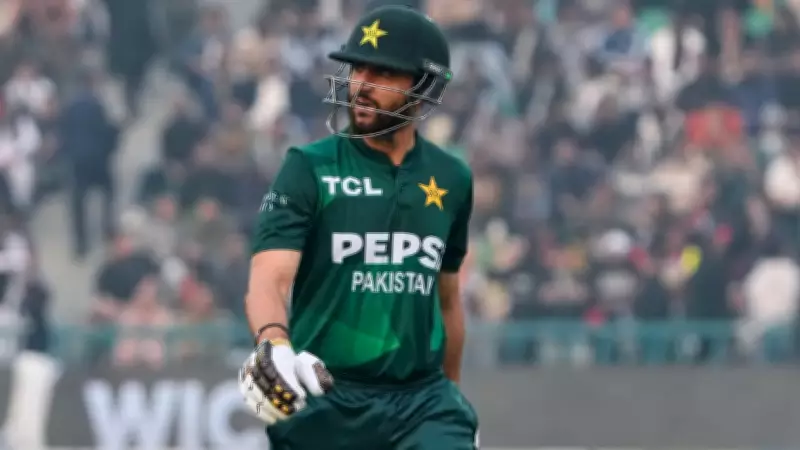
Pakistan's cricket captain Salman Agha has reiterated that the decision to boycott the upcoming T20 World Cup match against India lies entirely with the government and the Pakistan Cricket Board (PCB), stating that players have no control over this political stance. The comments came during a captain's conference on Thursday, where Agha addressed the growing uncertainty surrounding the highly anticipated February 15th clash between the arch-rivals in Colombo.
Government Directive Takes Precedence Over Player Autonomy
Salman Agha made it clear that the cricketing team will follow whatever instructions they receive from higher authorities. "The India game is not in our control. It's the government's and the PCB's decision and we respect that. Whatever they are going to say, we will do that," Agha stated emphatically. He further added that even if Pakistan were to face India again in the tournament's semifinal or final, the team would need to seek guidance from the government before proceeding.
This position echoes similar comments Agha made just days earlier after Pakistan's third T20I against Australia concluded on Sunday. At that time, he told reporters in Urdu, "Humara decision nahi hai, hum kuch nahi kar sakte," which translates to "The decision not to play against India isn't ours, so we cannot do anything about it."

Prime Minister Shehbaz Sharif Defends Boycott as Appropriate Stance
Earlier on Thursday, Pakistan Prime Minister Shehbaz Sharif publicly endorsed the boycott decision, calling it an "appropriate decision" and a "considered stance" taken to show solidarity with Bangladesh. Speaking after a government meeting, Sharif explained, "We have taken a very clear stand on the T20 World Cup that we won't play the match against India because there should be no politics on the sports field."
The Prime Minister emphasized that Pakistan should "completely stand by Bangladesh" in this matter, reinforcing the diplomatic dimension of the sporting boycott. This political backing has effectively shifted the decision-making power away from the cricket field and into governmental corridors.
Bangladesh Acknowledges Pakistan's Support
In response to Pakistan's declared solidarity, Bangladesh sports advisor Asif Nazrul expressed gratitude through social media. He posted "Thank You, Pakistan" on his official Facebook page while quoting Prime Minister Sharif's statement. This acknowledgment highlights how the boycott has evolved from a bilateral cricket issue into a broader geopolitical gesture within South Asian sports diplomacy.
Uncertain Future for Arch-Rivals' World Cup Clash
The boycott announcement has placed the February 15th match in Colombo in serious jeopardy, creating uncertainty for tournament organizers and fans worldwide. The Pakistan government's decision to withdraw from the match came as a response to Bangladesh's elimination from the T20 World Cup, transforming what was meant to be a sporting spectacle into a platform for political messaging.
As the situation develops, several key questions remain unanswered:
- How will the International Cricket Council (ICC) respond to this government-mandated boycott?
- What implications might this have for future India-Pakistan cricket relations?
- Will other cricket boards take similar political stances in international tournaments?
The unfolding scenario represents a significant moment where sports diplomacy intersects with national politics, with cricket players caught in the middle of decisions beyond their control. As captain Salman Agha's comments demonstrate, the players' role has been reduced to following directives rather than determining their participation in one of cricket's most storied rivalries.