Former BCCI Secretary Niranjan Shah Credits IS Bindra for Board's Rise
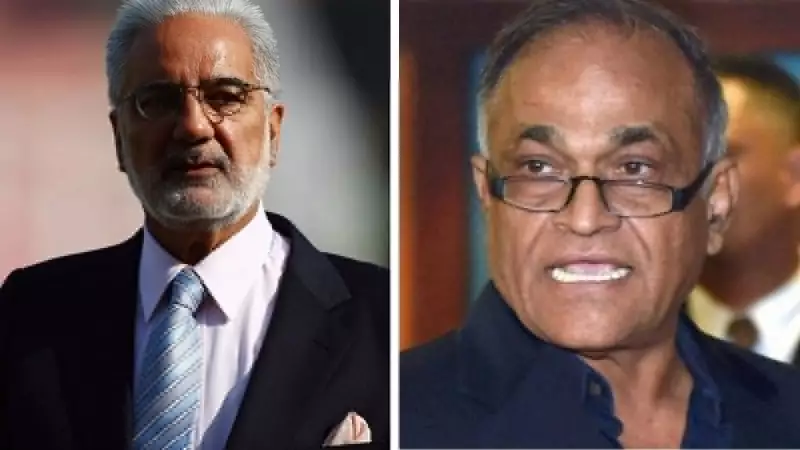
Former BCCI president Inderjit Singh Bindra, a towering figure in Indian cricket administration, passed away on Sunday at the age of 84. Bindra, who served as BCCI president from 1993 to 1996 and led the Punjab Cricket Association for over three decades, played a crucial role alongside the late Jagmohan Dalmiya in bringing the 1987 Cricket World Cup to India—the first time the tournament was held outside England. He also served as principal advisor to the International Cricket Council, leaving an indelible mark on the sport.
Bindra and Dalmiya: The Architects of Modern BCCI
In an exclusive reflection, former BCCI secretary Niranjan Shah shared insights into Bindra's contributions. "I have known IS Bindra since the 1990s," Shah recalled. "He was a passionate bureaucrat, a straight talker who understood how the government system works." Shah emphasized that during that era, cricket was not as commercialized, and India was still finding its footing in the global market. "In fact, many of us didn't even know what the market was back then," he added.
Bindra and Dalmiya emerged as torchbearers, instrumental in introducing media rights to Indian cricket. "They played a key role in bringing media rights, which completely changed the BCCI's financial situation," Shah noted. He explained that the board initially lacked funds to run cricket effectively, but with the revenue from media rights, the BCCI gradually amassed wealth. "Now we hear about media rights sold for millions of dollars, but back then, it was a groundbreaking shift because we used to pay Doordarshan to telecast matches," Shah highlighted.

Behind-the-Scenes Leadership and Global Impact
While Dalmiya was the public face of India's co-hosting of the 1996 World Cup with Sri Lanka and Pakistan, Bindra worked diligently behind the scenes. Shah pointed out that Bindra's efforts ensured India hosted successful World Cups in both 1987 and 1996, generating unprecedented revenue for the Indian board. "They made sure a decent amount of revenue came in, which the Indian board hadn't seen till then," he said.
Shah also shed light on how Bindra's background as an IAS officer and his Punjabi roots facilitated diplomatic engagements. "Dalmiya took Bindra's help in dealing with Pakistan, as being a Punjabi helped him communicate effectively with our neighbours," he explained. Bindra's administrative skills aided in building relationships with other countries, particularly in strategic planning for Indian cricket's future.
Legacy and Lasting Contributions
Bindra was keen on developing cricket infrastructure in Punjab, advocating for a stadium and enhancing the state's domestic team. Shah admired his honesty, noting that Bindra's forthright nature sometimes strained his friendship with Dalmiya. "He never hesitated to speak the truth, and that too cost him a friendship with Mr Dalmiya," Shah remarked.
After his tenure, Bindra was appointed as an advisor to the ICC when Sharad Pawar became its chief. Shah mentioned that they continued to meet at BCCI meetings until 2014, after which Bindra stepped away from cricket administration. Reflecting on Bindra's legacy, Shah concluded, "BCCI is where it is today because of people like Bindra, Dalmiya, and Pawar. They all wanted to take Indian cricket forward."
Niranjan Shah, a former BCCI secretary and veteran cricket administrator, shared these perspectives in a conversation, underscoring the foundational role Bindra played in shaping the BCCI's current stature in global cricket.