Nepal Cricket's Steady Ascent: Building a Legacy Brick by Brick
The age-old adage that Rome wasn't built in a day resonates profoundly with Nepal's cricketing ambitions. As American author James Clear, known for "Atomic Habits," aptly notes, while Rome wasn't built in a day, the builders were laying bricks every hour. For Nepal, the latest brick materialized as a financial boost from the International Cricket Council (ICC).
ICC Prize Money: A Symbolic Step Forward
On Wednesday, the ICC announced a transfer of $256,154 to the Cricket Association of Nepal from the 2026 T20 World Cup prize pool. This sum, though modest compared to cricket's financial giants, surpassed the earnings of established associate nations like Namibia, Canada, and Oman. It represents a critical infusion for a nation where cricket is rapidly becoming a unifying force.
The Jekyll and Hyde Nature of Nepal's Campaign
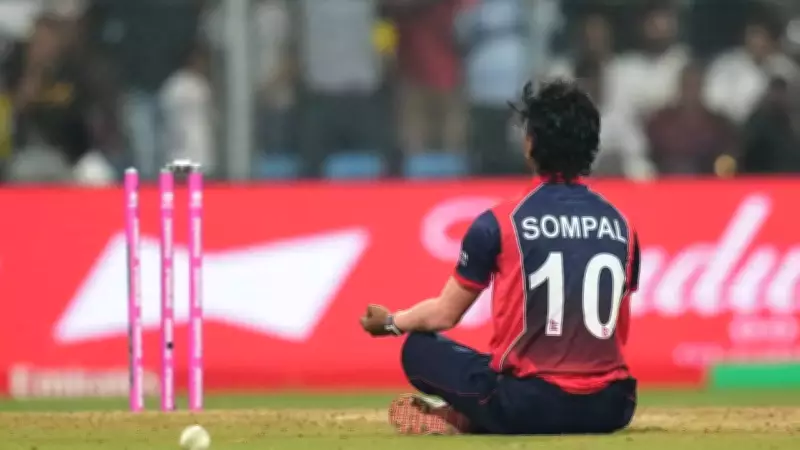
Nepal's recent World Cup journey was a tale of contrasts. It featured a heart-wrenching four-run loss to England, heavy defeats against Italy and West Indies, and a morale-boosting seven-wicket victory over Scotland. As the dust settles on their third World Cup appearance, the central question remains: how can Nepal transform near-misses into consistent triumphs?

Umesh Patwal, former head coach of Nepal, emphasizes that making a statement requires winning matches. "People only follow the champions," he told TimesofIndia.com. Despite coming close to upsetting South Africa in 2024 and pushing England to the brink, Nepal struggles with the final inch. Patwal identifies a lack of clarity in high-pressure moments as a key hurdle. "They are not sure who is supposed to be the match-winner," he explains, highlighting players like Kushal Bhurtel, Dipendra Airee, and Rohit Paudel who need to step up.
Structural Foundations: From Grassroots to National Stage
Nepal's cricket system is a tiered architecture, beginning at sub-district levels and progressing through provinces to the Prime Minister (PM) Cup. This national league includes seven provincial sides and three departmental teams: the Army, Police, and Armed Police Force. These departments provide salaries and stability, acting as guardians for players who might otherwise seek opportunities abroad.
However, Gyanendra Malla, former captain, points out structural shortcomings. "We need a longer season," he insists, advocating for multi-day formats to build game awareness. The current setup often leaves district players investing their own money, highlighting financial disparities.
Financial Realities: Passion Versus Profession
In Nepal, cricket is a religion with underpaid priests. While top-tier players under central contracts earn a livable wage, district-level athletes often sacrifice personal funds. Malla notes, "Most players are working as police or army, but not full-time." This financial precarity leads to reliance on social media for income, a point of contention with management.
Patwal defends this, stating, "Social media is a part of these guys because they don't make any money." During his tenure, salaries were unpaid, making media exposure a survival tool.
Cultivating a Champion Mindset
For Patwal, progress isn't just about playing more matches; it's about environmental change. Exposure to elite leagues like the IPL or Big Bash is crucial. "Just being with the team, seeing training, eating, and sleeping habits, that is a big churn out," he says. He cites Sanju Samson's mentorship under Sachin Tendulkar as an example Nepal lacks.
Malla adds that Nepal's geography offers untapped potential. "We are blessed to have four Test-nation neighbours," he says, urging regular matches against India's 'A' or 'B' sides to learn from bigger teams.
A New National Identity Unfolding
Historically known for the Himalayas and Gurkhas, Nepal is now forging a new identity through cricket. Malla smiles, "Before this, Nepal was renowned only for mountains. Now, the new identity is cricket." It unites people, even in sorrow, symbolizing national pride.

The ICC prize money will fund better nets and travel, but achieving Test status requires more. Patwal concludes, "They have the skill. They were the best runners between wickets, the best fielding side. They just need to sit among champions." As Nepal lays bricks hour by hour, the dream of becoming a cricketing powerhouse inches closer to reality.