Former Pakistan Spinner Danish Kaneria Backs ICC's Decision on T20 World Cup Schedule
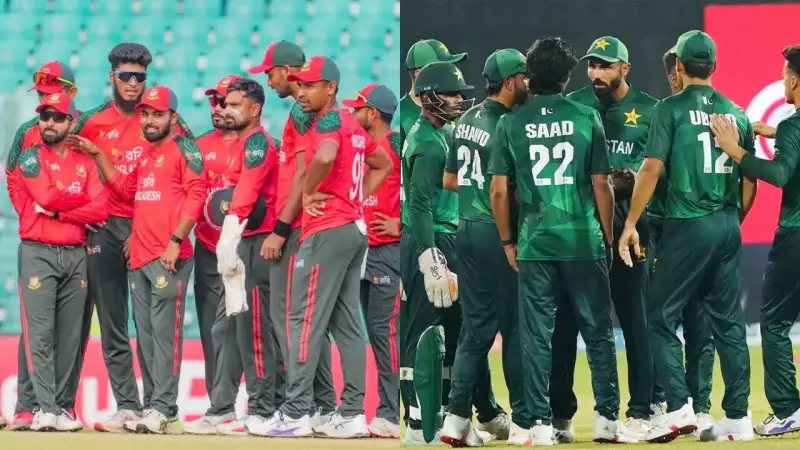
Former Pakistan leg-spinner Danish Kaneria has publicly endorsed the International Cricket Council's (ICC) decision to maintain the original schedule for the 2026 ICC Men's T20 World Cup. This comes after the Bangladesh Cricket Board (BCB) officially declined to travel to India for the prestigious tournament, citing security apprehensions amidst ongoing diplomatic tensions between the two neighboring nations.
Bangladesh's Withdrawal and ICC's Firm Stance
The Bangladesh Cricket Board had formally communicated its decision to the ICC, requesting that its scheduled matches be relocated to Sri Lanka instead of India. The board pointed to prevailing security concerns and strained bilateral relations as primary reasons for this unprecedented move. However, in a decisive response, the ICC reaffirmed on Wednesday that the global tournament would proceed as planned, with all of Bangladesh's fixtures remaining in India.
Kaneria, known for his candid commentary, remarked that Bangladesh's absence would not significantly impact the tournament's competitive landscape. "It's not like they were going to finish in the top four," he stated bluntly, questioning the cricketing merit behind the boycott.

The Mustafizur Rahman Precedent and Political Undercurrents
The current standoff occurs against the backdrop of recent developments involving Bangladeshi pacer Mustafizur Rahman. The Board of Control for Cricket in India (BCCI) had directed the Kolkata Knight Riders (KKR) to release the left-arm seamer ahead of IPL 2026, a move attributed to escalating political tensions. Kaneria elaborated on this incident during his conversation with IANS.
"There was the issue of Mustafizur, who was with KKR, and the team was forced to sideline him because of the kind of unrest and the public reaction. Shah Rukh Khan, who owns KKR, released him. There was no pressure from the BCCI or the ICC. But for humanity, he did what he thought was right," Kaneria explained.
He emphasized that neither the BCCI nor the ICC had discouraged Bangladesh's participation. "The BCCI or ICC never asked Bangladesh not to come to India. They welcomed them. All teams under the ICC umbrella receive foolproof security," he asserted.
ICC Meeting and Voting Dynamics
Kaneria referenced a crucial ICC meeting where the matter was discussed among member boards. "You saw that a meeting took place where all boards were present—from England to Australia, West Indies—every board that is part of the ICC was there. When voting occurred, everyone supported the ICC's proposal," he revealed.
Interestingly, only the Pakistan Cricket Board (PCB) aligned with Bangladesh in the voting process. "Only two votes went against it," Kaneria noted, highlighting the isolated position of the two South Asian cricketing bodies.
Humanitarian Concerns and Long-Term Consequences
The former spinner expressed distress over the humanitarian situation in Bangladesh that preceded this cricketing controversy. "When I look at this entire scenario, what was going on in Bangladesh, the kind of situation that developed there, the way our Hindu brothers and sisters and others were treated, the way incidents happened, it was wrong, first of all," Kaneria said emotionally.
He elaborated on his philosophical stance, "Our religion doesn't teach violence; it is a religion of love. People were just earning their livelihood, doing their jobs, and they were attacked without any reason. The strange and disturbing acts that took place were very sad. It really makes your heart sink—what is going on?"
Kaneria warned that Bangladesh's rigid position could adversely affect its cricketing future. "In my view, this is not going to be good for Bangladesh in the long run. If they think that whatever they say should be accepted by the ICC as a decision, that won't work. Going forward, India will not play with Bangladesh anyway, and that will be a big loss for them," he cautioned.

Tournament Logistics and Alternative Teams
Supporting the ICC's administrative approach, Kaneria stressed that major global tournaments cannot accommodate last-minute alterations. "I believe the ICC's decision is absolutely correct because things cannot be changed at the last minute. You have to prepare the entire tournament structure, schedules, and team travel. You have to change the whole scenario," he reasoned.
He reiterated his earlier point about Bangladesh's competitive standing, "If Bangladesh feels they don't want to play, then don't play. It won't make much difference anyway; it's not like they were going to finish in the top four."
Addressing speculation about Pakistan potentially following Bangladesh's lead, Kaneria dismissed such possibilities, pointing to the ICC's contingency plans. "I don't think that will happen. Because who suffers the loss? The country that backs out suffers the loss. There are penalties, rules and regulations. If Bangladesh doesn't go, Scotland can come in. If Pakistan refuses, some other team will come. Namibia is playing very good cricket. The ICC and BCCI won't be affected," he explained pragmatically.
Missed Opportunities for Bangladeshi Cricketers
Kaneria highlighted a significant collateral damage of Bangladesh's boycott—the potential exclusion of its players from the Indian Premier League. "If Bangladesh had come to play the T20 World Cup in India, then the barrier that has been created in the IPL with Mustafizur Rahman would have broken, and more Bangladeshi players would have taken part in the league," he observed, pointing to lost opportunities for emerging cricketers.
The Politicization of Cricket Discourse
The former cricketer lamented the increasing politicization of cricket conversations. "Now cricket is no longer being discussed, and only politics is being talked about. Earlier, people talked about wickets, bowling, and techniques. Now everything has become political," he noted with concern.
He commented on contemporary cricket narratives, "Technical cricket doesn't sell. What sells? Kohli vs Babar comparisons. Shaheen Afridi vs Bumrah comparisons," highlighting the shift from technical analysis to sensationalized rivalries.
A Plea for Cricket's Sanctity
Kaneria made an earnest appeal to all stakeholders to preserve cricket's essence. "For the future generation, it is very important that cricket is protected and promoted. Look at cricket as cricket. Let politics remain with politicians and authorities. Do not involve cricket in politics," he urged.
He concluded with a call for strategic foresight, "You have to look at the long picture, not the short. Now let's see what the final decision is, though in my opinion it must already have been taken, as nearly 24 hours have passed. What is good for cricket must be done, and as I said earlier, Scotland would already be preparing to face spin."