India's T20 World Cup Middle-Order Woes Exposed Despite Perfect Group Stage Record
The Indian cricket team, led by Suryakumar Yadav, has emerged from the group stage of the T20 World Cup with an unblemished 4-0 record. However, this flawless performance does not conceal the significant cracks that have been revealed in their batting lineup throughout the tournament. A troubling pattern of vulnerability, especially against off-spin bowling, has opponents like South Africa, West Indies, and Zimbabwe preparing straightforward strategies for the upcoming Super Eight phase, starting with a crucial match against South Africa on February 22.
Middle-Over Struggles: A Recurring Theme
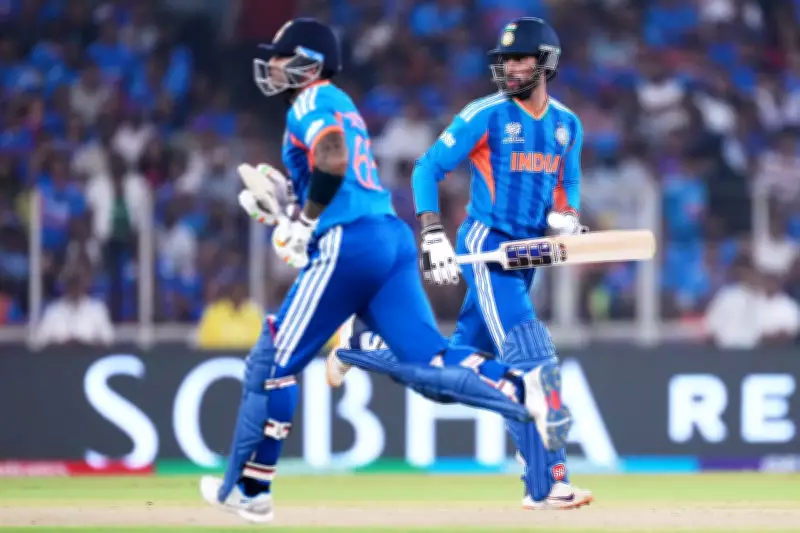
India's journey in the group stage has been marred by consistent middle-over batting collapses. In the opening game against the USA, a disastrous powerplay saw the team reduced to 46/4, setting a cautious tone. While the powerplay improved against Namibia, the partnership between Suryakumar Yadav and Tilak Varma drained momentum from the innings. From a promising 86/1, they added only 58 runs and lost three wickets over the next eight overs, with their stand yielding a mere 16 runs off 18 deliveries.
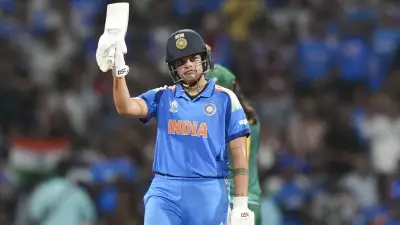
The trend continued in high-pressure matches. Against Pakistan, despite Ishan Kishan's explosive 77 off 40 balls, India managed just 73 runs and lost one wicket between overs 7 and 14. Suryakumar and Tilak were at the crease for most of this period, scoring only 38 runs off 34 balls, maintaining a run-a-ball rate. Similarly, versus the Netherlands, India scored 62 runs and lost three wickets in the middle overs, with the duo accumulating a paltry 30 runs off 28 balls.

Opponents Capitalize on Batting Weaknesses
Under the guidance of coach Gautam Gambhir and captain Suryakumar Yadav, India initially adopted a flexible batting order, with only the opening positions fixed. However, as the World Cup approached, the strategy shifted, assigning Tilak Varma to No. 3 and Suryakumar to No. 4. This fixed top-four approach has backfired, as opponents have successfully countered it. The Netherlands, for instance, studied India's struggles against Pakistan and implemented a spin-heavy attack in the powerplay to limit scoring options.
Netherlands captain Bas de Leede highlighted this tactical insight, stating, "We looked at the Pakistan game and saw they'd struggled with spin. So we focused on bowling spin in the powerplay to limit their scoring. Our spinners bowled really well to stop them from getting off to good starts." On a slow pitch, Indian batters found it challenging to accelerate, with Shivam Dube noting the difficulty of starting innings in such conditions.
Off-Spin Vulnerability and Team Response
India's scoring rate against off-spin has been particularly lackluster, with the left-right combination of Suryakumar and Tilak offering no advantage. Assistant coach Ryan ten Doeschate acknowledged this trend, pointing out that teams are bowling more finger-spin to exploit India's left-handed batters. He remarked, "This has been a trend in the World Cup. Teams are getting clever now, taking pace off the ball and bowling finger-spin. It could be a differentiator in the second phase of the competition."
Shivam Dube defended the under-fire pair, attributing their approach to game situations. "This is the World Cup; the game is difficult. If we don't get the start we want, then Tilak and Surya bat according to the situation. They have to adapt, and Surya is a player who can take the team to the best position," he explained.
Looking Ahead to the Super Eight Challenges
With only one day of rest before facing South Africa in Ahmedabad, the Indian team must address these issues swiftly. South Africa, another unbeaten side, will come prepared with refined plans to exploit India's middle-order frailties. The onus is on the batting unit to deliver a complete performance, something they have failed to achieve in the first four fixtures. An ideal outing on February 22 could sharpen their tools for the Proteas and beyond, but the pressure is mounting to fix the exposed vulnerabilities before it's too late.

As the tournament progresses, India's ability to overcome these challenges will be crucial in their quest for T20 World Cup glory. The management must inject urgency into experienced players and potentially reconsider batting strategies to counter the smart variations from spinners and seamers that have stifled their progress so far.