The Evolution of Powerplay Batting in T20 Internationals
For years in T20 International cricket, accumulating 50 runs during the Powerplay—the initial six overs—was considered an ideal foundation for building a substantial team total. This benchmark held firm even during the 2024 T20 World Cup, where established stars like Rohit Sharma and Virat Kohli operated within this traditional framework.
A New Era of Aggressive Batting Philosophy
The contemporary T20 landscape has undergone a seismic shift in batting philosophy. With teams now targeting scores of 225 or higher to feel secure on India's smaller grounds, the Powerplay benchmark has escalated dramatically. Scoring at least 75 runs during these crucial first six overs has become the new standard for competitive teams.
India's transition from the Rohit-Virat era to a new generation of power-hitters has been particularly striking. With both legendary batters retiring from T20Is, emerging talents like Abhishek Sharma have seamlessly adapted to these heightened expectations, making ambitious Powerplay targets appear increasingly achievable.

India's Dynamic Opening Combinations
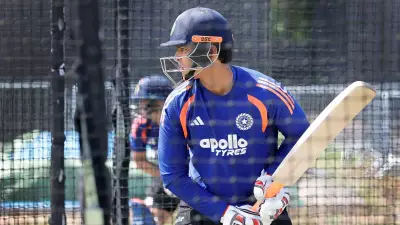
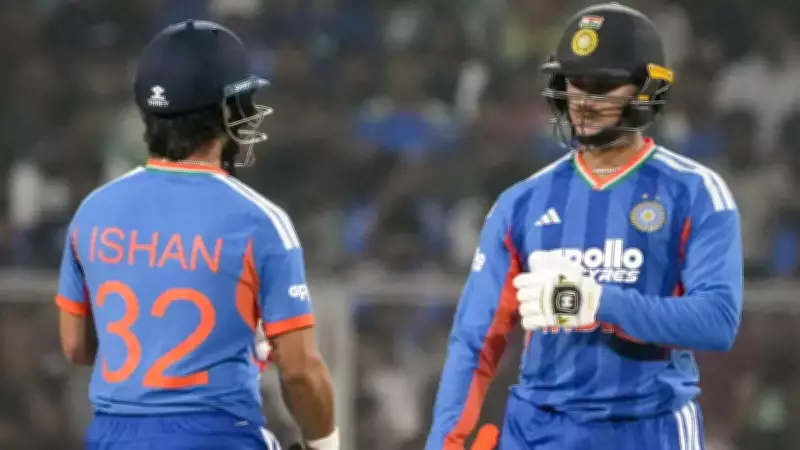
The Punjab southpaw Abhishek Sharma has demonstrated remarkable versatility, forming explosive partnerships with various teammates including Sanju Samson and Shubman Gill. Recent developments suggest India might settle on Ishan Kishan as his permanent opening partner for upcoming global tournaments.
Abhishek's phenomenal strike rate of 194.97 reflects his fearless approach and extraordinary ability to clear boundaries consistently. While his emergence has captivated the cricket world, India's discovery of Ishan Kishan's potential came through a process of experimentation. Even in his most recent T20I appearance, the Jharkhand cricketer was batting at number three, filling in for the injured Tilak Varma.
Kishan's maiden T20I century against New Zealand has virtually cemented his position in the lineup. With Sanju Samson struggling for form and Tilak Varma likely to reclaim the number three spot upon recovery, the opening position remains the most logical placement for Kishan's explosive talents.
Strategic Implications of Left-Handed Dominance
India potentially fielding a top-three comprising entirely left-handed batters presents unique strategic advantages. Their collective explosive power might convince team management to maintain this unconventional combination. Supported by a deep batting lineup extending to number eight, both Abhishek and Kishan would enjoy the freedom to play high-risk, aggressive cricket from the outset.
Statistical evidence underscores India's Powerplay dominance in 2025, where they recorded the highest run-rate of 10.86 during the first six overs. England followed closely at 10.52, while New Zealand and Australia shared third position with identical rates of 10.16.
Global Competitors and Their Opening Strategies
England's Experienced Duo
England's opening partnership of Phil Salt and Jos Buttler brings substantial experience of Indian conditions, with both enjoying considerable success in the Indian Premier League. The only potential vulnerability lies in Salt's technique against spin bowling, which could prove significant on turning Indian pitches.
New Zealand's Tactical Uncertainty
New Zealand, recently defeated 1-4 in a series against India, maintains deliberate ambiguity about their opening combination. While Devon Conway featured as opener during that series, Tim Seifert and Finn Allen are strongly tipped to assume those roles in the World Cup. Seifert maintains a strike-rate of 143.49, while Allen operates at an impressive 165.45.
The critical question concerns their familiarity with Indian conditions, explaining why New Zealand management initially preferred Conway for that responsibility. However, the senior left-hander hasn't delivered consistently, creating selection dilemmas ahead of major tournaments.
Australia's Formidable Threat
The opening combination that likely concerns India most belongs to Australia. Travis Head and Mitchell Marsh have opened together only once during a recent T20 series against Pakistan, where Australia suffered a 0-3 defeat. Both appeared unsettled during that outing, but Australian teams possess a well-documented ability to elevate their performance during World Cup events.

Head has consistently troubled Indian bowling across formats, and his regular participation in the IPL for Sunrisers Hyderabad provides invaluable experience on Indian pitches. Similarly, Marsh represents a fierce power-hitter who regularly opens for Lucknow Super Giants in the IPL, making him thoroughly acclimatized to subcontinental conditions.
As teams worldwide recalibrate their Powerplay approaches, India's aggressive batting revolution led by young talents positions them strongly for future T20 challenges, particularly with the 2026 T20 World Cup looming on the horizon.