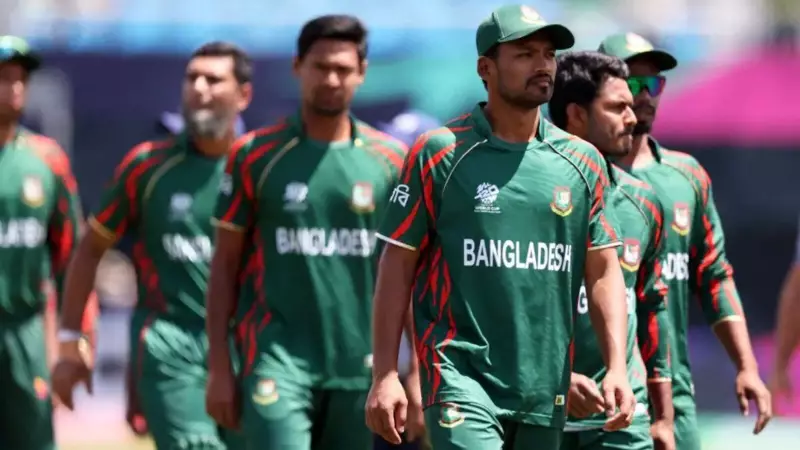
The International Cricket Council (ICC) has reportedly turned down a formal request from the Bangladesh Cricket Board (BCB) to relocate the national team's matches in the upcoming T20 World Cup away from India. This decision, as per a media report, means Bangladesh will play their group-stage games on Indian soil as originally scheduled by the global cricket governing body.
The BCB's Formal Request and Its Rationale
According to the report, the BCB had submitted an official plea to the ICC, seeking a change of venue for their matches in the tournament. The primary reason cited for this unusual request was the challenging playing conditions that Bangladeshi batters have historically faced in India. The board expressed concerns over the spin-friendly pitches commonly prepared in the country, which they believe have consistently disadvantaged their batting lineup.
The BCB's apprehension stems from a long-standing record of struggles in Indian conditions, particularly against quality spin bowling. This historical performance gap led the board to proactively seek what they viewed as a more neutral venue to enhance their competitive chances in the prestigious global event.

ICC's Firm Decision and Tournament Logistics
The ICC, after considering the appeal, has chosen to uphold the original fixture list and venue allocations. The council's decision underscores the complexities involved in altering the logistics of a mega-event like the T20 World Cup at a relatively advanced stage. Relocating matches for one team would have created a ripple effect, potentially disrupting the schedule for other participating nations, broadcast arrangements, and ticket sales.
The T20 World Cup 2024 is scheduled to be co-hosted by the United States and the West Indies. However, a specific group, which includes Bangladesh, is slated to play its initial matches in India. This unique multi-nation hosting model is part of the ICC's strategy to globalize the sport, but it also introduces intricate logistical challenges.
Historical Context and Competitive Implications
Bangladesh's track record in India has been a point of discussion for years. Their batsmen have often found it difficult to counter the turning ball on subcontinental pitches, which ironically are similar to home conditions but have not yielded favorable results. This psychological and technical hurdle was a significant driver behind the BCB's plea.
The ICC's rejection now means the Bangladesh team must prepare to confront these familiar challenges head-on. It places the onus on the team management and players to adapt their strategies, perhaps focusing more on mental conditioning and technical adjustments against spin, rather than seeking a change in environment.
Looking Ahead: Preparation and Adaptation
With the venue decision finalized, the focus for Bangladesh shifts entirely to preparation. The team will need to devise specific plans to tackle spin bowling effectively in Indian conditions. This could involve arranging preparatory camps on similar pitches, hiring specialist coaches, and analyzing past performances to rectify recurring mistakes.
The incident also highlights the broader dynamics of international cricket scheduling and the balance of power. While member boards can raise concerns, the ICC retains the final authority on tournament logistics, especially when decisions are based on sporting merit rather than security or political concerns. For fans and analysts, this sets the stage for an intriguing subplot within the larger T20 World Cup narrative, watching how Bangladesh responds to this setback.
Ultimately, the ICC's firm stance reinforces the principle that in world-class sports, athletes and teams must be prepared to excel in all conditions. The upcoming T20 World Cup in India will now be a true test of Bangladesh's ability to overcome a long-perceived weakness and prove their mettle on one of cricket's most challenging stages.