FIFA Maintains Unwavering Confidence in Mexico's 2026 World Cup Hosting Capabilities
In a decisive statement addressing growing international apprehension, FIFA leadership has firmly reaffirmed its commitment to Mexico as a host nation for the 2026 FIFA World Cup. This declaration comes despite recent widespread violence and security disruptions across multiple Mexican states that temporarily halted domestic football activities and captured global attention.
Violence Erupts Following Major Military Operation
The security concerns emerged following a significant military operation by Mexican authorities that resulted in the death of notorious cartel leader Nemesio Rubén Oseguera Cervantes, widely recognized by his alias El Mencho. The aftermath of this operation triggered retaliatory violence from the Jalisco New Generation Cartel, leading to at least 70 casualties according to official reports, along with burning vehicles and blocked highways that disrupted transportation networks.
This unrest occurred just months before Mexico is scheduled to host thirteen crucial World Cup matches across three major cities: Mexico City, Guadalajara, and Monterrey. The iconic Estadio Azteca in Mexico City, which carries immense historical significance in football, is set to host the tournament's opening match, adding another chapter to its storied legacy.

FIFA President Delivers Measured Response from Colombia
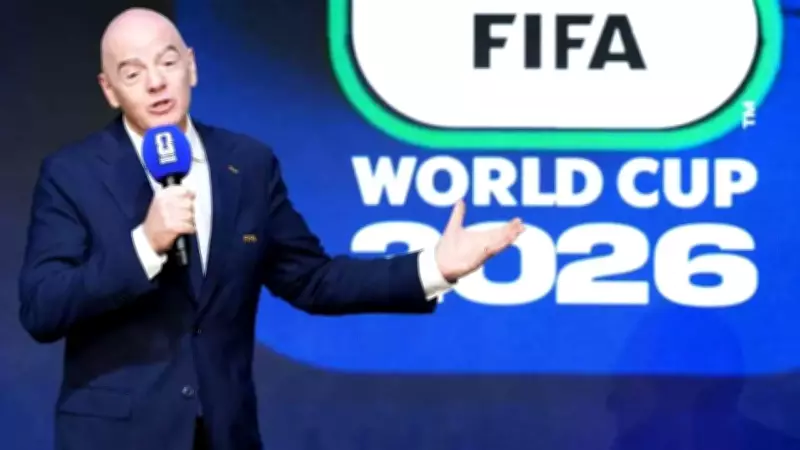
Speaking from Colombia, FIFA President Gianni Infantino addressed the situation with characteristic composure, emphasizing the organization's continued trust in Mexican authorities. "Of course, we are monitoring the situation in Mexico these days, but I want to say from the outset that we have complete confidence in Mexico, in its president, Claudia Sheinbaum, and in the authorities, and we are convinced that everything will go as smoothly as possible," Infantino stated.
The FIFA leader further contextualized the situation within broader global realities, noting: "Mexico is a great country, like in every country in the world, things happen; we don't live on the moon or another planet. That's why we have governments, police, and authorities who will ensure order and security."
Mixed Reactions from Football Federation Leaders
While FIFA maintains its steady position, reactions from other football federation leaders reveal a spectrum of perspectives regarding Mexico's preparedness. Ramón Jesurún of the Colombian Football Federation expressed solid support, stating: "Our first two matches are in Mexico, but we know they will overcome this and move forward. I have absolute and total confidence in my geopolitical thinking that this is an issue Mexico will overcome, and overcome very quickly."
In contrast, Michael Ricketts of the Jamaican Soccer Federation admitted to significant apprehension: "The games are at the end of March, so we still have another month to see what happens; but it is making me very nervous, to be honest. We will be listening out for CONCACAF and FIFA to give us instructions whether they are playing the games or whether they are immediately looking for other options."
Mexican Leadership Provides Firm Assurances
Mexican President Claudia Sheinbaum has responded to the concerns with unequivocal guarantees, asserting there is "every guarantee" the matches will proceed as planned and insisting there is "no risk" to the tournament's security. FIFA officials confirm they remain in regular contact with Mexican authorities, maintaining vigilant monitoring without succumbing to panic.
As preparations continue unabated, stadiums undergo final preparations and ticket demand remains robust. Amidst the uncertainty, football's global governing body has made a clear strategic choice: prioritizing trust in established partnerships over reactive fear, while maintaining contingency planning as the tournament approaches.