BCCI Vice President Rajeev Shukla Accuses Pakistan of Misleading Bangladesh
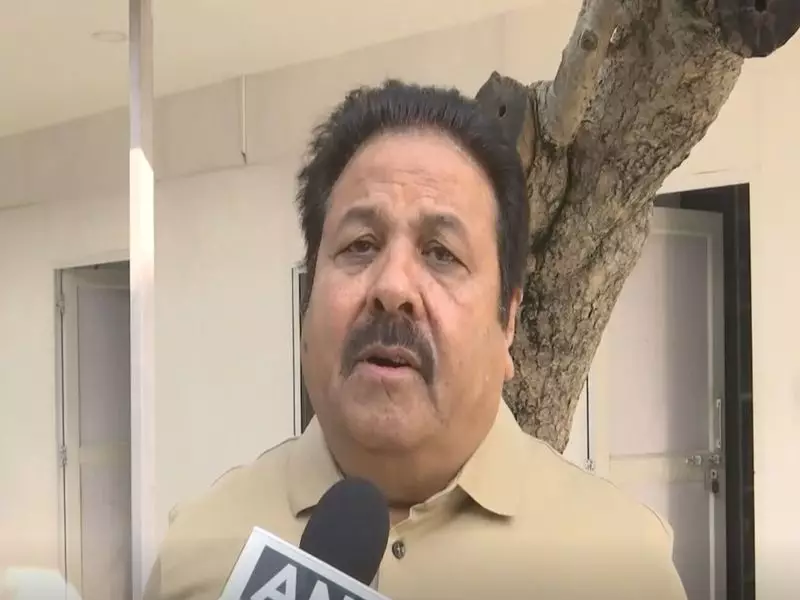
In a significant development that underscores the complex interplay between sports and international relations in South Asia, Rajeev Shukla, the Vice President of the Board of Control for Cricket in India (BCCI), has made a pointed accusation against Pakistan. Shukla has claimed that Pakistan is actively misleading Bangladesh in matters pertaining to international cricket, a statement that has stirred considerable attention within the cricketing community and beyond.
Details of the Allegation
According to Shukla, Pakistan's actions are not merely incidental but part of a broader pattern of behavior aimed at influencing Bangladesh's stance on various cricketing issues. While specific instances were not elaborated upon in detail, the implication is that this involves strategic maneuvers in forums such as the International Cricket Council (ICC) or bilateral cricket agreements. Shukla's remarks come at a time when cricket diplomacy often mirrors geopolitical tensions in the region, making his comments particularly resonant.
This accusation highlights the ongoing challenges in fostering transparent and cooperative relationships among cricket boards in South Asia, where historical and political factors frequently spill over into the sporting arena. The BCCI, as one of the most influential cricket bodies globally, plays a pivotal role in shaping the narrative, and Shukla's statement is seen as a firm stance against what he perceives as manipulative tactics by Pakistan.

Broader Implications for Cricket and Diplomacy
The allegations made by Rajeev Shukla could have several implications:
- Strained Relations: This may further strain the already delicate relations between the cricket boards of Pakistan and India, potentially affecting future bilateral series or collaborative efforts.
- Impact on Bangladesh: Bangladesh, as a key cricketing nation in the region, might find itself in a difficult position, needing to navigate between competing influences from its neighbors.
- Global Perception: Such public accusations could influence how international cricket bodies view the dynamics in South Asia, possibly leading to increased scrutiny or mediation efforts.
Moreover, this incident underscores the importance of clear communication and trust among cricket administrations. As Shukla emphasized, misleading actions not only harm bilateral ties but also undermine the spirit of fair play that cricket is meant to uphold. The BCCI's stance, as articulated by its vice president, signals a commitment to calling out what it sees as unfair practices, even if it means escalating tensions in the short term.
Context and Background
To fully grasp the significance of Shukla's statement, it is essential to consider the historical context. Cricket in South Asia has long been intertwined with political narratives, with India and Pakistan's rivalry being one of the most prominent examples. Bangladesh, having emerged as a competitive cricketing force in recent decades, often finds itself caught in the crossfire of these larger geopolitical currents. Previous instances, such as disputes over tournament hosting or player exchanges, have shown how easily sports can become a proxy for diplomatic disagreements.
In this light, Rajeev Shukla's accusation is not an isolated event but part of an ongoing dialogue—or lack thereof—among the region's cricket boards. It reflects broader issues of transparency and cooperation that need to be addressed to ensure the healthy growth of cricket in South Asia. As stakeholders watch closely, the response from Pakistan and Bangladesh will be crucial in determining whether this leads to constructive dialogue or further division.
Ultimately, while the immediate focus is on the specific allegation of misleading behavior, the underlying message from the BCCI vice president is a call for greater integrity and honesty in international cricket relations. Whether this will prompt a reevaluation of strategies by all parties involved remains to be seen, but it undoubtedly adds another layer to the intricate tapestry of sports diplomacy in the region.