Bangladesh Cricket Board's Final Bid to Contest ICC's T20 World Cup Venue Decision
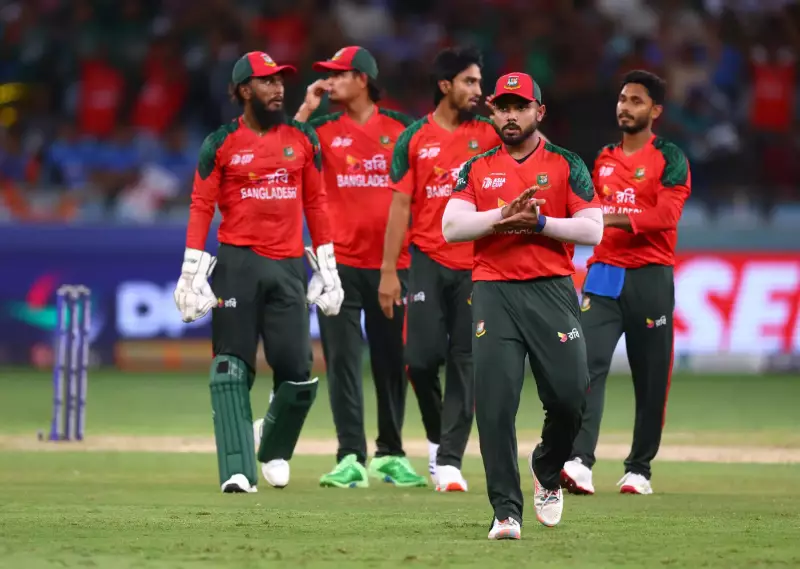
The Bangladesh Cricket Board (BCB) has launched a last-ditch effort to challenge the International Cricket Council's (ICC) decision to stage the national men's team's T20 World Cup matches in India. In a move that underscores the deepening rift, the BCB has formally written to the ICC's Dispute Resolution Committee (DRC), seeking intervention. However, this appeal is widely viewed as unlikely to proceed, as it falls outside the committee's designated authority and jurisdiction.
Political Tensions and Security Concerns Fuel the Dispute
This development follows a series of escalating tensions between Bangladesh and India, particularly in the cricketing arena. The BCB, led by President Aminul Islam Bulbul, finds itself increasingly isolated after the ICC kept Scotland on standby as a potential replacement. The board's decision to approach the DRC represents a final option in its quest to overturn the venue allocation.
Bangladesh's interim government, alongside sports ministry adviser Asif Nazrul—known for his strong anti-India stance—had earlier announced that the team would not travel to India, citing security reasons. This statement came shortly after senior pacer Mustafizur Rahman was removed from the Kolkata Knight Riders squad following a directive from the Board of Control for Cricket in India (BCCI).

ICC's Firm Stance and Legal Limitations
The ICC Board had previously voted 14-2 in favor of keeping Bangladesh's matches in India, following an independent security assessment that rated the threat level as low to moderate. Despite this, Nazrul maintained that the final decision rested with the government rather than the BCB, highlighting the political undertones of the dispute.
A BCB source confirmed the move, stating, Yes, BCB has approached the DRC of ICC as it wants to exhaust all its options. If DRC rules against BCB, then the only body that can be approached is Court of Arbitration of Sports (CAS) in Switzerland.
However, a careful reading of the ICC Constitution and the DRC's Terms of Reference reveals significant limitations. Clause 1.3 explicitly states: The Committee shall not operate as an appeal body against decisions of the ICC or any decision-making body established under the ICC's Memorandum and Articles of Association or under any rules or regulations of the ICC.
An ICC board source elaborated that while Bangladesh is free to approach the DRC, the committee lacks the remit to even hear a case challenging a decision made by the Board of Directors. The source also expressed frustration with BCB's handling of the situation, noting, The ICC Board Members are extremely angry with Aminul Islam Bulbul as to why before informing the global body, a press conference was held. Asif Nazrul is a persona non grata for the ICC but Bulbul shouldn't have allowed a press conference before informing their decision to the ICC.
DRC's Role and Historical Precedents
The ICC's Dispute Resolution Committee operates under British law and is chaired by English barrister Michael Beloff, King's Counsel. Its role is strictly limited to assessing whether the ICC Board has followed due process under its own laws, rather than functioning as an appellate authority.
One of the DRC's most notable rulings came in 2018, when it dismissed the Pakistan Cricket Board's USD 70 million compensation claim against the BCCI over an alleged failure to honour a bilateral series agreement. In that verdict, the DRC ruled that what PCB had described as a Memorandum of Understanding was, in fact, only a letter of intent and not legally binding.
The committee comprises an 11-member panel, including:

- Mike Heron, KC, and Justice Winston Anderson as Independent Code of Conduct Commission representatives
- Independent lawyers Deon van Zyl (South Africa), Gary Roberts (Americas), Guo Cai (Asia), EAP Anabelle Bennett, Jean Paulsson (Europe), and Peter Nicholson, the Ethics Officer
- Vijay Malhotra, Chair of the Audit Committee, and Sally Clark from Management Support
Implications and Next Steps
With ICC chairman Jay Shah currently in Dubai after attending the Under-19 World Cup in Namibia, a formal announcement regarding Bangladesh's potential replacement is expected by Saturday. The BCB's appeal, while symbolic, highlights the broader geopolitical and administrative challenges facing international cricket.
As the situation unfolds, the cricketing world watches closely to see how this dispute will impact the upcoming T20 World Cup and the future of bilateral relations between Bangladesh and India in the sport.