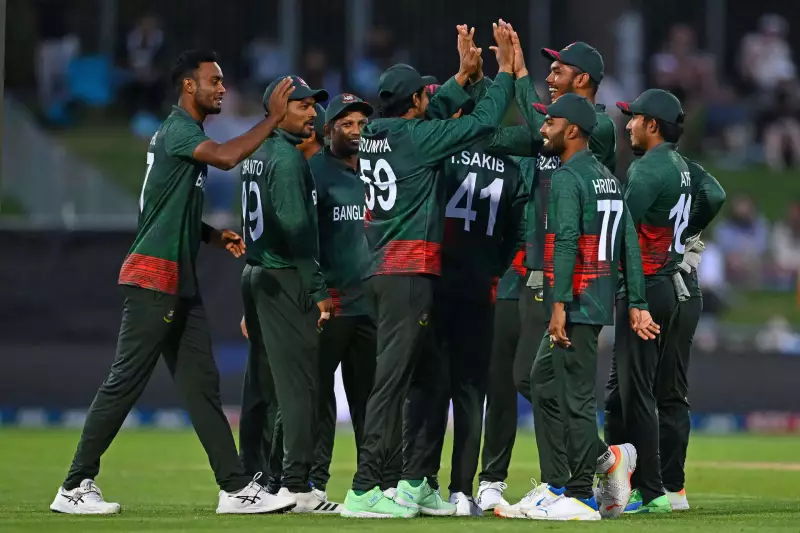
Former Bangladesh Cricket Board general secretary Suyed Ashraful Haque has strongly criticized the joint decision by the Bangladesh government and the BCB to withdraw from the ICC Men's T20 World Cup, labeling it an unnecessary and damaging move for the nation's cricket development.
Security Concerns Questioned
Speaking to ANI on Saturday, Haque expressed his disagreement with the decision to refuse participation in a global tournament over what he described as questionable "security concerns." He suggested these concerns were improperly linked to a Bangladeshi player being dropped from an Indian Premier League side, creating an unjustified connection between domestic and international competitions.
"It was not right for Bangladesh to withdraw from the T20 World Cup just because a Bangladeshi player was not allowed to play in the IPL in India," Haque told ANI. He emphasized that comparisons between the IPL and the World Cup were fundamentally misplaced, noting that the IPL represents a domestic competition while ICC events operate under far stricter and more comprehensive security arrangements.

Undermining Years of Progress
Haque warned that Bangladesh "has overplayed its hand in this matter" by choosing not to participate in the prestigious tournament. He stressed that such decisions directly hurt the progress of the country's cricket, undermining the effort and hard work invested in building Bangladeshi cricket over many years.
The former BCB official also addressed the Bangladesh government's demand to shift the team's matches to Sri Lanka, calling such a move unrealistic. He explained that ICC tournaments are planned well in advance with meticulous coordination and cannot be relocated at short notice without disrupting the entire event structure.
ICC's Replacement Process
Haque pointed out that the ICC's decision to replace Bangladesh with Scotland represented a normal and expected outcome according to established protocols. "When a team chooses not to take part, the ICC follows a standard process to bring in a replacement," he noted, indicating that the governing body acted appropriately within its established frameworks.
Earlier on Saturday, the International Cricket Council officially confirmed that Scotland would replace Bangladesh in the ICC Men's T20 World Cup 2026 after the BCB refused to participate according to the published schedule. The 20-team tournament is scheduled to be played from February 7 to March 8 across multiple venues.
ICC's Comprehensive Review Process
The ICC stated that its decision followed an extensive process to address concerns raised by the BCB about playing in India. Over a period exceeding three weeks, the ICC engaged with the BCB through multiple rounds of dialogue conducted in a transparent and constructive manner, including both video conferences and in-person meetings.
The governing body reviewed all concerns presented by the BCB, commissioned independent security assessments from internal and external experts, and shared detailed security and operational plans. These comprehensive arrangements included:
- Federal and state-level security coordination
- Enhanced and escalating security protocols for the event
- Multiple layers of protection for teams and supporters
"The ICC's assessments concluded that there was no credible or verifiable security threat to the Bangladesh national team, officials or supporters in India," the official release stated.
Preserving Tournament Integrity
The ICC emphasized its commitment to preserving the integrity and sanctity of the tournament schedule, safeguarding the interests of all participating teams and fans, and avoiding the establishment of precedents that could undermine the neutrality and fairness of ICC events. The decision against changing the schedule considered the wider impact such a move would have on the entire tournament ecosystem.
Following a meeting on Wednesday, the ICC Business Corporation Board asked the BCB to confirm within 24 hours whether the team would participate in the tournament as scheduled. When no confirmation was received within the deadline, the ICC proceeded according to its governance and qualification processes to identify a replacement side.

Scotland's Qualification
Scotland, who now take Bangladesh's place in the tournament, represent the highest-ranked T20I side that did not originally qualify for the competition. Currently ranked 14th in the world, they stand ahead of several other cricket nations including:
- Namibia
- United Arab Emirates
- Nepal
- United States
- Canada
- Oman
- Italy
The development marks a significant opportunity for Scottish cricket to showcase their talent on the global stage while highlighting the consequences of Bangladesh's controversial withdrawal decision.